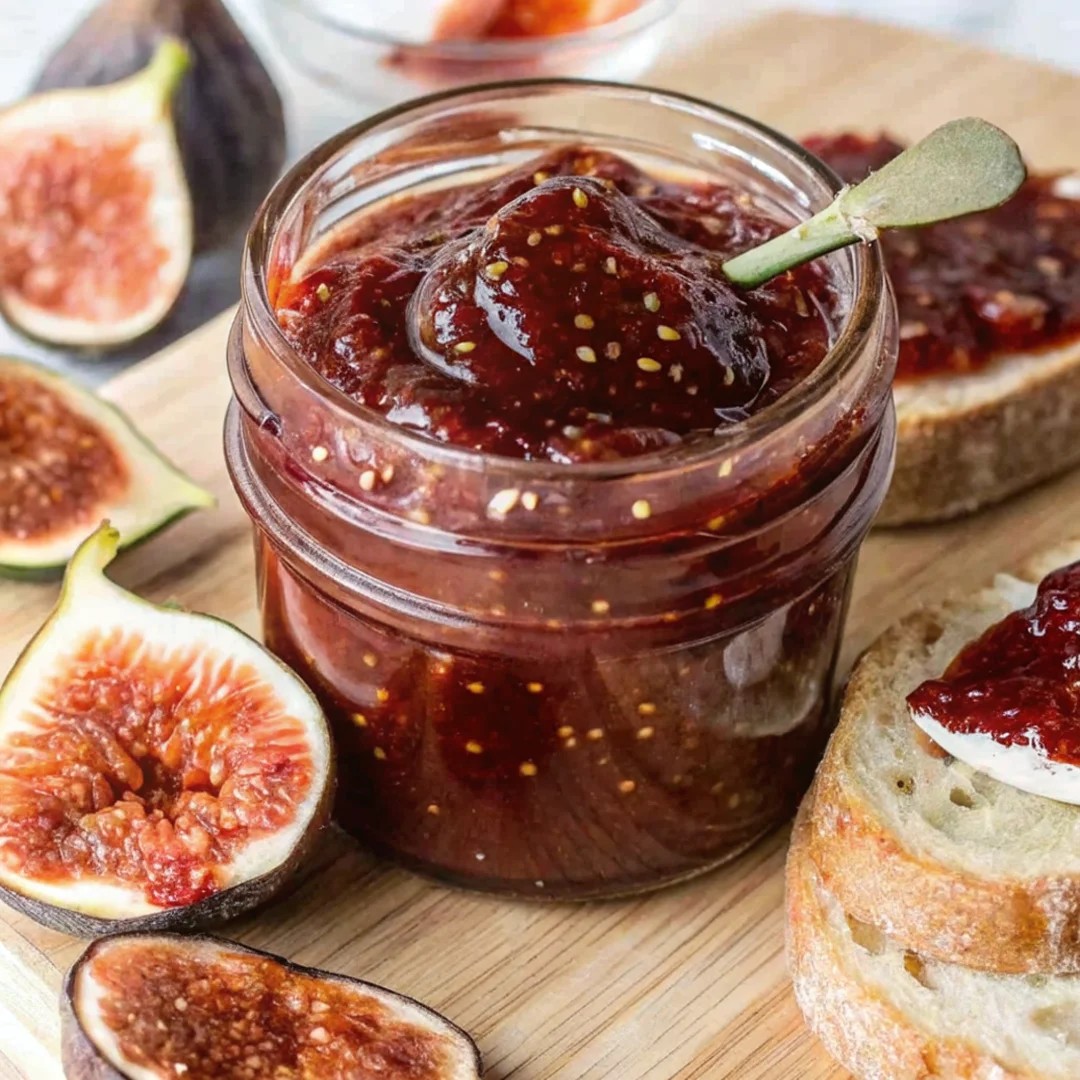
Homemade Fig Preserves Recipe Without Pectin
Can You Really Make Perfectly Set Fig Preserves Without a Single Packet of Pectin? (Hint: Our Grandmothers Knew Best!)
Did you know that figs are naturally higher in pectin than many popular fruits like strawberries or peaches? Yet, the vast majority of fig preserves recipe guides you find online insist on adding commercial pectin. Why rely on a processed powder when nature provides? This obsession overlooks a delicious truth: crafting homemade fig preserves without pectin isn’t just possible; it’s the traditional, deeply flavorful method that yields a richer, more complex result. Forget gummy textures and artificial shortcuts.
This fig preserves recipe harnesses the fruit’s inherent magic, slow-cooked to capture the pure essence of late summer figs. The reward? A preserve boasting incredible depth, a beautifully glossy set, and the kind of artisanal quality supermarket jars can only dream of. Ready to reclaim this simple kitchen alchemy? Let’s dive into the foolproof method for creating perfect, pectin-free fig preserves.
Table of Contents
Ingredients: Simple, Pure, and Bursting with Flavor
The beauty of this recipe lies in its simplicity and reliance on high-quality ingredients. Here’s what you’ll need to capture figgy perfection:
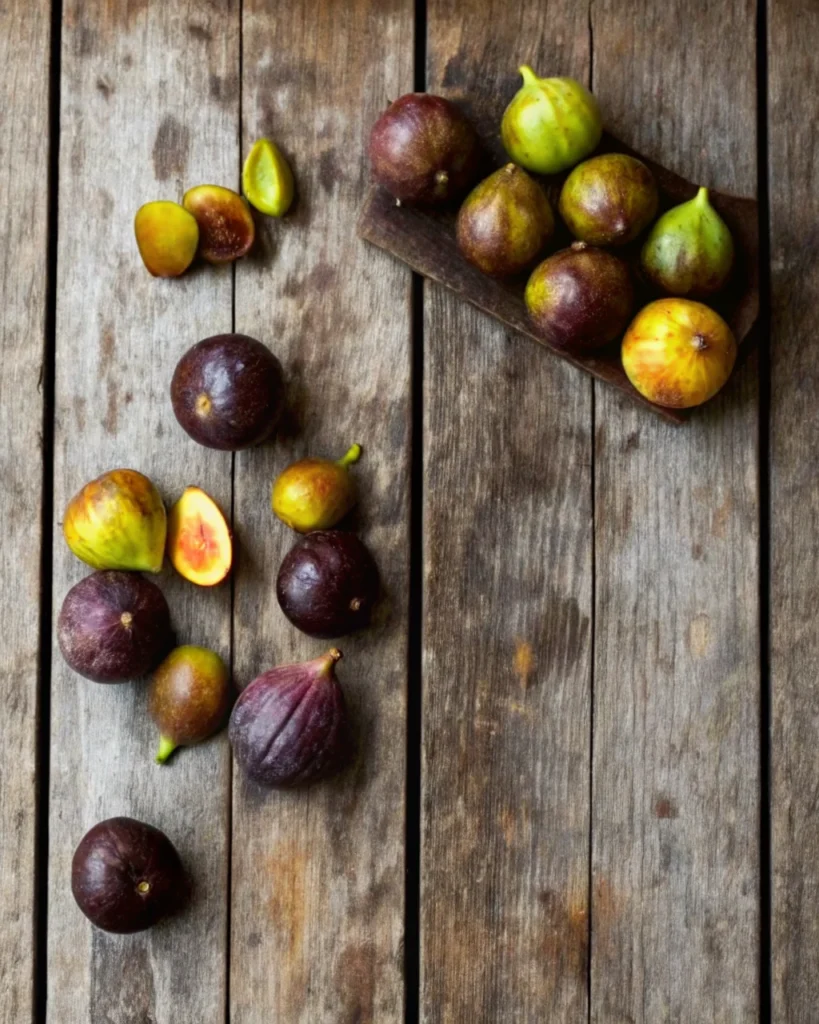
- 4 pounds Fresh, Ripe Figs: This is approximately 10-12 cups once stemmed and quartered. Choose plump, deeply colored figs that yield slightly to gentle pressure. Avoid hard, underripe figs (they lack pectin and flavor) or overly mushy, bruised ones. Mission, Brown Turkey, or Kadota figs all work beautifully.
- 3 cups Granulated Sugar: Provides sweetness, acts as a preservative, and helps draw out the fig’s natural juices and pectin. For a slightly deeper flavor, substitute up to 1 cup with light brown sugar.
- 1 large Lemon (or 2 medium): You’ll need both the zest (finely grated) and the juice (approx. 1/4 cup). The acidity balances the sweetness, enhances flavor, and aids in setting and preservation. Fresh is non-negotiable here – bottled juice lacks the complexity.
- 1/4 teaspoon Fine Sea Salt: Just a pinch to elevate all the flavors and cut through the sweetness.
- 1 cup Water: Helps initiate the cooking process without scorching.
Sensory Snapshot: Imagine the heady, honeyed perfume of ripe figs mingling with the bright, zesty aroma of fresh lemon. The sugar glistens like crystals, promising transformation. This quartet of ingredients – fruit, sweetener, acid, salt – is the timeless foundation for preserve perfection.
Timing: Patience is the Secret Ingredient
Unlike quick-pectin jams, this traditional method embraces slow cooking to coax out the figs’ natural pectin and develop deep, caramelized flavors. Here’s the breakdown:
- Preparation Time: 25 minutes (Stemming, quartering figs, zesting/juicing lemon).
- Cooking Time: 65-75 minutes (Includes macerating time and active simmering/stirring).
- Total Time: Approximately 90-100 minutes.
- Cooling/Setting Time: Allow preserves to cool completely in the jars (at least 12-24 hours) for the set to fully develop. Patience!
Data Insight: While some pectin-added jams claim readiness in under 30 minutes, this slow-simmered approach takes about 40% longer. However, this extended time isn’t just about setting; it’s responsible for a significantly richer flavor profile and a more luxurious, glossy texture that simply can’t be rushed. Think of it as the difference between a quick stir-fry and a slow-braised stew.
Step 1: Prepare Your Figs & Equipment
- Wash the figs gently under cool running water. Pat them dry carefully.
- Using a small knife, slice off the tough stem ends. Quarter the figs (cut into 4 pieces). If figs are very large, cut into sixths or eighths. You want substantial pieces that will soften beautifully but still hold some shape. Tip: Don’t discard slightly softer figs; they contribute great flavor and pectin.
- Zest the lemon(s) finely, avoiding the bitter white pith. Juice the lemon(s) – you need about 1/4 cup of fresh juice. Strain the juice if desired to remove seeds/pulp.
- Sterilize your jars and lids according to safe canning practices (boiling water bath for 10 minutes). Keep them hot until ready to fill. Prepare your canner setup if planning for shelf-stable preserves.
Step 2: Macerate for Maximum Juice & Flavor
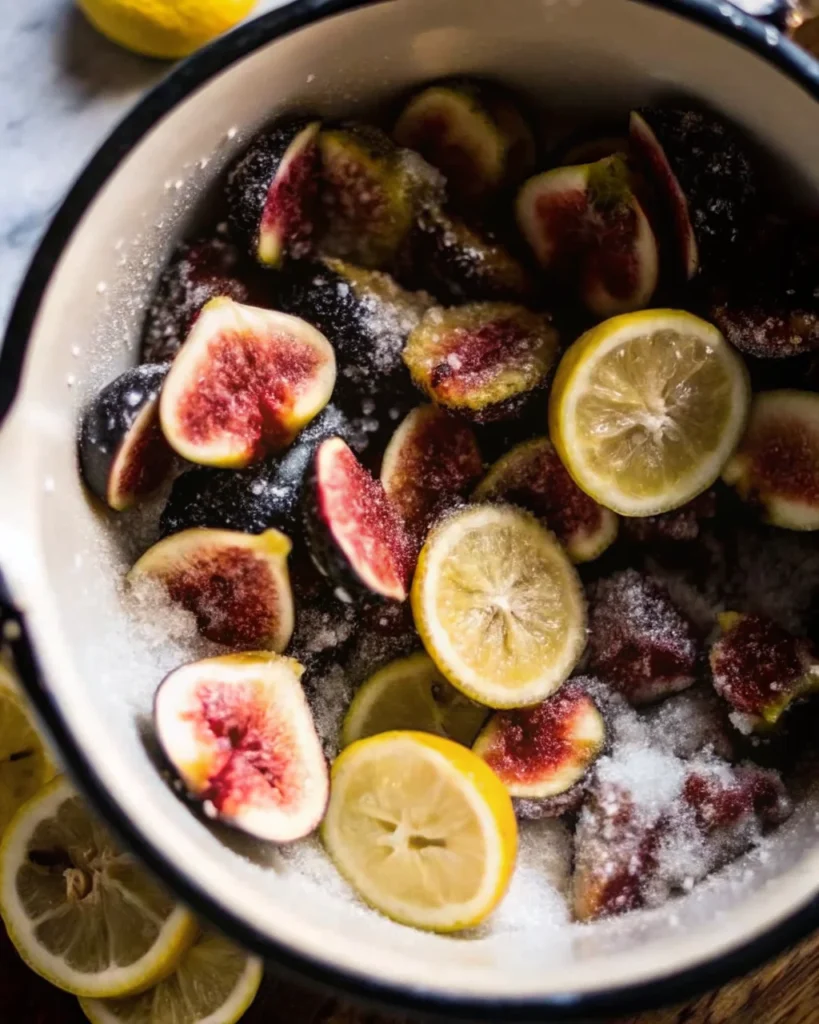
- In a large, heavy-bottomed pot (like a Dutch oven – essential for even heat distribution and preventing scorching), combine the quartered figs, granulated sugar, lemon zest, lemon juice, salt, and water.
- Gently stir everything together, ensuring the sugar starts to coat the figs.
- Cover the pot and let the mixture sit at room temperature for at least 30 minutes, or up to 1 hour. Tip: This maceration time is crucial! It draws out the figs’ natural juices, dissolves the sugar, and begins the pectin release process. You’ll see a lovely syrup forming.
Step 3: The Gentle Simmer – Coaxing Out the Pectin
- After macerating, place the pot uncovered over medium heat. Stir occasionally as the mixture comes to a gentle simmer. Tip: Resist cranking the heat! Slow and steady wins the preserve race.
- Once simmering, reduce the heat to maintain a low, steady simmer – gentle bubbles should break the surface regularly, but it shouldn’t be a vigorous boil. This gentle heat protects the delicate fig pieces and allows flavors to meld without caramelizing too quickly.
- Skim off any light foam that rises to the surface using a spoon. This foam is primarily air and impurities and removing it results in clearer, more attractive preserves. Tip: Keep a small bowl of water nearby to dip your spoon into for easier skimming.
Step 4: Patience & Testing the Set (The Exciting Part!)
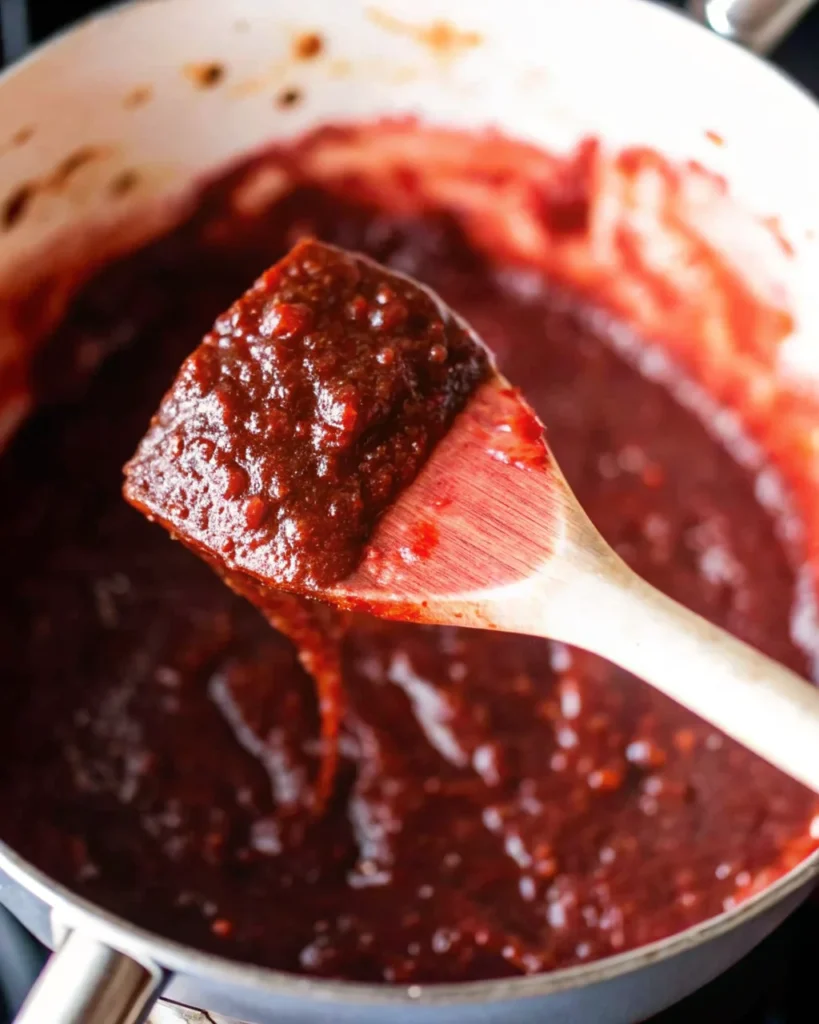
- Continue simmering gently, stirring every 10-15 minutes to prevent sticking, especially as the mixture thickens. The figs will soften and the syrup will gradually reduce and deepen in color. Expect this stage to take 45-60 minutes.
- Testing for Set (The Plate Test is Key!): After about 45 minutes of simmering, start testing for set.
- Place 2-3 small plates or saucers in your freezer.
- Spoon a small amount (about 1/2 tsp) of the hot preserve liquid onto a chilled plate.
- Return the plate to the freezer for 1-2 minutes.
- Remove and push the edge of the preserve with your fingertip. If it wrinkles slightly and holds its shape (doesn’t flood back together immediately), it’s done! Tip: Remember, preserves thicken SIGNIFICANTLY as they cool. If it seems slightly runny but thickens noticeably on the cold plate, it’s likely perfect. If it’s still very liquid, continue simmering for another 5-10 minutes and test again.
- Visual Clues: The syrup should coat the back of a spoon thickly. When you drag a spoon or spatula across the bottom of the pot, the path should stay visible for a couple of seconds before the syrup flows back.
Step 5: Jarring Up Your Liquid Gold
- Once the desired set is achieved, remove the pot from the heat immediately. Let the preserves rest for 5 minutes; this helps prevent fruit floating in the jars.
- Carefully ladle the hot preserves into your sterilized, hot jars, leaving 1/4-inch headspace at the top. Wipe the jar rims meticulously with a clean, damp cloth to remove any residue.
- Place the sterilized lids on the jars and screw on the bands until fingertip-tight (don’t overtighten).
- For Shelf-Stable Preserves: Process the jars in a boiling water bath canner for 10 minutes (adjust for altitude if over 1,000 ft – typically add 5 minutes for every 1,000 ft above). Remove jars and let them cool undisturbed for 12-24 hours. Check seals – lids should be concave and not pop. Tip: If you skip the water bath, the preserves MUST be refrigerated immediately and used within 3 weeks, or frozen.
- Refrigerator/Freezer Option: Skip the water bath. Let the jars cool completely on the counter, then store in the refrigerator for up to 3 weeks, or freeze for up to 1 year. Thaw frozen preserves in the refrigerator overnight before use.
Nutritional Information (Per Tablespoon – Approximate)
This information provides a snapshot per serving. Remember, portion sizes vary!
| Nutrient | Amount Per Tbsp | % Daily Value (DV)* | Notes |
|---|---|---|---|
| Calories | 50 kcal | – | Primarily from natural sugars (figs/sugar) |
| Total Fat | 0 g | 0% | Naturally fat-free |
| Sodium | 5 mg | <1% | From added salt |
| Total Carbs | 13 g | 5% | |
| Dietary Fiber | 0.5 g | 2% | Figs contribute natural soluble fiber |
| Sugars | 12 g | Includes: | ~7g Added Sugars (sugar), ~5g Natural (figs) |
| Protein | 0.2 g | <1% | Minimal protein contribution |
| Calcium | 10 mg | 1% | Figs are a source of calcium |
| Potassium | 35 mg | <1% | Figs contain potassium |
| Iron | 0.1 mg | <1% |
*Percent Daily Values are based on a 2,000 calorie diet. Your daily values may be higher or lower depending on your calorie needs.
Data Insight: Figs are a surprising source of calcium and potassium. While this preserve is sugar-rich, a tablespoon delivers a small boost of fiber and minerals. Compared to many commercial jams, this homemade version avoids artificial additives and high-fructose corn syrup.
Healthier Tweaks: Lightening the Load Without Losing Soul
Want to enjoy the figgy goodness with less sugar? Try these mindful modifications:
- Sugar Reduction: You can cautiously reduce the sugar to 2.5 cups. Be aware this:
- Significantly impacts setting: Less sugar means less pectin activation and potentially runnier preserves. Expect a looser “spoonable” consistency more like a compote.
- Shortens shelf life: Sugar is a key preservative. Reduced-sugar preserves MUST be refrigerated and used within 2-3 weeks, or frozen.
- Alters flavor: The balance will shift; the fig’s natural tartness will be more pronounced.
- Honey or Maple Syrup: Replace up to 1 cup of the granulated sugar with mild honey or pure maple syrup. Add it after the initial maceration/simmer begins to preserve its delicate flavors. Expect a different flavor profile and potentially darker color. Remember, these are still sugars.
- Low/No-Sugar Pectin (Use Sparingly): If you must drastically reduce sugar but still want a firm set, use a low/no-sugar pectin like Pomona’s Pectin. Crucially: FOLLOW THE PACKET INSTRUCTIONS EXPLICITLY. It requires added calcium water and specific ratios. This fundamentally changes the recipe from “no pectin” to “specialized pectin,” but it’s an option for strict diets.
- Chia Seed “Jam” Alternative: For a radically different, low-sugar, high-fiber option: Mash 4 cups figs, add 1/4 cup honey/maple syrup, 2 tbsp lemon juice, and 3-4 tbsp chia seeds. Simmer 10-15 min until thickened. Refrigerate (sets overnight). Texture is gel-like, not traditional preserve. Use within 1 week refrigerated.
Serving Suggestions: Beyond the Toast Point
Your homemade fig preserves are incredibly versatile! Think outside the jar:
- The Classics: Slathered on warm toast, biscuits, scones, or croissants. Paired with creamy cheeses like Brie, Camembert, goat cheese, or sharp cheddar (cheese board essential!).
- Breakfast Boost: Swirled into plain yogurt or oatmeal. Dolloped on pancakes or waffles.
- Savory Glazes & Sauces: Thinned slightly with balsamic vinegar or water and brushed onto roasting chicken, pork tenderloin, or duck during the last 15 minutes of cooking. Stirred into pan sauces for depth.
- Sandwich Sophistication: Elevate a turkey or ham sandwich. Amazing with roasted vegetables and hummus in a wrap.
- Dessert Magic: Filling for thumbprint cookies or sandwiched between cake layers. Topping for vanilla ice cream or panna cotta. My favorite trick: Warm a spoonful and drizzle over a slice of pound cake with a dollop of whipped cream.
- Cocktail Hour: A small spoonful muddled into an Old Fashioned or stirred into a champagne cocktail.
Common Mistakes to Avoid: Fig Preserves Pitfalls Solved
Even experienced cooks can stumble. Sidestep these common errors:
- Using Underripe Figs: The single biggest mistake! Underripe figs lack sufficient natural pectin and sugar, leading to runny, flavorless preserves. Solution: Use only ripe, fragrant figs.
- Overcooking: Trying to force a set by boiling too hard or too long results in dark, overly thick, caramelized (sometimes burnt) preserves with tough fig bits. Solution: Gentle simmer + frequent plate testing. Remember it thickens on cooling.
- Undercooking: Not reaching the gel point means runny preserves. Solution: Be patient, simmer long enough, and trust the plate test.
- Insufficient Acid (Lemon): Low acid compromises both flavor (too cloying) and safety (for canned preserves). Solution: Measure lemon juice accurately – fresh is best.
- Wrong Pot: A thin-bottomed pot causes scorching. Solution: Use a heavy Dutch oven or preserving pan.
- Skipping the Skim: Foam leads to cloudy preserves and can trap air bubbles affecting shelf life. Solution: Take a minute to skim diligently.
- Ignoring Headspace/Jar Prep: Overfilling jars or not sterilizing/wiping rims can cause seal failures or spoilage. Solution: Follow safe canning protocols meticulously if preserving for shelf life.
- Not Letting it Cool to Set: Judging the set while hot is impossible. Solution: Always use the cold plate test and remember preserves thicken dramatically as they cool completely.
Storing Your Figgy Masterpiece: Keeping the Flavor Fresh
Proper storage ensures you enjoy your hard work for months:
- Unopened, Shelf-Stable (Canned): Store in a cool, dark, dry place (like a pantry). Properly processed jars will keep for 12-18 months for best quality (often longer, but flavors fade).
- Refrigerator (After Opening or Unprocessed): Once opened, or if you skipped the water bath canning, store in the refrigerator. Consume within 3 weeks. Always use a clean spoon!
- Freezing: An excellent alternative to canning. Pour cooled preserves into freezer-safe containers or jars (leave 1/2-inch headspace for expansion). Seal tightly. Freeze for up to 1 year. Thaw overnight in the refrigerator.
- Best Practices: Label jars/containers with the date made. Store jars upright. Before using, inspect for any signs of spoilage (mold, off odors, bulging lids, spurting liquid) – if in doubt, throw it out!
Conclusion: Your Homemade Fig Triumph Awaits!
Making homemade fig preserves without pectin connects you to a timeless tradition. By harnessing figs’ natural pectin through slow simmering, you create a preserve with unparalleled depth, beautiful texture, and pure flavor. It requires ripe fruit, patience, and trust in the process, but the reward – jars of golden, figgy sunshine – is absolutely worth it. This fig preserves recipe proves that sometimes, the simplest methods yield the most extraordinary results. Ready to taste the difference? Grab those ripe figs and get cooking! We’d love to hear about your preserve-making adventure. Did you discover a new favorite way to serve them? Share your tips, questions, and photos in the comments below! Don’t forget to subscribe for more delicious, from-scratch recipes delivered straight to your inbox.
Fig Preserves Without Pectin: Your Questions Answered
- Why don’t we need pectin for this fig recipe?
- A: Figs are naturally high in pectin, especially when perfectly ripe. Combined with the slow cooking method and the right ratio of sugar and acid (lemon juice), the preserves thicken beautifully on their own. This is how preserves were made for generations before commercial pectin existed!
- My preserves seem runny even after cooling. What happened?
- A: This usually stems from one of three things: 1) Underripe figs (not enough natural pectin), 2) Undercooking (didn’t reach the gel point – did you do the plate test?), or 3) Insufficient acid (lemon juice helps activate pectin). Unfortunately, you can’t fix the set once cooled and jarred. Enjoy them as a delicious fig syrup or compote, or reprocess by reheating and simmering longer if you catch it before jarring.
- Can I use frozen figs?
- A: Yes! Thaw frozen figs completely and drain off any excess liquid before using. Measure the thawed figs as you would fresh. The texture might be slightly softer, but the flavor and pectin content remain good.
- Can I reduce the sugar more than suggested?
Homemade Fig Preserves Recipe Without Pectin
- Total Time: 100 minutes
- Yield: 6–7 half-pint jars 1x
Description
Craft luscious, old-fashioned fig preserves with no added pectin. This slow-simmered recipe captures the pure essence of ripe figs using just sugar, lemon, and time – no artificial shortcuts needed.
Ingredients
- 4 pounds Fresh, Ripe Figs (10–12 cups once stemmed and quartered)
- 3 cups Granulated Sugar (substitute up to 1 cup with light brown sugar if desired)
- 1 large Lemon (zest and ~1/4 cup fresh juice)
- 1/4 teaspoon Fine Sea Salt
- 1 cup Water
Instructions
- Gently wash figs, remove stems, and quarter (or cut larger figs smaller). Zest and juice the lemon. Sterilize jars and lids.
- In a heavy pot, combine figs, sugar, lemon zest and juice, salt, and water. Stir gently. Cover and macerate at room temperature for 30–60 minutes.
- Uncover, bring to a gentle simmer over medium heat, then lower heat to maintain steady simmer. Skim foam as needed.
- Simmer gently for 45–60 minutes, stirring every 10–15 minutes. Start plate testing for set after 45 minutes: a wrinkling surface on a chilled plate signals readiness.
- Once set, remove from heat, rest 5 minutes. Ladle into hot jars leaving 1/4-inch headspace. Wipe rims and seal.
- Process jars in boiling water bath for 10 minutes (or longer if above 1,000 ft altitude). Cool 12–24 hours. Or refrigerate for 3 weeks, freeze for up to 1 year.
Notes
Use only ripe figs for best set and flavor. The natural pectin and lemon provide the perfect consistency without needing commercial pectin.
- Prep Time: 25 minutes
- Cook Time: 75 minutes
- Category: Preserve
- Method: Simmering
- Cuisine: Traditional
Nutrition
- Serving Size: 1 tablespoon
- Calories: 50
- Sugar: 12g
- Sodium: 5mg
- Fat: 0g
- Saturated Fat: 0g
- Unsaturated Fat: 0g
- Trans Fat: 0g
- Carbohydrates: 13g
- Fiber: 0.5g
- Protein: 0.2g
- Cholesterol: 0mg