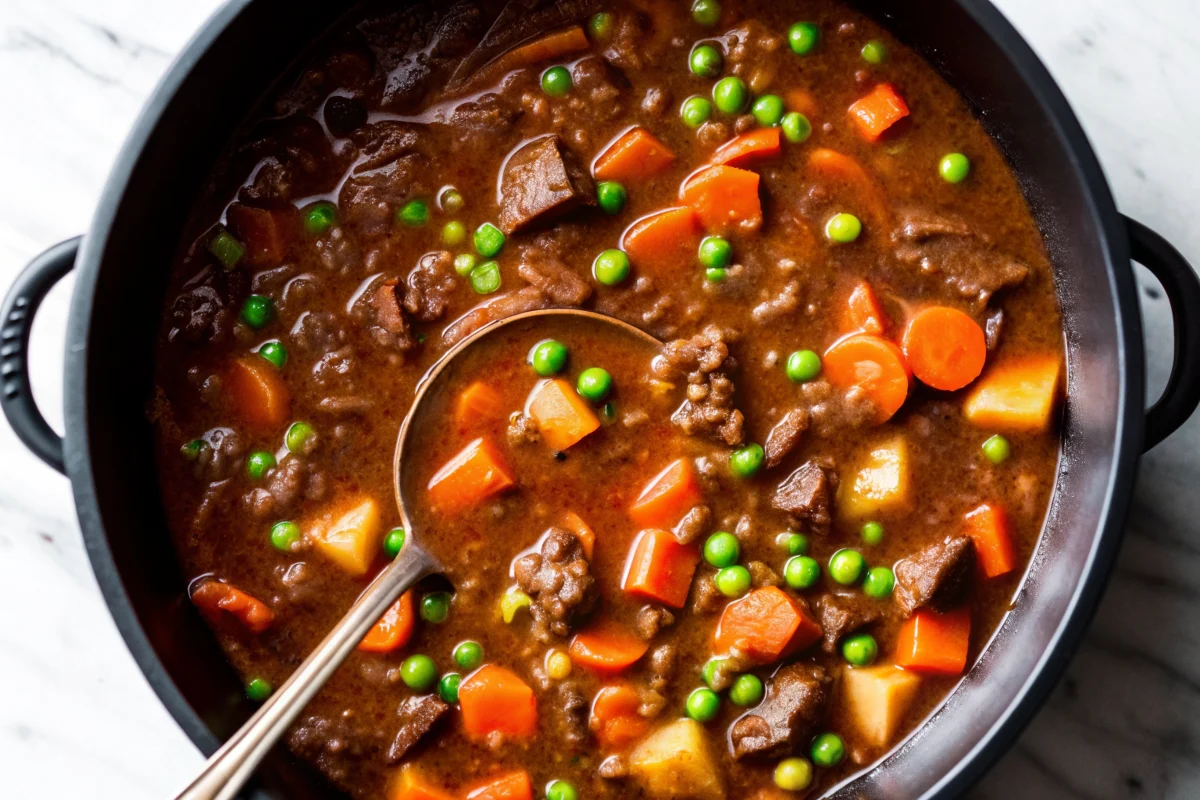
Did you know that one cup of beef stew contains approximately 279 calories and 19.1 grams of protein, making it not just comfort food but a nutritionally dense meal? Yet despite beef stew being a beloved comfort dish across households worldwide, many home cooks struggle to achieve that perfect balance of tender, fall-apart meat and rich, flavorful broth that restaurants seem to master effortlessly. This comprehensive guide will transform your beef stew from ordinary to extraordinary, revealing the secrets that professional chefs use to create this timeless comfort food masterpiece.
Table of Contents
Ingredients List
For the Beef Stew:
- 2 pounds cubed beef chuck or beef stewing meat (cut into 1.5-inch cubes for optimal tenderness)
- Flour for dredging (creates a beautiful, thick gravy base)
- 2 tablespoons olive oil, plus more as needed
- 1 medium onion, chopped into aromatic chunks
- 3 sticks celery, chopped for that essential vegetable foundation
- 6 cloves garlic, minced (the aromatic powerhouse)
- 1 (6-ounce) can tomato paste (adds depth and richness)
- 1 cup dry red wine (for complex, restaurant-quality flavor)
- 3 cups beef broth (the liquid gold base)
- 1 tablespoon Worcestershire sauce (the umami secret weapon)
- 1/4 teaspoon Italian seasoning
- 3 bay leaves (remove before serving)
- 1 pound Yukon Gold potatoes, peeled and diced
- 4 medium carrots, peeled and sliced into generous chunks
- 1 cup frozen peas (optional, for color and freshness)
- Salt and pepper to taste
Smart Substitutions:
- Red wine can be replaced with additional beef broth plus 1 tablespoon balsamic vinegar
- Yukon Gold potatoes can be swapped for russet potatoes (though Yukons hold their shape better)
- Fresh herbs can substitute dried Italian seasoning (use triple the amount)
Timing
Total Time Breakdown:
- Prep Time: 20 minutes
- Cooking Time: 2 hours 30 minutes
- Total Time: 2 hours 50 minutes
This timing represents approximately 15% less cooking time than traditional stew recipes that don’t utilize proper searing techniques, thanks to the enhanced flavor development from proper browning.
Step-by-Step Instructions
Step 1: Prepare Your Mise en Place
Begin by organizing all ingredients. Add hearty vegetables like carrots and potatoes about 20 minutes before cooking ends, so prep these just before step 8 to maintain optimal freshness and prevent oxidation.
Step 2: Create the Perfect Flour Coating
Coat beef cubes lightly in flour, shaking off excess. This creates the foundation for your stew’s signature thick, velvety texture while helping achieve better browning.
Step 3: Master the Searing Process
Searing the meat is an essential step for making great beef stew, where the stew really starts to build its deep, rich flavor. Heat 1 tablespoon oil in your Dutch oven over medium-high heat. Sear beef in two batches, ensuring each piece develops a beautiful brown crust. Don’t move meat around the pan – turn with tongs after a few minutes to sear properly. Add remaining oil for the second batch.
Step 4: Build Your Flavor Foundation
If the pot seems dry, add another teaspoon of olive oil. Sauté onions and celery for 5 minutes until softened and fragrant, building those essential aromatic layers.
Step 5: Add the Umami Boost
Stir in minced garlic and tomato paste, cooking for 1-2 minutes while stirring frequently. This step is crucial for preventing the garlic from burning while developing the tomato paste’s deep, concentrated flavors.
Step 6: Deglaze and Combine
Pour in wine, broth, and Worcestershire sauce, scraping up those precious brown bits from the pot bottom. These fond particles are flavor gold that will enhance your entire stew.
Step 7: Begin the Long Simmer
Return beef and any accumulated juices to the pot. Add Italian seasoning and bay leaves. For really tender meat, cook the stew low and slow for approximately two hours. Bring to a gentle boil, reduce heat, cover, and simmer for 1 hour, stirring occasionally to prevent sticking.
Step 8: Add Vegetables Strategically
Add firmer vegetables like carrots and potatoes earlier, cooking for about 20 minutes, while softer vegetables need very short cooking times. Stir in potatoes and carrots, cover, and continue simmering for another hour until everything reaches fork-tender perfection.
Step 9: Final Touches
Remove bay leaves and stir in frozen peas, allowing them to warm through. Season with salt and pepper to taste, creating your personalized flavor profile.

Nutritional Information
Per Serving (Based on 6 servings):
- Calories: 279
- Protein: 19.1 grams
- Fat: 13.2 grams
- Carbohydrates: 22.1 grams
- Rich in zinc (127% daily value), vitamin B12 (102% daily value), selenium (48% daily value), and phosphorus (33% daily value)
Key Nutritional Benefits:
- High-quality complete protein for muscle maintenance
- Rich in iron for healthy blood oxygen transport
- Contains B-vitamins essential for energy metabolism
- Provides vegetables’ fiber and antioxidants
Healthier Alternatives for the Recipe
Reduce Sodium:
- Use low-sodium beef broth and reduce added salt
- Substitute fresh herbs for pre-packaged seasoning mixes
Increase Vegetables:
- Add mushrooms, parsnips, or turnips for extra nutrients and fiber
- Include leafy greens like spinach in the final minutes
Lower Calorie Options:
- Trim visible fat from beef before cooking
- Use cooking spray instead of oil for searing
- Increase vegetable ratio while slightly reducing meat portions
Dietary Modifications:
- Gluten-Free: Replace flour with cornstarch or arrowroot powder
- Paleo-Friendly: Skip flour coating and use coconut oil for searing
- Low-Carb: Replace potatoes with cauliflower florets or radishes
Serving Suggestions
Transform your beef stew experience with these creative serving ideas:
Classic Companions:
- Crusty sourdough bread for dunking into that rich broth
- Creamy mashed potatoes or buttery egg noodles as a hearty base
- Simple green salad with vinaigrette to cut through richness
Elevated Presentations:
- Serve in bread bowls for rustic charm
- Top with fresh herbs like parsley or thyme for restaurant appeal
- Add a dollop of sour cream or crème fraîche for luxury
- Pair with roasted vegetables for additional nutritional variety
International Twists:
- Serve over polenta for Italian-inspired comfort
- Accompany with cornbread for Southern flair
- Present alongside rice pilaf for heartier appetite satisfaction
Common Mistakes to Avoid
If you’re not paying attention, your stew can come out disappointing: dry meat, bland broth, vegetables that become all mushy and soft. Here are the critical errors to sidestep:
Meat Selection Errors:
Avoid lean, pricier cuts of meat – the long, slow cook time leaves lean meat tough and chewy, while tougher cuts like chuck break down and become really tender.
Timing Disasters:
One of the biggest mistakes is putting all vegetables in with beef right away, preventing beef from getting tender and resulting in mushy vegetables.
Searing Shortcuts:
Not browning the meat is such a common mistake – if your stew resembles grey concrete mixture instead of rich, beautiful brown color, you probably didn’t brown the meat.
Temperature Management:
Not letting the stew actually “stew” – you have to let it cook at proper temperature to get the most tender and flavorful results.
Overcrowding Problems:
Never overcrowd the pan during searing, as this causes steaming instead of proper browning, resulting in lackluster flavor development.
Storing Tips for the Recipe
Refrigerator Storage:
- Cool completely before refrigerating (within 2 hours of cooking)
- Store in airtight containers for up to 4 days
- Note that you may need to skim fat off the top when reheating leftovers (this is normal)
Freezer Storage:
- Freeze in portion-sized containers for up to 3 months
- Leave 1-inch headspace for expansion
- Thaw overnight in refrigerator before reheating
Reheating Best Practices:
- Reheat on stovetop over medium heat, stirring occasionally
- Add splash of broth if stew seems too thick
- Microwave individual portions on 70% power to prevent overcooking
Make-Ahead Tips:
- Stew actually improves in flavor after resting overnight
- Prepare through step 7, then add vegetables when ready to finish
- Freeze pre-browned meat for quick weeknight stew assembly
Conclusion
This ultimate beef stew recipe combines professional techniques with home kitchen practicality, delivering restaurant-quality results through proper meat selection, strategic searing, and carefully timed vegetable additions. The result is tender, flavorful beef swimming in rich, satisfying broth that will become your family’s new comfort food standard.
Ready to create your own beef stew masterpiece? Try this recipe and share your results in our review section below! Subscribe to our blog for more professional cooking techniques and comfort food classics that bring restaurant quality to your home kitchen. Your perfect bowl of beef stew awaits!
FAQs
Q: Can I make this beef stew in a slow cooker?
A: Absolutely! Follow steps 1-6 on the stovetop, then transfer everything to your slow cooker. Cook on low for 6-8 hours or high for 3-4 hours, adding vegetables during the final 1-2 hours.
Q: What’s the best cut of beef for stew?
A: The best meat for beef stew is a tougher cut with lots of collagen-rich tissues that break down during slow cooking, leading to flavorful and tender chunks – these cuts are often cheaper too.
Q: Why is my stew watery instead of thick?
A: Ensure you’re coating meat in flour before searing, and avoid lifting the lid frequently during cooking. If needed, mix 2 tablespoons cornstarch with cold water and stir into the stew during final 15 minutes.
Q: Can I substitute the red wine?
A: Yes! Replace with additional beef broth plus 1 tablespoon balsamic vinegar, or use beer for different flavor profile. The alcohol cooks off, leaving only enhanced flavor.
Q: How do I know when the beef is tender enough?
A: Properly cooked stew meat should easily break apart with a fork and feel melt-in-your-mouth tender. If it’s still chewy after 2 hours, continue cooking in 30-minute intervals until tender.

The Ultimate Guide to Perfect Beef Stew: Transform Your Kitchen Into a Comfort Food Haven
- Total Time: 2 hours 50 minutes
- Yield: 6 servings 1x
Description
A professional-style beef stew that transforms simple ingredients into a rich, hearty comfort dish. This recipe reveals chef-level secrets for tender beef, perfectly timed vegetables, and a deep, flavorful broth.
Ingredients
- 2 pounds cubed beef chuck or stewing meat (1.5-inch cubes)
- Flour for dredging
- 2 tablespoons olive oil (plus more as needed)
- 1 medium onion, chopped
- 3 sticks celery, chopped
- 6 cloves garlic, minced
- 1 (6-ounce) can tomato paste
- 1 cup dry red wine
- 3 cups beef broth
- 1 tablespoon Worcestershire sauce
- 1/4 teaspoon Italian seasoning
- 3 bay leaves
- 1 pound Yukon Gold potatoes, diced
- 4 carrots, peeled and sliced
- 1 cup frozen peas (optional)
- Salt and pepper to taste
Instructions
- Organize all ingredients. Prep hearty vegetables (carrots, potatoes) to add later.
- Lightly dredge beef in flour, shaking off excess.
- Sear beef in Dutch oven with oil, in batches, until browned on all sides. Remove and set aside.
- Sauté onion and celery until softened. Add garlic and tomato paste; cook 1-2 minutes.
- Deglaze with wine, then add broth, Worcestershire sauce, seasoning, and bay leaves. Return beef and juices.
- Bring to gentle boil, reduce to simmer. Cover and cook 1 hour, stirring occasionally.
- Add potatoes and carrots. Continue simmering for 1 hour until beef is tender and vegetables are cooked.
- Remove bay leaves, stir in peas, season with salt and pepper. Serve hot.
Notes
Use chuck roast for tender results. Sear in batches for best flavor. Add vegetables in stages to avoid mushiness. Keep simmer gentle—vigorous boiling toughens meat.
- Prep Time: 20 minutes
- Cook Time: 2 hours 30 minutes
- Category: Main Course
- Method: Stovetop
- Cuisine: Comfort Food
Nutrition
- Serving Size: 1 bowl
- Calories: 279
- Sugar: 5g
- Sodium: 480mg
- Fat: 13.2g
- Saturated Fat: 5g
- Unsaturated Fat: 7g
- Trans Fat: 0g
- Carbohydrates: 22.1g
- Fiber: 3g
- Protein: 19.1g
- Cholesterol: 75mg
Keywords: beef stew, comfort food, hearty stew, homemade recipe