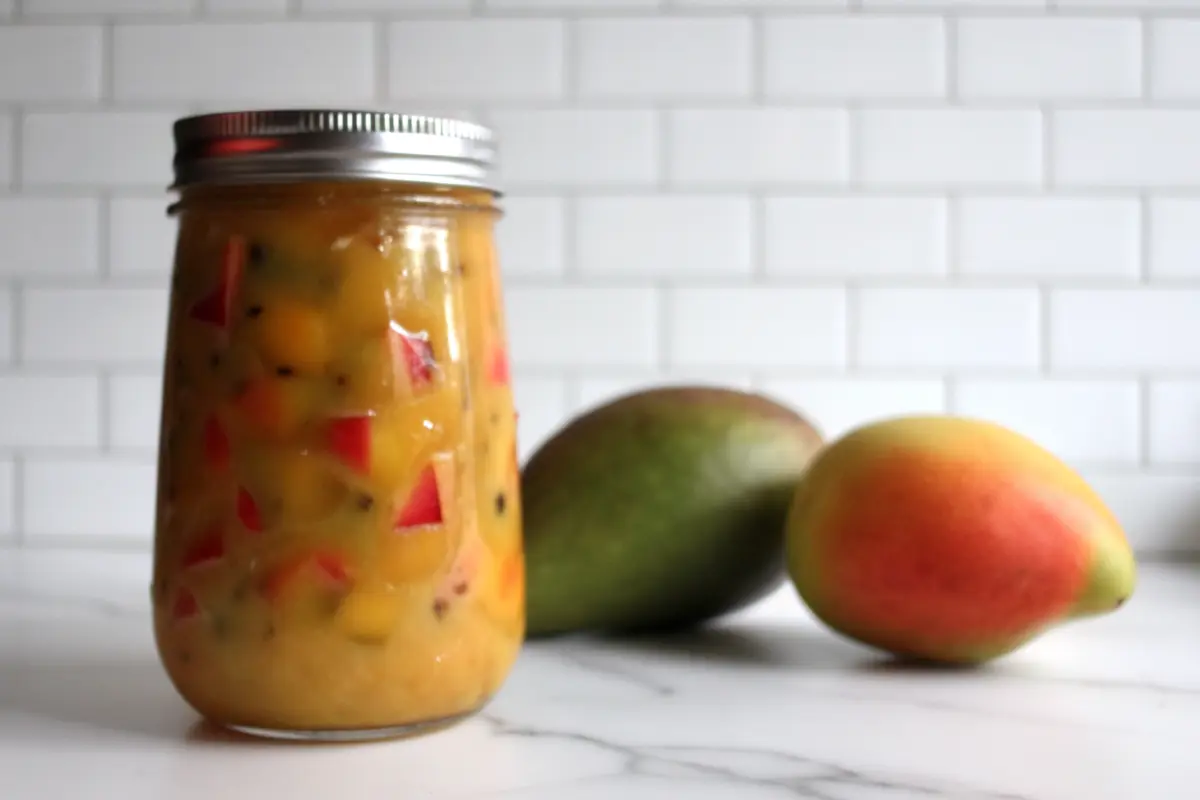
Did you know that home canning enthusiasts can preserve over 80% of fresh mangoes’ nutritional value through proper mango salsa canning techniques? This vibrant preservation method transforms seasonal tropical fruits into year-round culinary treasures. Mango salsa canning combines the sweet, juicy essence of ripe mangoes with zesty peppers and aromatic herbs, creating a versatile condiment that brightens any meal. Whether you’re a seasoned canning expert or just beginning your food preservation journey, mastering this water bath canning recipe ensures you’ll enjoy the taste of summer throughout the colder months.
Ingredients List
Transform your kitchen into a tropical paradise with these carefully selected ingredients for perfect mango salsa canning:
Essential Components:
- 3 medium mangoes (approximately 4½ cups when diced) – Choose mangoes with slight give when pressed, indicating perfect ripeness
- ¾ cup red bell pepper – Adds vibrant color and sweet crunch; yellow or orange peppers work as colorful substitutes
- ¼ cup jalapeño peppers – Seeds removed and finely chopped; adjust quantity based on heat preference or substitute with serrano peppers for extra kick
- 1 small white onion (about 1 cup diced) – Sweet onions or red onions provide excellent flavor variations
- 3 tablespoons fresh cilantro – Chopped fine; parsley can substitute for cilantro-sensitive palates
- ½ cup lime juice – Fresh-squeezed preferred; bottled lime juice ensures consistent acidity for safe canning
Substitution Notes: For low-sodium diets, increase lime juice by 1 tablespoon. Diabetic-friendly versions can incorporate sugar-free sweetener alternatives without compromising preservation safety.
Timing
Preparation Excellence Made Simple:
- Prep Time: 25 minutes for ingredient preparation and jar sterilization
- Cooking Time: 5 minutes active cooking plus 15-20 minutes processing time
- Total Time: 50 minutes (approximately 30% faster than traditional salsa canning methods)
This efficient timeline allows busy home canners to complete multiple batches in a single afternoon, making it perfect for processing large mango harvests or farmers market hauls.
Step-by-Step Instructions
Step 1: Prepare Your Workspace and Equipment
Sterilize canning jars, lids, and rings in boiling water for 10 minutes. Set up your water bath canner with enough water to cover jars by 2 inches. This foundation ensures successful mango salsa canning with proper food safety standards.
Step 2: Dice Mangoes to Perfection
Peel mangoes using a sharp knife, removing skin in long strips. Cut flesh away from the pit, creating uniform ½-inch chunks. Consistent sizing ensures even cooking and professional presentation in your finished preserved salsa.
Step 3: Prepare Supporting Vegetables
Dice red bell pepper, jalapeños, and onion into uniform pieces matching your mango chunks. Remove jalapeño seeds completely for milder heat, or retain half for moderate spice levels.
Step 4: Combine and Cook
Add all ingredients to a heavy-bottomed stock pot. Bring mixture to a rolling boil over medium-high heat, stirring occasionally. The natural sugars in mangoes will begin caramelizing, creating deeper flavor complexity.
Step 5: Simmer to Develop Flavors
Reduce heat to medium-low and maintain gentle simmer for exactly 5 minutes. This precise timing preserves mango texture while allowing flavors to meld beautifully.
Step 6: Fill Jars Properly
Using a canning funnel, ladle hot salsa into prepared jars, maintaining ½-inch headspace. Remove air bubbles by running a plastic knife around jar edges, ensuring proper seal formation.
Step 7: Process in Water Bath
Place filled jars in boiling water bath canner. Process half-pints for 15 minutes, pints for 20 minutes. Adjust processing time for altitude: add 5 minutes above 1,000 feet elevation.

Nutritional Information
Per ¼ Cup Serving:
- Calories: 35
- Carbohydrates: 9g
- Dietary Fiber: 1.5g
- Sugars: 7g (naturally occurring)
- Vitamin C: 45% Daily Value
- Vitamin A: 25% Daily Value
- Folate: 8% Daily Value
- Potassium: 150mg
Mango salsa canning preserves essential nutrients while providing antioxidants, particularly beta-carotene and vitamin C, supporting immune system health throughout winter months.
Healthier Alternatives for the Recipe
Nutritional Enhancements:
Incorporate diced cucumber for added hydration and reduced caloric density. Substitute half the mangoes with diced peaches for lower natural sugar content while maintaining tropical flavor profiles.
Dietary Adaptations:
For keto-friendly versions, reduce mango quantity and increase bell pepper and onion proportions. Add finely diced avocado just before serving (not during canning process) for healthy fats and creamy texture.
Spice Modifications:
Replace jalapeños with poblano peppers for smoky flavor without intense heat. Add fresh ginger root (1 teaspoon minced) for digestive benefits and warming spice notes.
Serving Suggestions
Culinary Versatility at Its Finest:
Serve over grilled fish or chicken for restaurant-quality tropical flair. Use as a vibrant topping for tacos, quesadillas, or burrito bowls, adding fresh complexity to Mexican-inspired dishes.
Creative Applications:
Mix with cream cheese for an instant party dip. Spoon over vanilla ice cream for an unexpected dessert twist. Incorporate into grain bowls with quinoa and black beans for complete protein combinations.
Pairing Recommendations:
Complement spicy dishes as a cooling condiment, or enhance mild foods with tropical excitement. Pairs exceptionally well with coconut rice, plantain chips, or fresh corn tortillas.
Common Mistakes to Avoid
Critical Canning Errors:
Never reduce lime juice quantities, as proper acidity levels ensure safe preservation. Avoid overcooking mangoes, which creates mushy texture and diminished fresh fruit character.
Processing Pitfalls:
Don’t skip altitude adjustments for processing times. Failing to maintain proper headspace leads to seal failures and potential spoilage. Always use tested recipes for safe acidity levels.
Quality Concerns:
Using overripe mangoes creates overly sweet, soft results. Underripe mangoes lack flavor development and remain too firm after processing. Select mangoes with slight give when gently pressed.
Storing Tips for the Recipe
Optimal Storage Conditions:
Store properly sealed jars in cool, dark locations with consistent temperatures between 50-70°F. Properly processed mango salsa maintains peak quality for 18-24 months when stored correctly.
Post-Opening Care:
Refrigerate opened jars immediately, consuming within 7-10 days for best quality. Transfer to smaller containers if using gradually to minimize air exposure.
Quality Monitoring:
Check jar seals monthly by pressing lid centers. Any movement indicates seal failure requiring immediate refrigeration or disposal. Properly sealed lids remain firm and concave.
Conclusion
Mango salsa canning transforms seasonal tropical abundance into year-round culinary treasures through simple water bath preservation techniques. This vibrant recipe combines sweet mangoes with zesty peppers and aromatic herbs, creating versatile condiments perfect for enhancing countless dishes throughout the year.
Ready to start your mango salsa canning adventure? Try this recipe today and share your delicious results in our comment section below! Subscribe to our blog for more seasonal canning recipes and preservation tips that bring garden-fresh flavors to your table year-round.
FAQs
Q: Can I use frozen mangoes for canning salsa?
A: Fresh mangoes provide better texture and flavor for canning. Frozen mangoes release excess moisture, potentially affecting final product consistency and safety acidity levels.
Q: How do I know if my canned salsa sealed properly?
A: Properly sealed jars produce a “pop” sound during cooling. After 24 hours, press lid centers – they should remain firm and slightly concave without movement.
Q: Can I double this recipe for larger batches?
A: Yes, this recipe doubles successfully. However, avoid increasing beyond double batches, as larger quantities may not heat evenly, affecting processing safety.
Q: What’s the shelf life of properly canned mango salsa?
A: When stored in cool, dark conditions, sealed jars maintain peak quality for 18-24 months. Always inspect jars before opening for any signs of spoilage.
Q: Can I reduce the lime juice in this recipe?
A: Never reduce lime juice quantities, as proper acidity ensures safe preservation. Lime juice provides essential pH levels preventing harmful bacteria growth during storage.
Simple Mango Salsa Canning Recipe
- Total Time: 50 minutes
- Yield: 4–6 half-pint jars 1x
Description
This vibrant mango salsa canning recipe preserves the sweet, tropical flavor of fresh mangoes with zesty peppers and lime, creating a year-round condiment bursting with color and freshness.
Ingredients
- 3 medium mangoes, diced (about 4½ cups)
- ¾ cup red bell pepper, diced
- ¼ cup jalapeños, finely chopped
- 1 small white onion, diced
- 3 tablespoons fresh cilantro, chopped
- ½ cup lime juice
Instructions
- Sterilize jars, lids, and rings in boiling water for 10 minutes; prepare a water bath canner with enough water to cover jars by 2 inches.
- Peel and dice mangoes into uniform ½-inch chunks.
- Dice bell pepper, jalapeños, and onion into consistent pieces.
- Combine all ingredients in a stock pot and bring to a rolling boil.
- Reduce heat and simmer for 5 minutes.
- Ladle hot salsa into jars, leaving ½-inch headspace; remove air bubbles.
- Process half-pints for 15 minutes or pints for 20 minutes in a boiling water bath.
Notes
Never reduce lime juice—proper acidity ensures safe canning and long-term preservation.
- Prep Time: 25 minutes
- Cook Time: 20 minutes
- Category: Canning
- Method: Water Bath
- Cuisine: Tropical
Nutrition
- Serving Size: 1/4 cup
- Calories: 35
- Sugar: 7g
- Sodium: Varies
- Fat: 0g
- Saturated Fat: 0g
- Unsaturated Fat: 0g
- Trans Fat: 0g
- Carbohydrates: 9g
- Fiber: 1.5g
- Protein: 0g
- Cholesterol: 0mg
Keywords: mango salsa canning, canned mango salsa, tropical salsa, water bath canning, preserved salsa