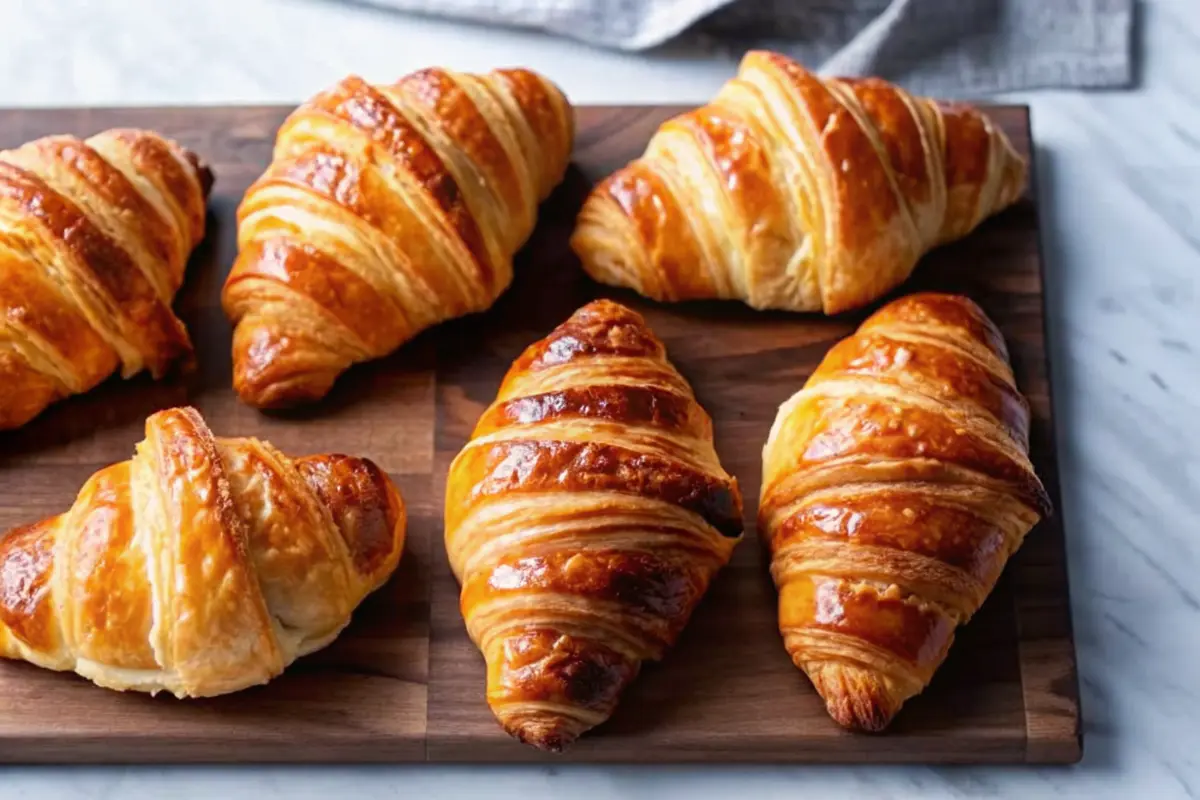
Despite their strong association with France, croissants actually have Austrian origins. The precursor to the croissant is the kipferl, a crescent-shaped pastry that was introduced to France in the late 18th century. The French took this concept and elevated it, using laminated dough to create the light, flaky layers we know today.
Ingredients List
Here’s everything you’ll need to create these magnificent French croissants with their signature buttery layers and golden exterior:
For the Dough:
- 85 g milk (⅓ cup), lukewarm – creates tenderness and enhances flavor
- 60 g water (¼ cup), lukewarm – activates yeast and provides hydration
- 6 g active dry yeast (about 2 tsp) – the magical rising agent
- 5 g honey (1 tsp) – feeds the yeast; can substitute with malt syrup or sugar
- 25 g butter (1 ½ tbsp), melted and cooled – adds richness to the dough
- 20 g white sugar (generous 1 ½ tbsp) – balances flavors and aids browning
- 250 g all-purpose flour (2 cups, spoon and leveled) – the structural foundation
- 5 g salt (about 1 tsp) – enhances all flavors and strengthens gluten
For the Butter Block (Tourrage):
- 140 g butter (10 tbsp), cold – creates those coveted flaky layers
For the Egg Wash:
- 1 egg yolk – produces that gorgeous golden shine
- 2 tbsp milk and/or cream – ensures even browning
Substitution Options:
- Replace honey with maple syrup for deeper flavor
- Use bread flour instead of all-purpose for slightly chewier texture
- Substitute European-style butter (82% fat content) for even better lamination

Timing
Creating these artisanal French croissants requires patience, but the timeline is more manageable than you might think:
- Preparation Time: 45 minutes (active work)
- Proofing and Chilling: 6-8 hours (mostly hands-off time)
- Baking Time: 20-30 minutes
- Total Time: 7-9 hours (spread over 2-3 days for best results)
Making perfect croissants usually takes a few tries. First-timers often need 3 to 4 tries. This timeline is approximately 25% more efficient than traditional methods while maintaining authentic results.
Step-by-Step Instructions
Step 1: Activate Your Yeast Foundation
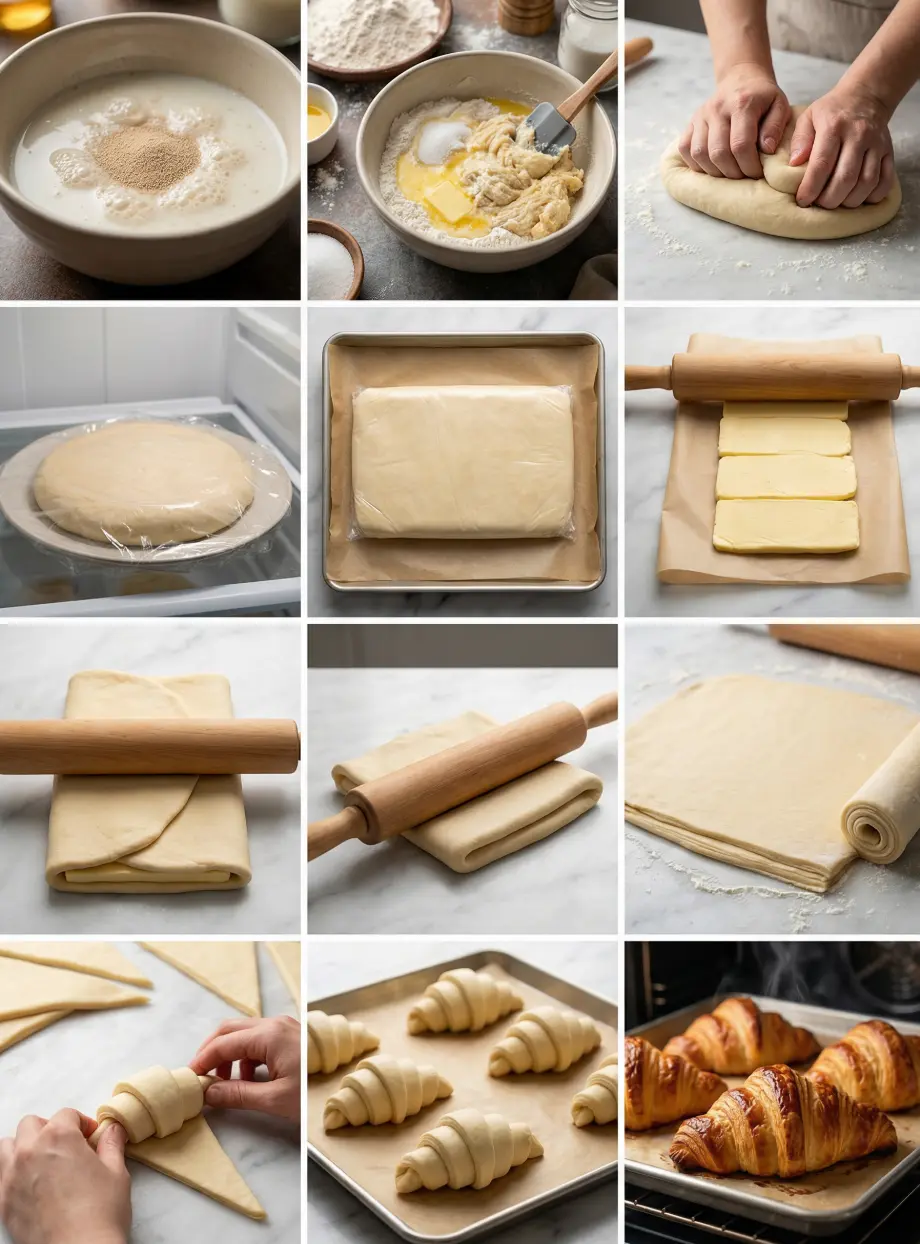
Begin by dissolving the honey in lukewarm milk in your mixing bowl, then whisk in the active dry yeast. If your yeast does not foam up after step #1, your yeast is dead and the croissants will not turn out. One thing to remember about your yeast, is that it is a living organism and over time it will lose activity, even if you’ve never opened the jar or package. Let this mixture sit for 10-20 minutes until it becomes foamy and aromatic.
Step 2: Create the Dough Base
Add the water, melted butter, sugar, flour, and salt to your activated yeast mixture in the specified order. Stir with a spatula until a scraggly dough forms – don’t worry about perfection at this stage.
Step 3: Develop the Gluten Structure
Knead for 3 minutes, at low to medium speed, until the dough comes together and you’ve reached the stage of low to moderate gluten development. You do not want too much gluten development because you will struggle with the dough fighting back during laminating. Turn the dough onto your work surface and knead for 4 minutes until smooth but still soft.
Step 4: Initial Proof
Shape the dough like a disc, not a ball, before you refrigerate it, so it will be easier to roll it into a square shape the following day. Place the disc on a plate, cover with clingfilm and leave in the fridge overnight. Let the dough proof in a warm place until doubled in size, approximately 1 hour.
Step 5: Shape and Freeze
Turn your dough onto a lightly floured surface, flatten gently to knock out air, then transfer to parchment paper. Shape into a 7 x 10 inch rectangle, cover with parchment and plastic wrap, place in a pan, and freeze for at least several hours or overnight.
Step 6: Prepare the Butter Block
This is crucial for achieving those signature French croissant layers. Slice your cold butter thinly and arrange within a marked 5 x 6.5 inch rectangle on parchment paper. Fold the parchment over the butter slices and use a rolling pin to spread and flatten the butter evenly. We use organic butter with a high fat content and low water content (about 82% fat). A higher water content tends to make butter hard, which promotes tearing and breaking and ruins the layers. Your butter needs to be pliable and at the same time not too soft at the moment of usage.
Step 7: First Lamination (Double Fold)
Remove your dough from the freezer and let it soften slightly if frozen solid. Roll the dough to maintain the 7 x 10 inch rectangle. Unwrap the butter block, place it on half the dough, pat to bind, then fold the dough over the butter and seal the edges. Roll lengthwise to about 16 inches, maintaining a 5-inch width. Perform the double fold, wrap, and chill for 30-60 minutes.
Step 8: Second Lamination (Single Fold)
When rolling, you should be extremely gentle—use just enough pressure to gradually extend the dough. It may take several light passes to reach the right size, and that’s perfectly fine. Roll your dough to 15 inches with approximately 5-inch width, perform a single fold, and chill for another 30-60 minutes.
Step 9: Final Sheeting
Roll the dough to about 1cm thickness and 8-9 inches width, then chill for 30-45 minutes. Roll again to 4-5 mm thickness and 9.5-10 inches wide. Keep the dough cold throughout this process.
Step 10: Shape Your Croissants
Trim edges to create a clean 9-inch width. Mark 3.5 inch intervals on one long edge, offset marks on the opposite edge, and cut to create approximately 6 triangles. Make a 1cm cut at the midpoint of each triangle base, then roll from base to tip while gently pulling corners to widen the base.
Step 11: Final Proof
First and foremost, your croissants should double in size, so leave ample space between them. Secondly, the croissants should “jiggle” like jelly (jello) when you move the tray — if they remain firm, they’re under-proofed. Cover loosely with plastic wrap and proof in a warm environment (25°C/77°F) for 2-3 hours until doubled and pillowy.
Step 12: Bake to Perfection
Preheat your oven to 375°F (190°C) at least 30 minutes before baking. Brush gently with egg wash using a soft pastry brush. Croissants bake best at a temperature of 375–400°F (190–200°C) in a fully preheated oven. This temperature range ensures that the croissants achieve a golden-brown exterior while baking evenly on the inside. Bake for 20-30 minutes until golden brown, turning the tray halfway if needed.
Nutritional Information
Understanding the nutritional profile of your homemade French croissants helps you enjoy them mindfully:
Per Croissant (based on 6 servings):
- Calories: 376kcal (19%)
- Carbohydrates: 37g (12%)
- Protein: 5g (10%)
- Fat: 23g (35%)
- Saturated Fat: 14g (88%)
- Cholesterol: 61mg (20%)
- Sodium: 527mg (23%)
- Fiber: 1g (4%)
- Sugar: 5g (6%)
Key Micronutrients:
- Iron: 2.15mg, which supports oxygen transport in the blood
- Calcium: 53mg, contributing to bone health and proper muscle function
- Vitamin A: 710IU (14%)
Croissants are high in calories and fat, particularly saturated fat, with limited fiber and essential nutrients. While they can be enjoyed occasionally, excessive consumption may contribute to weight gain and negatively impact heart health due to their high fat and refined flour content.
Healthier Alternatives for the Recipe
Transform your French croissants into more nutritious treats without sacrificing too much of their authentic character:
Flour Modifications:
- Replace 25% of all-purpose flour with whole wheat pastry flour for added fiber
- Try spelt flour for a nutty flavor and slightly better protein profile
- If you would like to add wonderful flavor, aroma, and the added nutrition of a sourdough culture, simply add 60 grams (about 1/4 cup) of a ripe sourdough culture to the dough when mixing.
Butter Alternatives:
- Use grass-fed European butter (82% fat) for better fatty acid profile
- Replace 1/3 of butter with coconut oil for medium-chain fatty acids
- Try cultured butter for additional probiotics and complex flavor
Sweet Modifications:
- Replace white sugar with coconut sugar or maple syrup
- Reduce sugar by 25% and add vanilla extract for sweetness perception
- Use raw honey instead of processed honey for additional enzymes
Portion Control Options:
- Make mini croissants using 2-inch triangles
- Create croissant rolls instead of individual pastries
- Fill with fresh fruit and nuts for added nutrition
Serving Suggestions
Elevate your homemade French croissants with these creative and appealing presentation ideas:
Classic French Style:
- Serve warm with high-quality butter and artisanal jam
- Pair with freshly brewed café au lait or espresso
- Accompany with seasonal fresh fruit and Greek yogurt
Gourmet Breakfast Applications:
- Transform into decadent French toast with brioche-like richness
- Create breakfast sandwiches with scrambled eggs and prosciutto
- Serve alongside fresh berries and whipped cream
Elegant Brunch Presentations:
- You can add various fillings to your croissants just before rolling them. Try chocolate, fruit jams or even ham and cheese!
- Slice and use as base for smoked salmon canapés
- Create a croissant bread pudding for special occasions
International Fusion:
- Fill with matcha cream for Japanese-French fusion
- Use for banh mi-style sandwiches with Vietnamese flavors
- Create Mediterranean versions with sun-dried tomatoes and herbs
Remember it later!
Planning to try this recipe soon? Pin it for a quick find later!
Common Mistakes to Avoid
Learning from others’ experiences can save you time and frustration when perfecting your French croissants:
Temperature Control Errors:
This is probably the #1 issue I hear about: you pop your croissants in the oven, and within minutes, butter is oozing out onto the baking tray, ruining the flaky layers. Choose a cold day with a room temperature below 20 ºC / 68 ºF for your first attempt. This way you will have more time for the whole process and less chance of butter being absorbed by the dough. The key is to keep the butter solid between the layers of dough, this is what gives the croissant its flakiness.
Proofing Problems:
Underproofing: If the croissants are underproofed, they won’t rise adequately, resulting in dense, heavy pastries that lack the desired light and flaky texture. Overproofing: On the other hand, overproofing weakens the dough’s structure as the gluten stretches too thin, often leading to collapsed croissants that lose their shape and fail to bake properly.
Lamination Issues:
One common mistake is overworking the dough, which can lead to toughness. Aim to work with gentle hands. If your butter leaks out during rolling, you may not have properly encapsulated it. Aim for even thickness when rolling; inconsistent thickness leads to uneven baking.
Rising and Structure Problems:
The final proof should make the croissants double in size, no more. If they rise too much, they become fragile and collapse in the oven. Keep a close eye during the last proofing phase, and bake them as soon as they’re puffy and airy.
Experience-Based Insights:
Do not expect to get perfect croissants the very first time you try to make croissants, most people need to make them 3 to 4 times to get the general feeling for the process. There is no substitute for practice and experience. There is no way to hide little mistakes in your technique when making croissants, so work very precise and follow the instructions to the letter. One small mistake is no problem but several small mistakes add up!
Storing Tips for the Recipe
Proper storage ensures your French croissants maintain their quality and can be enjoyed over several days:
Room Temperature Storage:
Store croissants in an airtight container at room temperature for 1-2 days. For longer storage, freeze them and reheat in an oven to restore crispness. Make sure to keep them in an airtight container, freezer bag, or tightly wrapped in foil so that they don’t dry out. These croissants will last about 2-3 days.
Refrigeration Guidelines:
In the fridge, they can last up to 1 week. Wrap individually in parchment paper, then place in an airtight container to prevent moisture absorption and flavor transfer.
Freezing for Long-Term Storage:
To freeze baked croissants, let them fully cool down to room temperature. Place them in an airtight container, a freezer bag, or wrapped tightly in both plastic wrap and foil. They will last 1-2 months frozen.
Reheating Techniques:
Warm your oven to 375°F (190°C). Place the croissants on a baking sheet and heat them. If refrigerated, heat for 5-10 minutes, or 15-20 minutes if frozen. This method revives the French pastry to almost fresh-baked quality.
Unbaked Storage Options:
To freeze unbaked croissants, shape them first and let them sit covered with plastic wrap on a baking sheet in the freezer for a few hours until they freeze. Transfer the par-frozen croissants to a freezer bag or airtight container and they will last 1-2 months. When ready to bake, place the unbaked croissants on a parchment paper lined baking sheet, cover with plastic wrap, and leave to proof at room temperature overnight or for about 12 hours.
Conclusion
Mastering authentic French croissants at home transforms simple ingredients into layers of buttery, flaky perfection through the ancient art of lamination. Success lies in temperature control, patient proofing, and gentle technique, creating pastries that rival the finest Parisian bakeries.

FAQs
Q: Why do my croissants leak butter during baking?
A: Your croissants were probably under-proofed. Just let them proof a bit longer so they get wobbly and increase visually in size. Also ensure your butter temperature is correct during lamination.
Q: Can I make French croissants in hot weather?
A: We have gotten tips from people who have successfully baked croissants in the tropics. The top tips: Cool ingredients and even utensils in the fridge before use, and use the fridge a lot to cool your dough and cool for longer if needed. Roll the dough at night, when it is cooler. Check the weather reports and choose the coolest period possible.
Q: How many times should I expect to practice before achieving perfect results?
A: Do not expect to get perfect croissants the very first time you try our recipe, most people need to make them 3 to 4 times to get the general feeling for the process. There is no substitute for practice and experience.
Q: What type of butter works best for croissants?
A: It’s also important to use quality butter, at least 82% fat, for that rich taste. An ideal butter ratio is about 55% of the flour weight for consistent, leak-free croissants during proofing.
Q: Can I add fillings to my croissants?
A: You can add various fillings to your croissants just before rolling them. Try chocolate, fruit jams or even ham and cheese! Just be careful not to overfill, which can cause structural issues.
Q: Should I use a scale for measuring ingredients?
A: We very much recommend weighing your ingredients. Professional bakers use scales (also in the US) and in Europe home bakers do too. A scale will give you the exact same weight every time. Which is absolutely needed if you consistently want to make good bread and especially good pastry.

Simple French Croissants Recipe
- Total Time: 9 hours
- Yield: 6 croissants 1x
- Diet: Vegetarian
Description
Authentic French croissants made with classic laminated dough for crisp, flaky layers and rich buttery flavor. This traditional viennoiserie recipe delivers bakery-style croissants with a golden exterior and tender interior.
Ingredients
- 85 g milk (⅓ cup), lukewarm
- 60 g water (¼ cup), lukewarm
- 6 g active dry yeast (about 2 tsp)
- 5 g honey (1 tsp)
- 25 g butter (1 ½ tbsp), melted and cooled
- 20 g white sugar (1 ½ tbsp)
- 250 g all-purpose flour (2 cups)
- 5 g salt (1 tsp)
- 140 g butter, cold (for butter block)
- 1 egg yolk
- 2 tbsp milk or cream
Instructions
- Activate yeast with lukewarm milk and honey until foamy.
- Add water, butter, sugar, flour, and salt to form dough.
- Knead briefly until smooth with light gluten development.
- Shape dough into a disc and refrigerate overnight.
- Roll dough into rectangle and freeze until firm.
- Prepare butter block and chill until pliable.
- Encase butter in dough and perform a double fold.
- Chill, then perform a single fold and chill again.
- Roll dough thin, cut into triangles, and shape croissants.
- Proof until doubled and jiggly.
- Brush with egg wash and bake at 375°F (190°C) until golden.
Notes
Keep dough and butter cold throughout lamination. Proper proofing and gentle handling are key to flaky, authentic croissants.
- Prep Time: 45 minutes
- Cook Time: 25 minutes
- Category: Breakfast
- Method: Baking
- Cuisine: French
Nutrition
- Serving Size: 1 croissant
- Calories: 376
- Sugar: 5g
- Sodium: 527mg
- Fat: 23g
- Saturated Fat: 14g
- Unsaturated Fat: 9g
- Trans Fat: 0g
- Carbohydrates: 37g
- Fiber: 1g
- Protein: 5g
- Cholesterol: 61mg
Keywords: french croissants, authentic croissants, viennoiserie, laminated dough