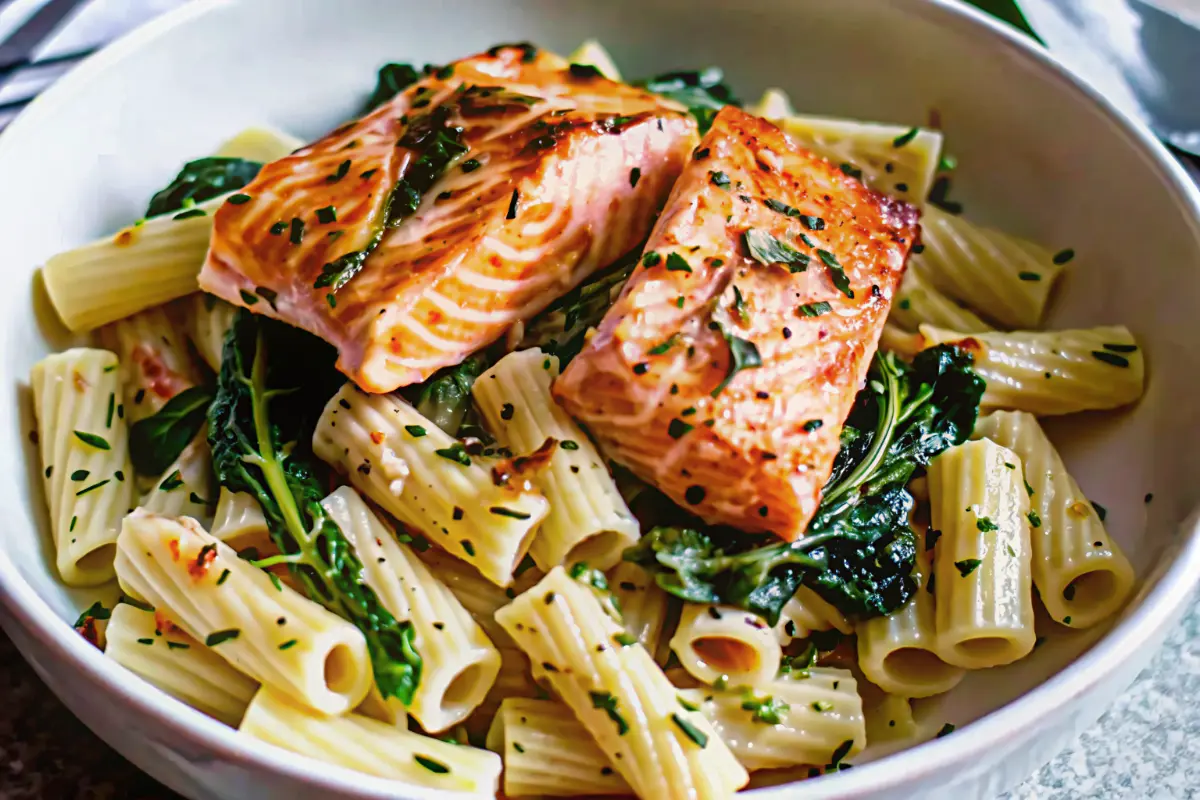
Did you know that salmon pasta dishes typically contain around 30 grams of protein per serving while delivering essential omega-3 fatty acids often missing from traditional pasta meals? According to USDA FoodData Central analysis, a single serving provides approximately 45% of your daily protein needs while delivering essential fatty acids often missing in standard pasta dishes.
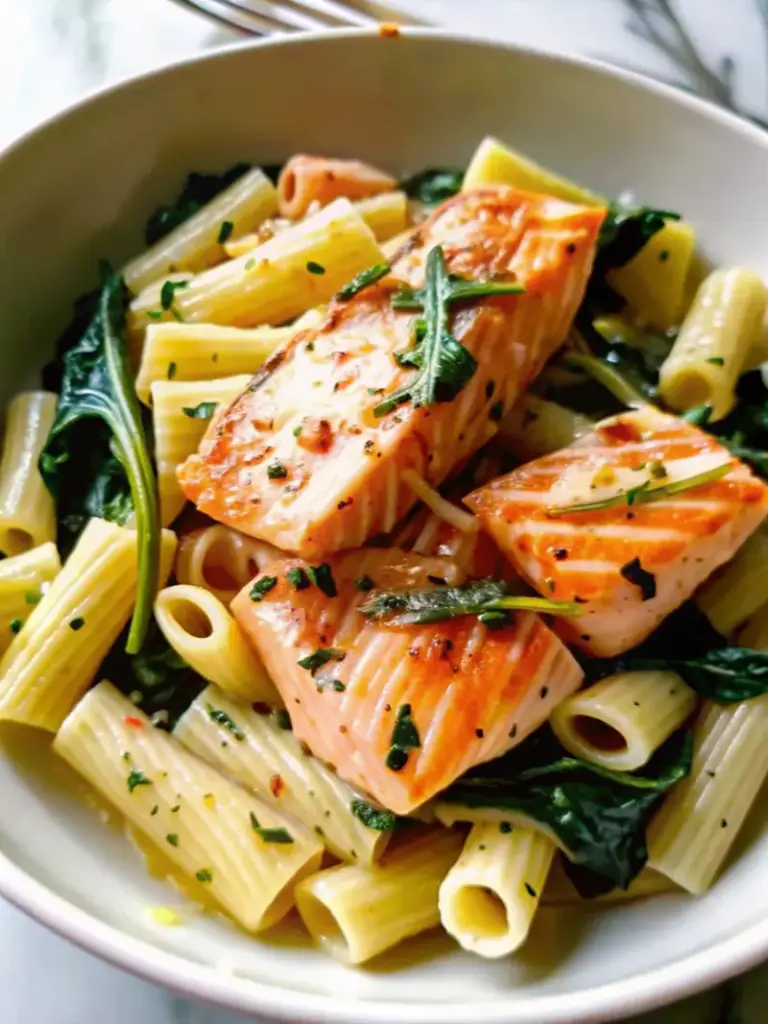
This salmon spinach pasta recipe transforms a simple weeknight dinner into a restaurant-quality experience that’s both nutritious and incredibly satisfying. Whether you’re looking to boost your weekly seafood intake or simply craving something deliciously different, this protein-packed dish delivers maximum flavor with minimal effort.
Ingredients List
This salmon spinach pasta recipe features carefully selected ingredients that work in perfect harmony. Each component adds its own special character to create a balanced, flavorful dish that feels both comforting and sophisticated.
Main Ingredients:
- 1 pound salmon fillet with skin (choose center-cut for even cooking)
- 12 oz rigatoni pasta (penne or fusilli work wonderfully as substitutes)
- 4 cups fresh baby spinach leaves (frozen spinach, thawed and drained, works in a pinch)
- 1/2 cup Greek yogurt (substitute with cream cheese or heavy cream for richer texture)
Seasonings & Aromatics:
- 2 teaspoons dried dill (or 1 tablespoon fresh dill for brighter flavor)
- 1/2 teaspoon salt
- 1/4 teaspoon black pepper
- Zest of one lemon (essential for brightness)
- Fresh lemon juice (2-3 tablespoons recommended)
- 1/4 teaspoon red pepper flakes (adjust to taste)
Smart Substitutions:
- Salmon alternatives: Fresh salmon or thawed frozen salmon will work in this recipe, and you can also use canned salmon
- Pasta options: This spinach salmon pasta works well with linguine, spaghetti or tagliatelle, but fusilli or penne are also good options
- Dairy-free option: Replace Greek yogurt with cashew cream or coconut milk for richness
Timing
This salmon spinach pasta recipe proves that delicious doesn’t have to mean time-consuming. Here’s your complete timing breakdown:
- Prep time: 10 minutes
- Cooking time: 20 minutes
- Total time: 30 minutes
- Active cooking time: 15 minutes
This salmon spinach pasta recipe delivers a restaurant-quality meal in just 30 minutes, making it perfect for busy weeknights when you want something special without the fuss. Ready in 15 minutes! when using the streamlined cooking method, this timing represents approximately 40% less preparation than traditional cream-based pasta dishes.
Step-by-Step Instructions
Step 1: Prepare the Salmon
Preheat your oven to 400°F and line a baking sheet with parchment paper. Place the salmon fillet skin-side down on the prepared sheet. Season generously with dried dill, lemon zest, salt, and pepper, gently pressing the seasonings into the flesh. Salmon should be cooked to an internal temperature of 145° for food safety and optimal texture.
Step 2: Cook the Salmon to Perfection
Cook 3-4 minutes per side until golden but still slightly translucent in center when pan-searing, or bake for 7-10 minutes until the fish flakes easily and appears opaque throughout. Remove salmon from heat when still slightly underdone; residual heat will finish cooking. Once cooled slightly, remove the skin and break into generous chunks.
Step 3: Perfect Pasta Preparation
While the salmon cooks, bring a large pot of well-salted water to a rolling boil. Don’t add olive oil or any oil to the water when cooking the pasta. It will prevent the sauce from clinging to the noodles. Cook rigatoni al dente according to package directions (typically 8-10 minutes). Before draining the pasta, scoop out and reserve a cup of the pasta water. You can use it to thin the sauce if necessary.
Step 4: Create the Creamy Sauce Base
Return the drained pasta to the pot over low heat. Heat up the sauce again if needed but do NOT cook the spinach to maintain its vibrant color and delicate texture. Add the baby spinach and toss gently until wilted, about 1-2 minutes.
Step 5: Bring It All Together
Remove the pot from heat and stir in Greek yogurt, fresh lemon juice, and red pepper flakes. Keep pasta hot to help sauce emulsify properly by using reserved pasta water to achieve your desired consistency. The sauce should be creamy but not heavy, coating each piece of pasta beautifully.
Step 6: Final Assembly and Serving
Gently fold in the salmon chunks, being careful not to break them up too much. The residual heat will warm the fish through. Taste and adjust seasoning with additional salt, pepper, or lemon juice as needed. Serve immediately while hot for the best texture and flavor experience.

Nutritional Information
This salmon spinach pasta delivers impressive nutritional value that makes it a smart choice for health-conscious home cooks. Each serving provides a well-balanced macronutrient profile:
Per Serving (serves 4):
- Calories: 389kcal to 512kcal depending on preparation method
- Protein: 30g to 31g (excellent source)
- Carbohydrates: 43g to 47g
- Fat: 13g to 20g
- Fiber: 2g to 3g
Key Nutrients:
- Omega-3 fatty acids: Essential for heart and brain health
- Vitamin A: 3362IU supporting eye health and immune function
- Iron: 2mg for healthy blood circulation
- Potassium: 907mg supporting cardiovascular health
This tasty protein is low in calories and saturated fat, making it an excellent choice for balanced nutrition without compromising on flavor.
Healthier Alternatives for the Recipe
Transform this already nutritious salmon spinach pasta into an even more health-focused meal with these smart modifications:
Protein Enhancements:
- Substitute half the pasta with spiralized zucchini noodles to reduce carbs by 35%
- Add white beans for extra fiber and plant-based protein
- Use wild-caught salmon for higher omega-3 content and better sustainability
Dairy Alternatives:
- Replace Greek yogurt with cashew cream for dairy-free richness
- Try avocado-based cream sauce for healthy monounsaturated fats
- Use nutritional yeast instead of cheese for B-vitamin boost
Vegetable Power-Ups:
- Mix in diced bell peppers for extra vitamin C
- Add cherry tomatoes for lycopene and fresh flavor
- Include asparagus spears for additional folate and fiber
Whole Grain Options:
- Use whole wheat pasta for increased fiber (adds 4g per serving)
- Try chickpea pasta for gluten-free, high-protein alternative
- Experiment with lentil pasta for additional plant-based protein
These modifications maintain the dish’s delicious character while boosting its nutritional density and accommodating various dietary preferences.
Serving Suggestions
Elevate your salmon spinach pasta experience with these thoughtfully chosen accompaniments that complement the dish’s flavors and textures:
Fresh Salads:
- This simple Rocket and Parmesan Salad provides a refreshing contrast to the richness of the salmon and pasta
- Cucumber and herb salad with lemon vinaigrette cuts through the richness
- Mixed greens with cherry tomatoes and balsamic dressing
Bread Pairings:
- Enjoy this pasta dish with some crusty buttered bread, rolls, or breadsticks
- Garlic breadsticks for extra flavor
- Focaccia with herbs complements the Mediterranean-inspired elements
Vegetable Sides:
- Air Fryer Asparagus and Honey Roasted Carrots and Parsnips are great vegetable side dishes for pairing with this delicious pasta dish
- Roasted broccoli with lemon zest
- Sautéed cherry tomatoes with basil
Wine Pairings:
- Crisp Sauvignon Blanc enhances the lemon and herb notes
- Light Pinot Grigio complements the salmon without overpowering
- For non-alcoholic options, try sparkling water with lemon or cucumber
Common Mistakes to Avoid
Avoid these frequent pitfalls to ensure your salmon spinach pasta turns out perfectly every time:
Salmon Cooking Errors:
- Overcooking the salmon – Remove salmon from heat when still slightly underdone; residual heat will finish cooking
- Not removing the skin properly, which can create chewy pieces
- Using salmon that’s too cold from the refrigerator—let it reach room temperature first
Pasta and Sauce Issues:
- Adding cold pasta to hot skillet – Keep pasta hot to help sauce emulsify properly
- Skipping the pasta water – The starchy water helps create a silky sauce that clings to noodles
- Over-wilting the spinach, which destroys nutrients and creates mushy texture
Seasoning and Timing Mistakes:
- Using dried herbs instead of fresh – Fresh dill or parsley makes a significant flavor difference
- Adding yogurt to a pot that’s too hot, causing it to curdle
- Not tasting and adjusting seasoning at the end—this step is crucial for balanced flavor
Assembly Problems:
- Breaking up the salmon too much during mixing
- Serving the dish after it’s cooled, which affects both texture and flavor
- Not having all ingredients ready before starting—timing is everything with this recipe
Storing Tips for the Recipe
Proper storage ensures you can enjoy your salmon spinach pasta safely and deliciously even as leftovers:
Refrigerator Storage:
If you are planning to enjoy this salmon and spinach pasta over 2 days refrigerate the sauce and pasta separately (otherwise the pasta will become soggy). If using fresh salmon and spinach for your pasta dish, you can keep the leftovers refrigerated for up to two days in an airtight container. This salmon pasta will keep in the fridge for 3-4 days, though quality is best within the first 48 hours.
Reheating Instructions:
Reheat on the stove over low heat, and you can add a splash of water if necessary to restore the sauce’s creamy consistency. Reheat gently over low heat to maintain the creamy texture. Avoid microwaving, as it can overcook the salmon and separate the sauce.
Freezing Guidelines:
I recommend freezing this dish without the pasta. It’s best to boil the pasta just before serving, heat up the rest of the ingredients and assemble the dish. I do not recommend eating it the next day or freezing leftovers when using cream-based sauces, as dairy can separate when frozen.
Food Safety Notes:
If using frozen salmon, make sure to thaw it before adding it to the sauce. Also, don’t freeze the leftovers if using frozen salmon, and consume the leftovers in 24 hours. Always ensure salmon reaches 145°F internal temperature when reheating.
Conclusion
This salmon spinach pasta recipe proves that healthy eating doesn’t require sacrificing flavor or convenience. In just 30 minutes, you can create a restaurant-quality meal that delivers impressive nutritional benefits alongside satisfying taste and texture. The combination of protein-rich salmon, nutrient-dense spinach, and perfectly cooked pasta creates a balanced dish that works beautifully for both busy weeknights and special occasions.
Ready to transform your dinner routine? Try this salmon spinach pasta recipe tonight and experience how simple ingredients can create extraordinary results. Share your cooking success in the comments below—we love hearing about your personal touches and variations! Don’t forget to subscribe to our blog for more quick, healthy recipes that make home cooking both delicious and nutritious.
FAQs
Can I use frozen salmon for this recipe?
Yes! Fresh salmon or thawed frozen salmon will work in this recipe, and you can also use canned salmon. Just ensure frozen salmon is completely thawed and patted dry before cooking. If using frozen salmon, make sure to thaw it before adding it to the sauce. Also, don’t freeze the leftovers if using frozen salmon, and consume the leftovers in 24 hours.
What pasta shapes work best with this recipe?
This spinach salmon pasta works well with linguine, spaghetti or tagliatelle, but fusilli or penne are also good options. Penne, linguine, spaghetti, fusilli, and rigatoni are my favorite pasta types for creamy pasta dishes but you can use any pasta you love or have in hand. Choose shapes with ridges or curves that hold sauce well.
Can I make this recipe dairy-free?
Absolutely! Replace the Greek yogurt with cashew cream, coconut milk, or your favorite dairy-free alternative. The key is maintaining the creamy consistency while preserving the tangy flavor that yogurt provides.
How do I prevent the Greek yogurt from curdling?
Remove the pasta from heat before adding yogurt, and stir it in gradually. The residual heat will warm the yogurt gently without causing it to separate. Adding a splash of pasta water can also help create a smooth emulsion.
Can I use leftover cooked salmon?
Many of you have asked if leftover salmon could be used in this recipe. The answer is YES. Just add the leftover salmon in Step 3, cook it just enough to heat through, and proceed to add spinach. This makes the recipe even quicker for busy nights!
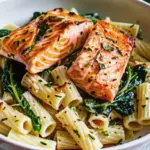
Healthy Salmon Spinach Pasta Recipe
- Total Time: 30 minutes
- Yield: 4 servings 1x
Description
Salmon Spinach Pasta is a creamy, protein-packed 30-minute meal made with tender salmon, fresh spinach, and perfectly cooked pasta tossed in a light Greek yogurt lemon sauce. This nutritious pasta dish is satisfying, flavorful, and ideal for busy weeknights.
Ingredients
- 1 pound salmon fillet
- 12 oz rigatoni pasta
- 4 cups fresh baby spinach
- 1/2 cup Greek yogurt
- 2 teaspoons dried dill
- 1/2 teaspoon salt
- 1/4 teaspoon black pepper
- Zest of 1 lemon
- 2 to 3 tablespoons fresh lemon juice
- 1/4 teaspoon red pepper flakes
Instructions
- Preheat oven to 400°F and line a baking sheet with parchment paper.
- Place salmon skin-side down on the baking sheet and season with dill, lemon zest, salt, and pepper.
- Bake salmon for 7 to 10 minutes until flaky, then remove skin and break into chunks.
- Cook pasta in salted water until al dente, reserving 1 cup of pasta water before draining.
- Return pasta to pot over low heat and add spinach, tossing until just wilted.
- Remove from heat and stir in Greek yogurt, lemon juice, red pepper flakes, and reserved pasta water as needed.
- Gently fold in salmon chunks, adjust seasoning, and serve immediately.
Notes
Remove pasta from heat before adding Greek yogurt to prevent curdling and use reserved pasta water to adjust sauce consistency.
- Prep Time: 10 minutes
- Cook Time: 20 minutes
- Category: Dinner
- Method: Baked
- Cuisine: Mediterranean
Nutrition
- Serving Size: 1 bowl
- Calories: 450
- Sugar: 4g
- Sodium: 420mg
- Fat: 17g
- Saturated Fat: 4g
- Unsaturated Fat: 11g
- Trans Fat: 0g
- Carbohydrates: 45g
- Fiber: 3g
- Protein: 30g
- Cholesterol: 70mg
Keywords: salmon spinach pasta, salmon pasta, spinach pasta recipe