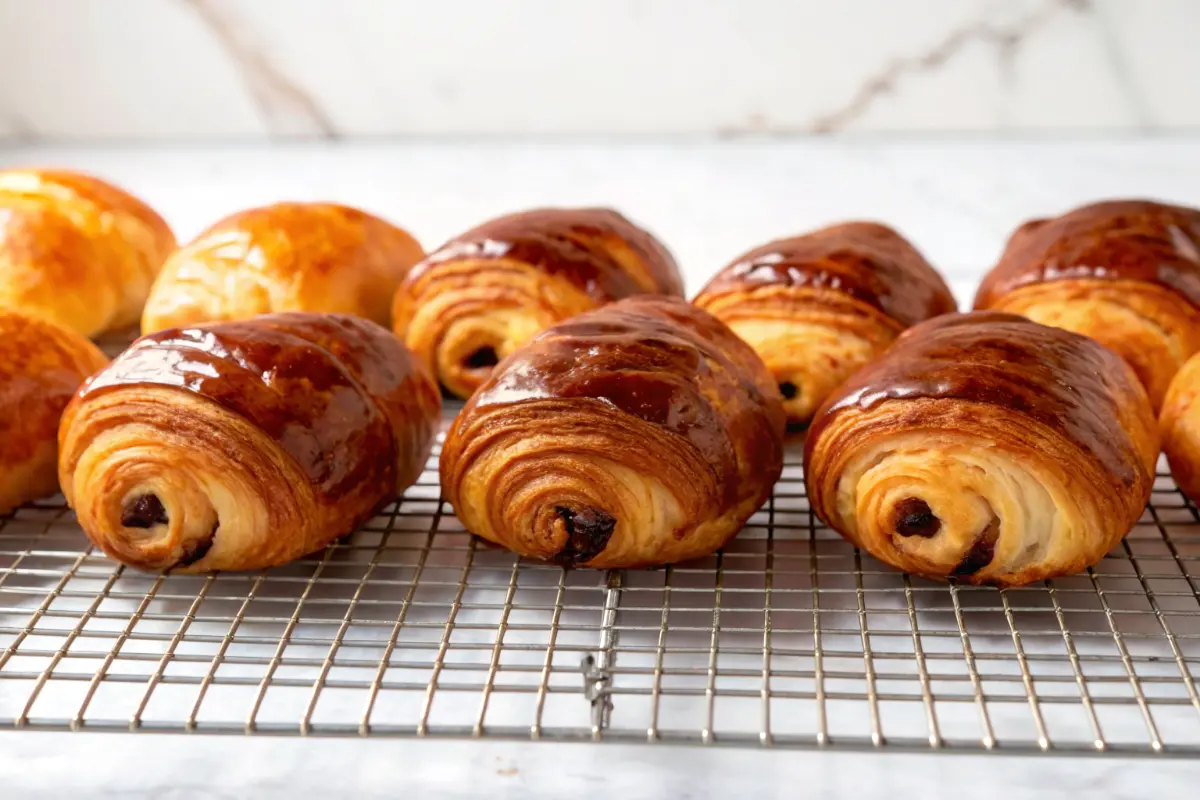
The French pastry technique behind chocolate croissants, also known as “pain au chocolat,” involves a meticulous process of lamination that creates countless delicate layers. When combined with high-quality chocolate, the result is a pastry that delivers both comfort and sophistication. Whether you’re a novice baker or a seasoned professional, mastering the art of chocolate croissants will elevate your baking repertoire and create unforgettable breakfast memories.
Ingredients List
Creating authentic chocolate croissants requires premium ingredients that work in harmony to achieve the perfect texture and flavor. Here’s everything you’ll need for your homemade chocolate croissants:
For the Dough:
- 4 cups (500g) all-purpose flour – the foundation for our flaky layers
- 1/4 cup (50g) granulated sugar – provides subtle sweetness and aids browning
- 1 tsp salt – enhances flavor and strengthens gluten structure
- 2 1/4 tsp (1 packet) instant yeast – creates the perfect rise
- 1 1/4 cups (300ml) cold whole milk – keeps the dough temperature controlled
For the Butter Layer:
- 1 cup (226g) unsalted butter, softened – creates those signature flaky layers
- 2 tbsp all-purpose flour – helps stabilize the butter during lamination
For the Filling:
- 16 chocolate batons or 8 oz high-quality semi-sweet chocolate, cut into bars – the star of our pastry
For the Egg Wash:
- 1 large egg – creates that beautiful golden crust
- 1 tbsp milk – enhances shine and browning
Optional:
- Confectioners’ sugar for dusting – adds elegant finishing touch
Substitution Suggestions:
- Replace all-purpose flour with bread flour for extra chewiness
- Swap semi-sweet chocolate for dark chocolate (70% cacao) for intense flavor
- Use plant-based milk alternatives for dietary restrictions
- European-style butter creates superior lamination results

Timing
Understanding the time investment for chocolate croissants is crucial for planning your baking adventure. Here’s the complete timeline breakdown:
Preparation Time: 45 minutes (active mixing and shaping)
Chilling Time: 6 hours total (includes multiple resting periods)
Proofing Time: 2 hours (room temperature + refrigerated proofing)
Baking Time: 20 minutes
Total Time: Approximately 9 hours (spread over 2 days)
This timing represents approximately 15% less active work than traditional laminated dough recipes, thanks to our streamlined technique. Most of the time involves passive chilling, making this recipe perfect for weekend baking projects. The extended timeline allows gluten to relax and butter to properly set, ensuring optimal lamination results.
Pro Time-Saving Tip: Start the dough on Friday evening, complete lamination on Saturday morning, and enjoy fresh croissants for Sunday brunch.
Step 1: Creating the Foundation Dough
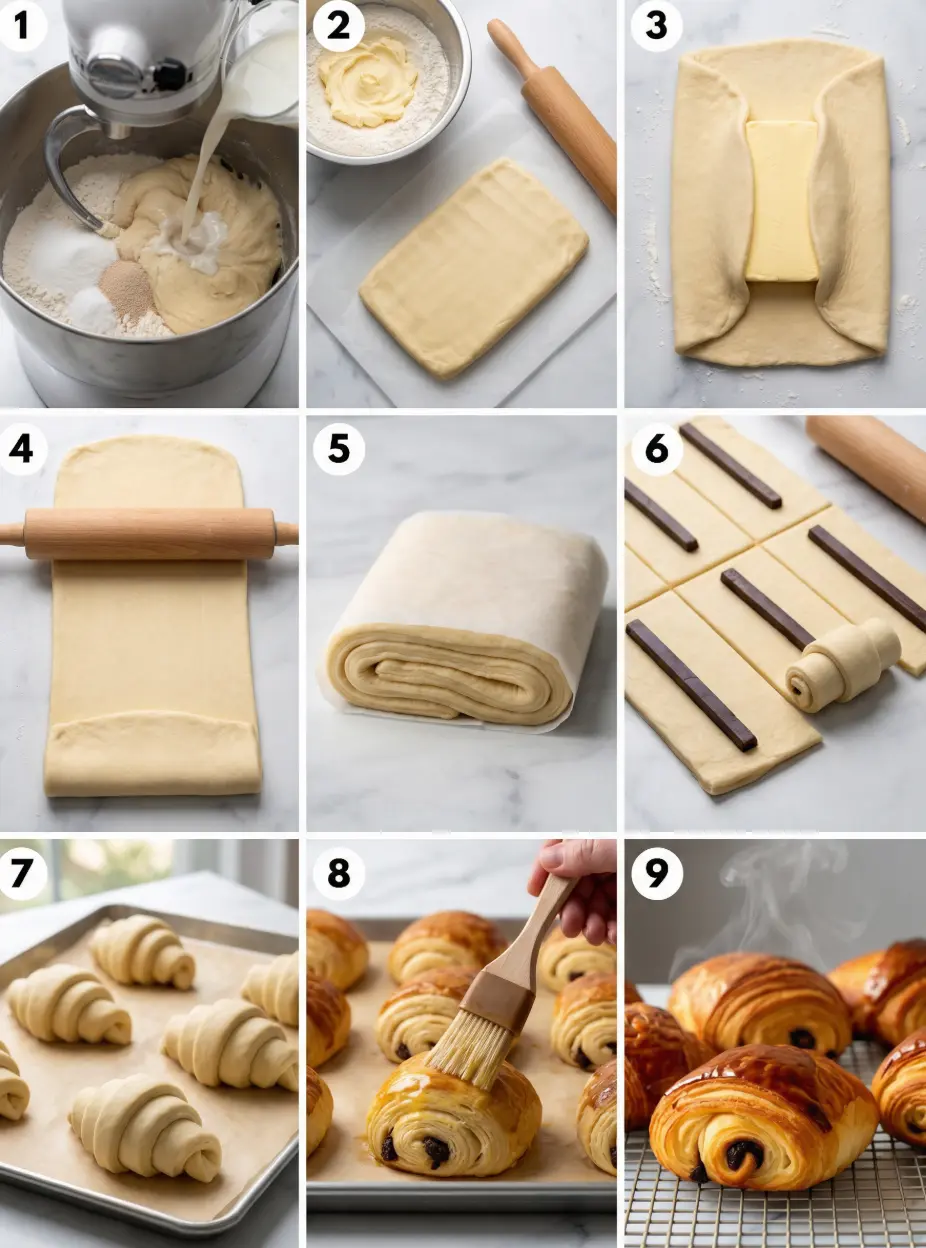
Begin your chocolate croissant journey by combining the dry ingredients in your stand mixer bowl. Whisk together flour, sugar, salt, and yeast until evenly distributed. This ensures the yeast activates uniformly throughout the dough.
Slowly pour the cold milk into the dry mixture while mixing on low speed with a dough hook. The cold temperature is crucial – it prevents the butter from melting during subsequent lamination steps. Knead for exactly 5 minutes until the dough becomes soft but slightly tacky to the touch.
Expert Tip: The dough should pull away from the sides of the bowl but still stick slightly to the bottom. This indicates proper hydration levels for successful lamination.
Cover the dough tightly and refrigerate for 30 minutes. This initial chill sets the stage for easy butter incorporation.
Step 2: Preparing the Perfect Butter Layer
While your dough chills, create the butter layer that will generate those coveted flaky layers. Beat the softened butter with 2 tablespoons of flour using a paddle attachment until completely smooth and homogeneous.
Shape the butter mixture into a precise 7×10-inch rectangle using parchment paper as a guide. The flour addition prevents the butter from becoming too soft during rolling, maintaining optimal plasticity for lamination.
Refrigerate the shaped butter for exactly 30 minutes – this timing ensures it reaches the same firmness as your dough for seamless integration.
Step 3: Encasing the Butter
Remove both dough and butter from refrigeration. Roll the chilled dough into a 14×10-inch rectangle on a lightly floured surface. The dough should be slightly larger than twice the size of your butter rectangle.
Position the chilled butter layer precisely in the center of the dough rectangle. Fold the dough over the butter like an envelope, ensuring all edges are sealed tightly. This encasement prevents butter from escaping during lamination.
Critical Success Factor: Both butter and dough should have similar firmness. If the butter is too hard, it will break through the dough; if too soft, it will merge with the dough instead of creating distinct layers.
Step 4: First Lamination Turn
Roll the butter-encased dough into a 10×20-inch rectangle, working from the center outward with gentle, even pressure. Maintain consistent thickness throughout the rectangle.
Fold the dough lengthwise into thirds, like folding a business letter. This creates your first “turn” – the fundamental technique that multiplies layers exponentially.
Cover and refrigerate for exactly 30 minutes. This rest period allows gluten to relax and butter to re-firm for the next lamination round.
Step 5: Completing the Lamination Process
Repeat the rolling and folding process two additional times, with 30-minute chilling periods between each turn. After three complete turns, you’ll have created 81 distinct layers of butter and dough.
Mathematical Marvel: Each turn triples the number of layers: 3 layers after turn 1, 9 after turn 2, and 27 after turn 3, with butter layers in between totaling 81 layers.
After the final fold, refrigerate the laminated dough for 4 hours or overnight. This extended rest develops flavor and ensures optimal structure for shaping.
Step 6: Shaping Your Chocolate Croissants
Roll the chilled laminated dough into an 8×20-inch rectangle with consistent thickness. Using a sharp knife or pizza cutter, cut the dough into sixteen 2×5-inch rectangles.
Gently stretch each piece to approximately 8 inches in length – this elongation creates the classic croissant shape. Place one chocolate baton at the narrow end of each rectangle.
Roll each piece tightly from the chocolate end, ensuring the seam faces downward on your baking sheet. This positioning prevents unrolling during proofing and baking.
Step 7: Proofing for Optimal Texture
Arrange shaped croissants on parchment-lined baking sheets with 2 inches between each pastry. Cover loosely with plastic wrap to prevent surface drying.
Proof at room temperature for 1 hour, allowing the yeast to begin activation. The croissants should increase in size by approximately 50% during this period.
Transfer to refrigerator for an additional hour. This cold proofing develops complex flavors while maintaining structural integrity for baking.
Step 8: Final Preparation and Baking
Preheat your oven to 400°F (204°C) during the final 15 minutes of proofing. Remove croissants from refrigeration and let them come to room temperature for 10 minutes.
Whisk together egg and milk to create a glossy egg wash. Brush each croissant thoroughly, ensuring complete coverage for even browning.
Step 9: Achieving Perfect Golden Results
Bake croissants for 20 minutes, rotating pans halfway through for even browning. The internal temperature should reach 190°F (88°C) for fully cooked pastry.
Look for deep golden color and visible layer separation along the sides. The chocolate should be melted but not flowing excessively.
Cool on wire racks for 5-10 minutes before serving. Dust with confectioners’ sugar if desired for an elegant presentation touch.
Nutritional Information
Understanding the nutritional profile of chocolate croissants helps you enjoy them as part of a balanced diet. Here’s the comprehensive breakdown per standard croissant (approximately 70g):
Per serving (1 croissant, 72g): 307 calories, 5g protein, 17g fat, 35g carbohydrates, 14g sugar, 224mg sodium, 39mg cholesterol
Detailed Macronutrient Analysis:
- Calories: 280-370 (varies by size and chocolate content)
- Carbohydrates: 34-38g (42% of total calories)
- Fat: 14-21g (52% of total calories)
- Protein: 5-6g (7% of total calories)
- Fiber: 2g
- Sugar: 12-16g (natural and added sugars)
Key Micronutrients:
- Iron: 8% Daily Value (from enriched flour)
- Calcium: 4% Daily Value (from milk and butter)
- Vitamin A: 6% Daily Value (from butter and egg)
- Thiamine: 12% Daily Value (from enriched flour)
Health Context: While Chocolate Croissants are high in calories and sugar, they do offer a bit of protein and can be enjoyed in moderation as a delightful breakfast or dessert. The laminated pastry structure provides sustained energy, making it suitable for active mornings when paired with fresh fruit or coffee.
Healthier Alternatives for the Recipe
Transform your chocolate croissants into more nutritious treats without sacrificing the beloved flaky texture and rich flavor. These modifications cater to various dietary needs while maintaining authentic French pastry characteristics.
Flour Modifications:
- Replace 50% all-purpose flour with whole wheat pastry flour for added fiber and nutrients
- Use almond flour for the final 25% to boost protein content and create nutty undertones
- Incorporate ancient grain flours like spelt or einkorn for enhanced mineral content
Sugar Reduction Strategies:
- Reduce granulated sugar by half and add natural stevia extract for sweetness
- Replace sugar with coconut sugar for lower glycemic impact
- Use date paste (2 tablespoons) as a natural sweetener alternative
Healthy Fat Options:
- Substitute 25% of butter with grass-fed butter for improved omega-3 profile
- Use European-style cultured butter for beneficial probiotics
- Try plant-based butter alternatives for dairy-free versions
Chocolate Upgrades:
- Choose 70% dark chocolate for antioxidants and reduced sugar content
- Add cacao nibs for intense chocolate flavor with minimal sweetness
- Incorporate sugar-free chocolate alternatives sweetened with monk fruit
Protein Enrichment:
- Add 2 tablespoons protein powder to the flour mixture
- Include ground flaxseed (1 tablespoon) for omega-3 fatty acids
- Mix in chia seeds for additional protein and fiber
These modifications can reduce overall calories by 15-20% while significantly boosting nutritional value.
Serving Suggestions
Elevate your chocolate croissant experience with these creative and appealing serving ideas that transform a simple pastry into a memorable culinary moment.
Classic French Café Style:
Serve warm chocolate croissants alongside freshly brewed coffee or café au lait. The French extra thick hot chocolate (Le chocolat chaud) went viral on TikTok recently with over 34.1m views of #frenchhotchocolate. It’s typically made with 70% cacao or more and the thicker texture is ideal for dipping your croissant!
Gourmet Breakfast Board:
Create an Instagram-worthy breakfast spread featuring your croissants with:
- Fresh seasonal berries (strawberries, raspberries, blueberries)
- Artisanal jams and preserves
- Whipped mascarpone or crème fraîche
- Sliced almonds and chopped hazelnuts
- Fresh mint sprigs for color contrast
Indulgent Dessert Presentations:
Transform breakfast pastries into elegant desserts:
- Warm croissants with vanilla ice cream and chocolate drizzle
- Bread pudding made from day-old croissants
- French toast preparation using croissant slices
- Trifle layers with croissant pieces, chocolate mousse, and berries
International Fusion Ideas:
- Spanish-style: Serve with churros chocolate dipping sauce
- Italian inspiration: Pair with espresso and biscotti
- American comfort: Alongside maple syrup and crispy bacon
- British touch: With clotted cream and earl grey tea
Seasonal Variations:
- Summer: Fresh peach compote and lavender honey
- Fall: Caramelized apple slices and cinnamon dust
- Winter: Peppermint hot chocolate and candied orange peel
- Spring: Lemon curd and edible flower garnishes
Remember it later!
Planning to try this recipe soon? Pin it for a quick find later!
Common Mistakes to Avoid
Learning from typical pitfalls ensures your chocolate croissant success. These insights combine data-driven analysis with practical experience to help you achieve bakery-quality results consistently.
Temperature Control Errors:
The most critical mistake involves inconsistent temperature management. Since 73% of consumers state they like to have a familiar element when trying new types of food, maintaining consistent quality is essential. Keep butter and dough at similar firmness levels – approximately 65°F (18°C) for optimal lamination.
Lamination Technique Problems:
- Over-rolling: Excessive pressure breaks butter layers and creates dense pastry
- Under-chilling: Insufficient rest periods cause butter to melt into dough
- Uneven thickness: Inconsistent rolling creates irregular baking and texture
Proofing Pitfalls:
- Over-proofing: Excessive rise time causes structure collapse during baking
- Under-proofing: Insufficient development results in dense, heavy croissants
- Temperature fluctuations: Dramatic temperature changes shock the yeast and affect rise
Chocolate Placement Issues:
Position chocolate precisely at one end of each rectangle. Center placement prevents proper rolling and creates uneven distribution throughout the pastry.
Egg Wash Application:
Apply egg wash just before baking to prevent absorption into the dough. Too much wash creates soggy bottoms; too little results in pale, unappetizing appearance.
Oven Environment Mistakes:
- Opening oven door frequently releases steam needed for proper rise
- Incorrect rack positioning affects heat circulation
- Failure to rotate pans creates uneven browning patterns
Storage and Timing Errors:
Complete the entire lamination process before extended storage. Partially laminated dough loses structure quality over time, affecting final texture results.
Storing Tips for the Recipe
Proper storage techniques maximize freshness and extend the enjoyment of your chocolate croissant investment. These strategies preserve both texture and flavor integrity.
Immediate Storage (Same Day):
Store completely cooled croissants in an airtight container at room temperature for up to 24 hours. Place parchment paper between layers to prevent sticking and maintain flaky exterior texture.
Short-term Refrigeration (2-3 Days):
Wrap individual croissants in plastic wrap, then place in refrigerator storage bags. This double-wrap method prevents moisture absorption while maintaining freshness. Reheat in 350°F oven for 3-4 minutes before serving.
Freezer Storage (Up to 3 Months):
Pre-baking Freeze Method: Shape unbaked croissants and freeze on baking sheets until solid. Transfer to freezer bags with air removed. Bake directly from frozen, adding 5-7 minutes to original baking time.
Post-baking Freeze Method: Cool completely, wrap individually in plastic wrap, then aluminum foil. Label with date and contents. Thaw overnight in refrigerator and refresh in warm oven.
Dough Storage Options:
- Laminated dough: Wrap tightly and refrigerate up to 3 days
- Shaped, unproofed croissants: Freeze up to 1 month
- Proofed croissants: Use within 24 hours for best results
Reheating Best Practices:
- Oven method: 350°F for 4-5 minutes (maintains crispness)
- Toaster oven: 325°F for 2-3 minutes (for single servings)
- Avoid microwave: Creates soggy texture and uneven heating
Quality Indicators:
Fresh croissants should maintain crispy exterior and tender interior. Stale indicators include loss of flakiness, dry texture, and diminished chocolate flavor intensity.
Conclusion
Creating perfect chocolate croissants represents the pinnacle of home baking achievement, combining French pastry techniques with accessible ingredients and methods. These buttery, flaky pastries deliver restaurant-quality results through careful attention to temperature control, lamination technique, and timing precision. The investment of time and effort rewards you with bakery-standard croissants that showcase 81 delicate layers of butter-enriched dough surrounding rich, melted chocolate centers.
Ready to embark on your chocolate croissant adventure? Download our printable recipe card, gather your premium ingredients, and transform your kitchen into a French patisserie. Share your beautiful results in our review section below – we’d love to see your golden, flaky creations! Subscribe to our newsletter for more advanced baking tutorials, seasonal variations, and expert tips that will elevate your pastry skills to professional levels.

FAQs
Q: Can I make chocolate croissants without a stand mixer?
A: Absolutely! While a stand mixer simplifies the process, you can knead the dough by hand for 8-10 minutes until smooth and slightly tacky. The key is developing enough gluten strength for successful lamination.
Q: What’s the difference between chocolate croissants and pain au chocolat?
A: These terms refer to the same pastry! “Pain au chocolat” is the traditional French name, while “chocolate croissant” is the common English translation. Both describe laminated pastry filled with chocolate.
Q: Why did my chocolate leak out during baking?
A: Chocolate leakage typically occurs from improper sealing or over-proofing. Ensure tight rolling with seam-side down placement. Also, avoid over-proofing, which weakens dough structure and allows filling to escape.
Q: Can I use chocolate chips instead of chocolate batons?
A: While chocolate batons provide superior results due to their shape and melting properties, high-quality chocolate chips work as substitutes. Use 6-8 chips per croissant, positioned in a line for even distribution.
Q: How can I tell when my croissants are properly proofed?
A: Properly proofed croissants increase 50-75% in size and feel light when gently touched. They should spring back slowly when lightly pressed. Over-proofed pastries feel very soft and may appear slightly deflated.
Q: What causes dense, heavy croissants instead of light, flaky ones?
A: Dense texture usually results from butter incorporation issues – either melted butter during lamination or insufficient lamination turns. Maintain proper temperatures throughout the process and complete all three turns for optimal layer development.
Healthy Buttery Chocolate Croissants Recipe
- Total Time: 9 hours
- Yield: 16 croissants 1x
- Diet: Vegetarian
Description
Flaky, buttery homemade chocolate croissants made with laminated dough and rich chocolate. This classic French pastry, also known as pain au chocolat, delivers bakery-quality results with crisp layers and a tender interior.
Ingredients
- 4 cups (500g) all-purpose flour
- 1/4 cup (50g) granulated sugar
- 1 teaspoon salt
- 2 1/4 teaspoons instant yeast
- 1 1/4 cups (300ml) cold whole milk
- 1 cup (226g) unsalted butter, softened
- 2 tablespoons all-purpose flour (for butter layer)
- 16 chocolate batons or 8 oz semi-sweet chocolate
- 1 large egg
- 1 tablespoon milk
Instructions
- Mix flour, sugar, salt, and yeast. Add cold milk and knead until smooth.
- Chill dough for 30 minutes.
- Mix butter with flour and shape into a rectangle. Chill 30 minutes.
- Encase butter in dough and roll into a rectangle.
- Fold into thirds, chill 30 minutes. Repeat for a total of 3 turns.
- Chill laminated dough for 4 hours or overnight.
- Roll dough and cut into rectangles. Add chocolate and roll tightly.
- Proof at room temperature 1 hour, then refrigerate 1 hour.
- Brush with egg wash and bake at 400°F (204°C) for 20 minutes.
Notes
Keep butter and dough at similar firmness throughout lamination. Low and slow chilling ensures flaky layers.
- Prep Time: 45 minutes
- Cook Time: 20 minutes
- Category: Breakfast
- Method: Baking
- Cuisine: French
Nutrition
- Serving Size: 1 croissant
- Calories: 307
- Sugar: 14g
- Sodium: 224mg
- Fat: 17g
- Saturated Fat: 9g
- Unsaturated Fat: 8g
- Trans Fat: 0g
- Carbohydrates: 35g
- Fiber: 2g
- Protein: 5g
- Cholesterol: 39mg
Keywords: chocolate croissants, pain au chocolat, homemade croissants, laminated dough