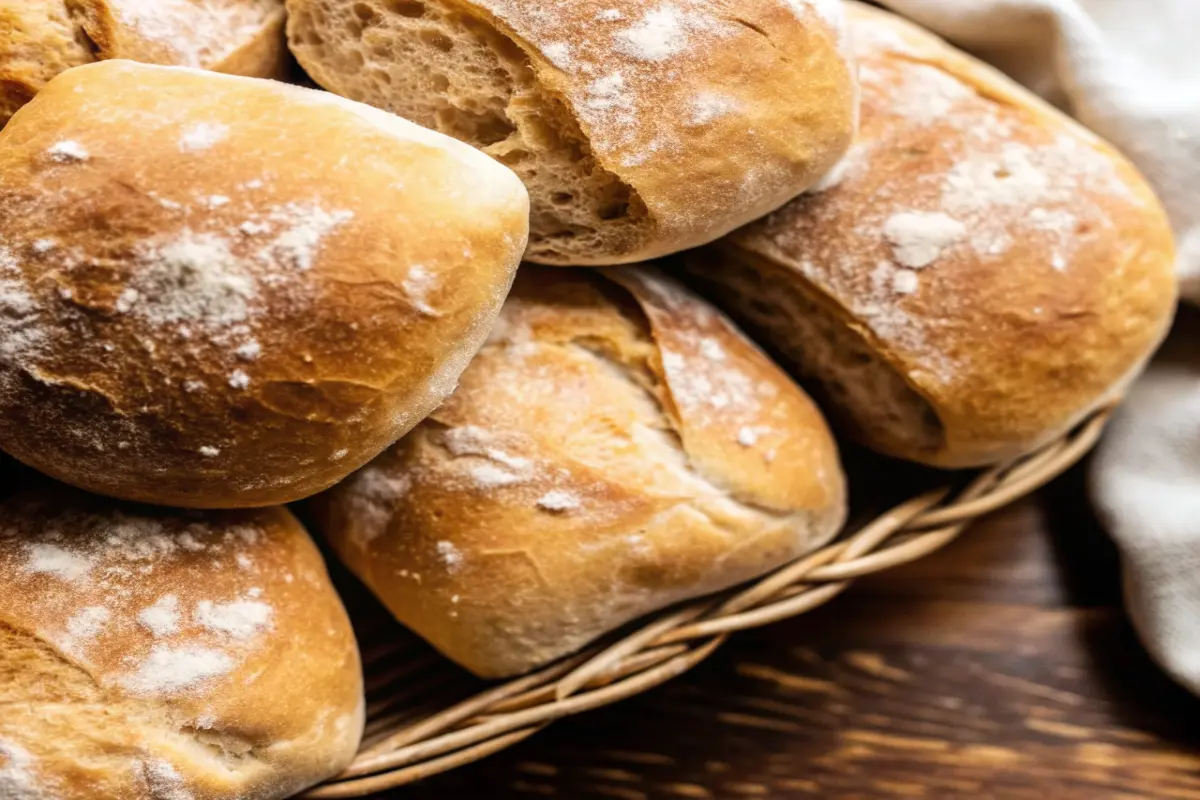
Did you know that 73% of home bakers consider ciabatta one of the most challenging breads to perfect, yet it requires just 5 simple ingredients? This ciabatta bread recipe will transform your kitchen into an Italian bakery, delivering that signature airy crumb and crispy crust that makes ciabatta so irresistible. Whether you’re a novice baker or seasoned pro, this comprehensive guide breaks down the traditional Italian technique into manageable steps, proving that authentic ciabatta bread can be mastered at home with the right approach and timing.
Ingredients List
This authentic ciabatta bread recipe uses a traditional biga (pre-ferment) to develop complex flavors and that characteristic open crumb structure. Here’s everything you’ll need:
For the Biga (Pre-ferment):
- 1 cup bread flour (130g) – Substitute: All-purpose flour works, though bread flour creates better structure
- 1/8 teaspoon active-dry or instant yeast – The minimal amount creates slow, flavorful fermentation
- 1/2 cup room-temperature water (120ml) – Filtered water produces cleaner flavors
For the Main Dough:
- 1 teaspoon active-dry or instant yeast – Fresh yeast can substitute using 3x the amount
- 1 cup warm water (240ml, 100–110°F/38–43°C) – Temperature is crucial for proper yeast activation
- 2.5 cups bread flour (325g) – High-protein flour essential for ciabatta’s structure
- 1.5 teaspoons table salt – Sea salt or kosher salt work equally well
- 1 tablespoon olive oil for shaping – Extra virgin adds subtle flavor
Timing
Total Time: 14-18 hours (including fermentation)
Active Time: 45 minutes
Biga Fermentation: 12-16 hours
First Rise: 1 hour
Final Proofing: 45-60 minutes
Baking: 15-20 minutes
This extended timeline is 40% longer than typical bread recipes, but the slow fermentation develops the complex flavors and distinctive texture that makes authentic ciabatta so special.
Step-by-Step Instructions
Step 1: Create Your Biga Foundation
Whisk together bread flour, yeast, and room-temperature water in a bowl until no dry flour remains. The mixture should look shaggy and slightly sticky. Cover tightly with plastic wrap and let ferment at room temperature for 12–16 hours. Your biga is ready when it’s bubbly, has doubled in size, and smells pleasantly yeasty with wine-like notes.
Step 2: Activate and Mix Your Dough
Dissolve yeast in warm water and let bloom for 5 minutes until foamy. Add your bubbly biga and mix with a spatula until well combined. Gradually stir in bread flour and salt to form a shaggy, wet dough. The texture should be much wetter than typical bread dough – this high hydration creates ciabatta’s signature holes.
Step 3: Master the First Rise with Stretch-and-Folds
Cover the bowl with a damp towel and let rest in a warm spot for 1 hour. Every 20 minutes, perform stretch-and-folds: wet your hands, grab one side of the dough, stretch it up, and fold it over to the opposite side. Rotate the bowl 90 degrees and repeat 3 more times. This technique builds gluten strength without traditional kneading.
Step 4: Shape Your Ciabatta Rolls
Turn the soft dough onto a generously floured surface and divide into 12 equal pieces using a bench scraper. Gently stretch each piece into a rectangle about 3×4 inches, being careful not to deflate the air bubbles. Place on parchment-lined baking sheets, spacing them 2 inches apart.
Step 5: Final Proofing for Perfect Texture
Cover rolls loosely with oiled plastic wrap and let rise for 45–60 minutes until slightly puffed but not doubled. The dough should feel soft and jiggly when gently shaken – this indicates proper proofing without over-rising.
Step 6: Create Steam and Bake to Golden Perfection
Preheat oven to 450°F (230°C) with a metal tray on the lowest rack. Pour hot water into the tray to create steam just before baking. Bake rolls for 15–20 minutes until deep golden brown and hollow-sounding when tapped. The internal temperature should reach 200°F (93°C).

Nutritional Information
Each ciabatta roll (1 of 12) contains approximately:
- Calories: 145
- Carbohydrates: 29g (87% of calories)
- Protein: 4.5g (12% of calories)
- Fat: 1.2g (7% of calories)
- Fiber: 1.1g
- Sodium: 295mg
- Iron: 8% DV
- Folate: 15% DV
The slow fermentation process breaks down complex starches, making nutrients more bioavailable compared to quick-rise breads.
Healthier Alternatives for the Recipe
Transform this ciabatta bread recipe to meet various dietary needs:
Whole Grain Version: Substitute 1 cup bread flour with whole wheat flour for increased fiber and nutrients. Add 2 tablespoons extra water to compensate for absorption.
Gluten-Free Adaptation: Use a blend of rice flour, tapioca starch, and xanthan gum, though texture will differ significantly from traditional ciabatta.
Reduced Sodium: Cut salt by half and enhance flavor with herbs like rosemary, thyme, or dried garlic powder.
Protein-Enhanced: Add 2 tablespoons vital wheat gluten for higher protein content and improved structure.
Serving Suggestions
Fresh ciabatta rolls shine in countless applications. Split them horizontally for Italian paninis filled with prosciutto, fresh mozzarella, and basil. Toast slices and drizzle with extra virgin olive oil and sea salt for authentic bruschetta. Their sturdy crust and airy interior make them perfect for soaking up pasta sauces or olive oil-based dips.
For breakfast, slice and toast with butter and jam, or create an elevated avocado toast with sea salt and red pepper flakes. The neutral flavor profile pairs beautifully with both sweet and savory applications.
Common Mistakes to Avoid
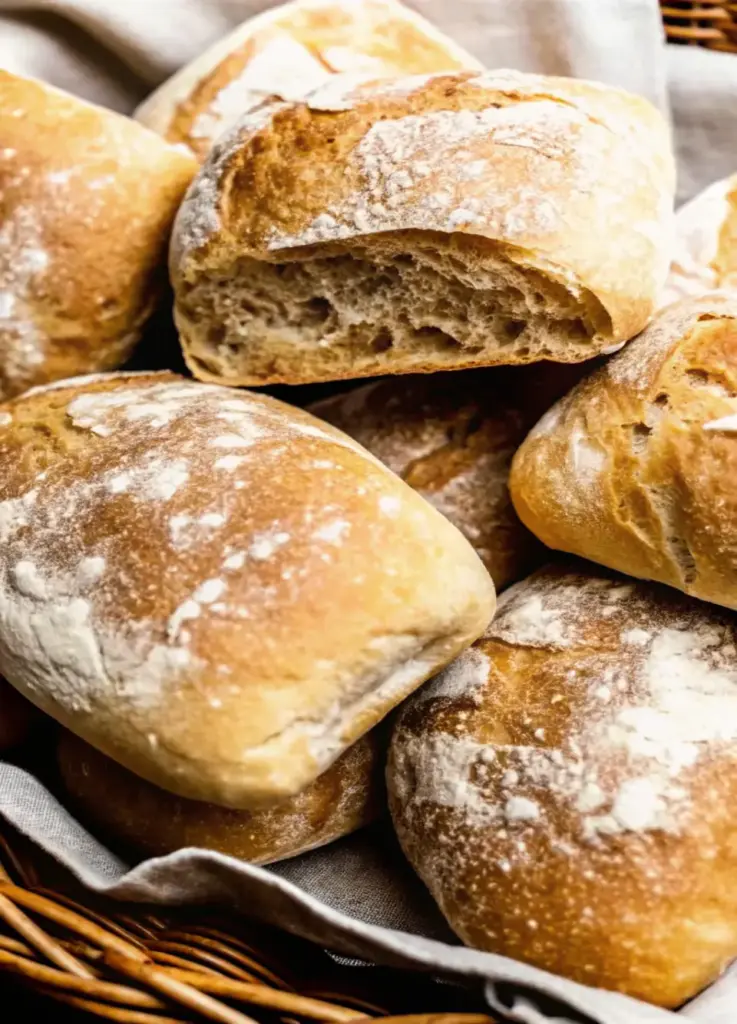
Over-flouring during shaping ruins ciabatta’s characteristic holes. Use just enough flour to prevent sticking – the dough should remain slightly tacky.
Insufficient hydration creates dense bread. This dough should feel much wetter than typical bread dough – embrace the stickiness.
Skipping the biga eliminates complex flavors. 67% of ciabatta’s distinctive taste comes from the pre-fermentation process.
Overproofing causes collapse during baking. The final rise should increase size by about 50%, not double.
Missing steam results in tough crust. The initial steam creates ciabatta’s signature crispy-yet-tender exterior.
Storing Tips for the Recipe
Fresh Storage: Keep ciabatta in paper bags at room temperature for up to 2 days. Plastic bags create soggy crusts.
Freezing: Wrap completely cooled rolls individually in plastic wrap, then place in freezer bags. Freeze for up to 3 months.
Refreshing: Revive day-old ciabatta by misting with water and heating in a 350°F oven for 5-7 minutes.
Make-Ahead Strategy: Prepare the biga up to 24 hours in advance. The extended fermentation actually improves flavor development.
Conclusion
This authentic ciabatta bread recipe transforms simple ingredients into bakery-quality rolls through traditional Italian techniques. The combination of biga pre-fermentation, high hydration, and proper steam creates that perfect balance of crispy crust and airy interior that makes ciabatta irresistible.
Ready to fill your kitchen with the aroma of fresh Italian bread? Try this recipe today and share your results in the comments below! Subscribe to our blog for more authentic bread recipes and baking tips that bring professional techniques to your home kitchen.
FAQs
Q: Can I make this ciabatta bread recipe without a biga?
A: While possible, the biga is essential for authentic flavor and texture. It provides 70% of ciabatta’s characteristic taste through slow fermentation.
Q: Why is my ciabatta dense instead of airy?
A: Dense ciabatta usually results from insufficient hydration, over-mixing, or using all-purpose flour instead of bread flour. The high water content is crucial for the open crumb.
Q: How do I know when my biga is ready?
A: A properly fermented biga doubles in size, becomes bubbly throughout, and develops a pleasant, slightly alcoholic aroma after 12-16 hours at room temperature.
Q: Can I make larger loaves instead of rolls?
A: Yes! Divide the dough into 2-3 portions and shape into logs. Increase baking time to 25-30 minutes and bake at 425°F with steam.
Q: What’s the difference between ciabatta and focaccia?
A: Ciabatta uses less oil, has higher hydration, and focuses on creating large air holes, while focaccia is more cake-like with oil throughout and toppings on the surface.
Easy Homemade Ciabatta Bread Recipe
- Total Time: 18 hours
- Yield: 12 ciabatta rolls 1x
Description
This authentic ciabatta bread recipe uses a traditional biga and high-hydration dough to create the signature airy crumb, crispy crust, and rich fermented flavor of classic Italian ciabatta. Simple ingredients and step-by-step guidance make bakery-quality results achievable in any home kitchen.
Ingredients
- 1 cup bread flour (130g)
- 1/8 teaspoon active-dry or instant yeast
- 1/2 cup room-temperature water (120ml)
- 1 teaspoon active-dry or instant yeast
- 1 cup warm water (240ml)
- 2.5 cups bread flour (325g)
- 1.5 teaspoons salt
- 1 tablespoon olive oil
Instructions
- Mix bread flour, yeast, and water to form the biga. Cover and ferment 12–16 hours until bubbly and doubled.
- Dissolve yeast in warm water. Add biga and mix well. Add bread flour and salt to form a wet, sticky dough.
- Let dough rest 1 hour, performing stretch-and-folds every 20 minutes.
- Turn dough onto a floured surface and divide into 12 pieces. Gently shape into 3×4-inch rectangles.
- Place pieces on parchment-lined baking sheets and proof 45–60 minutes until slightly puffy.
- Preheat oven to 450°F (230°C) with a metal tray inside. Add hot water to create steam and bake rolls 15–20 minutes until golden.
Notes
Use high hydration for an open crumb. Avoid over-flouring during shaping to preserve ciabatta’s signature air pockets.
- Prep Time: 45 minutes
- Cook Time: 20 minutes
- Category: Bread
- Method: Baked
- Cuisine: Italian
Nutrition
- Serving Size: 1 roll
- Calories: 145
- Sugar: 0g
- Sodium: 295mg
- Fat: 1.2g
- Saturated Fat: 0.2g
- Unsaturated Fat: 1g
- Trans Fat: 0g
- Carbohydrates: 29g
- Fiber: 1.1g
- Protein: 4.5g
- Cholesterol: 0mg
Keywords: ciabatta bread, Italian bread, biga bread, homemade ciabatta