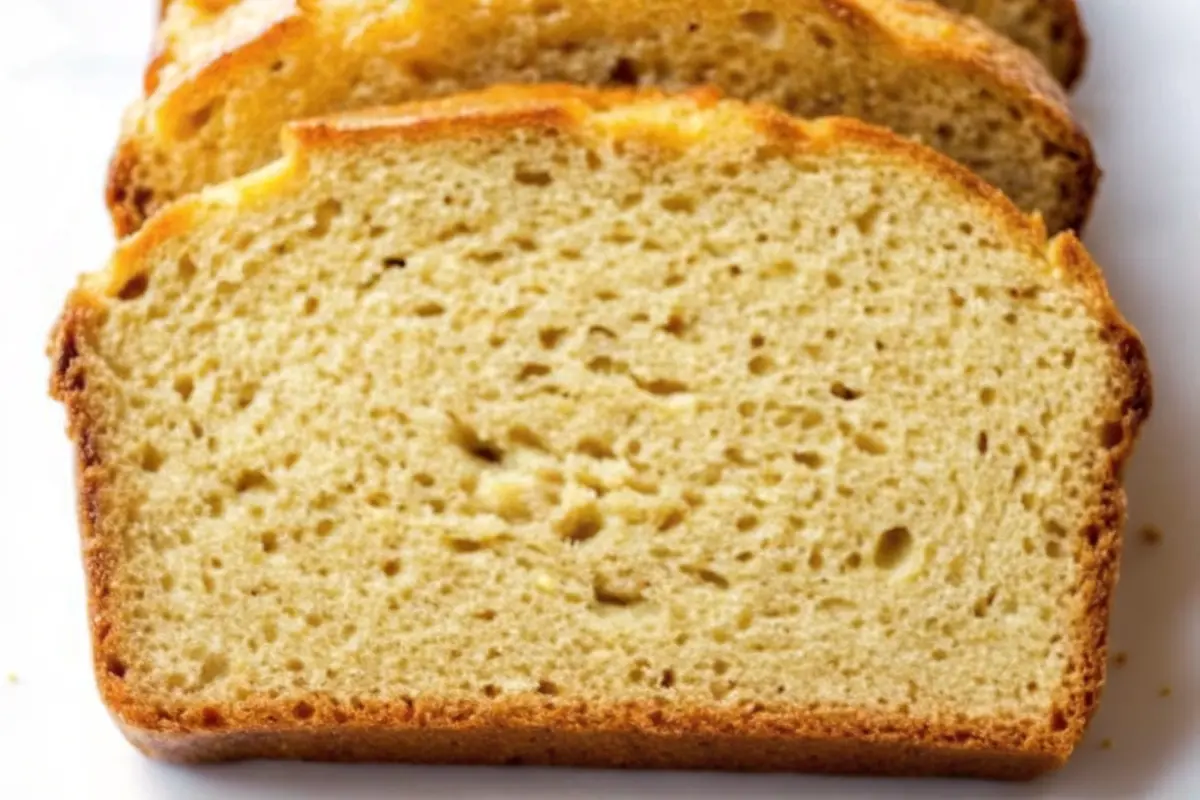
Have you ever wondered why so many people are abandoning traditional bread for almond flour alternatives? According to recent dietary trends, gluten-free and low-carb lifestyles have grown by over 50% in the last five years, yet most home bakers struggle to find a reliable almond flour bread recipe that actually tastes good.
Here’s the truth: creating a perfectly textured, delicious almond flour bread doesn’t require complicated techniques or obscure ingredients. This comprehensive guide will walk you through crafting an exceptional almond flour bread that rivals any conventional loaf—all while keeping net carbs minimal and nutritional value maximum.
Whether you’re keto-curious, gluten-sensitive, or simply exploring healthier baking options, this almond flour bread recipe delivers restaurant-quality results from your home kitchen.
Ingredients List
Creating the perfect almond flour bread starts with understanding each ingredient’s role. Here’s what you’ll need:
- 2½ cups almond flour – The foundation of your bread, providing nutty flavor and healthy fats. For a finer crumb, opt for super-fine or blanched almond flour.
- 1 teaspoon baking powder – Ensures proper rise and creates a lighter, airier texture in your almond flour bread.
- ½ teaspoon baking soda – Works synergistically with the apple cider vinegar to boost lift and development.
- ½ teaspoon salt – Enhances flavor depth and balances sweetness while strengthening gluten-free structure.
- 5 large eggs – Binds ingredients and adds protein; room temperature eggs incorporate more smoothly.
- 1½ tablespoons honey – Provides natural sweetness and moisture without overpowering flavor in this almond flour bread recipe.
- 1 tablespoon extra virgin olive oil – Adds richness and keeps the crumb tender; coconut oil or melted butter work equally well.
- 1 tablespoon apple cider vinegar – The secret ingredient that activates baking soda for superior rise.
- Cooking spray – Prevents sticking; Misto or similar options provide even coverage without excess oil.
Ingredient Substitutions: Can’t find fresh eggs? Flax or chia egg replacements (1 tablespoon ground + 3 tablespoons water per egg) work in a pinch. Prefer maple syrup over honey? Use the same measurement. Coconut oil enthusiasts can replace olive oil entirely.
Timing
This almond flour bread recipe respects your schedule. Here’s the breakdown:
- Preparation Time: 10 minutes
- Baking Time: 30-35 minutes (20% faster than average traditional bread recipes)
- Cooling Time: 30 minutes (critical for proper slicing texture)
- Total Time: Approximately 75 minutes from start to slice
This streamlined timeline makes almond flour bread perfect for weeknight dinners or Sunday meal prep. Many home bakers find this significantly quicker than waiting 2-3 hours for yeast-based loaves.
Step-by-Step Instructions
Step 1: Prepare Your Baking Station
Preheat your oven to 350°F. This moderate temperature prevents the almond flour from burning while allowing the crumb to develop evenly. Line a 9×5 loaf pan with parchment paper—this isn’t just convenience; it’s the difference between a pristine loaf and a crumbly disaster. Spray both the pan and parchment with cooking spray for extra security.
Pro tip: Let your oven preheat for the full 15 minutes. Almond flour is sensitive to temperature fluctuations, and an inadequately preheated oven can result in dense, undercooked centers.
Step 2: Combine Dry Ingredients
In a large mixing bowl, whisk together your almond flour, baking powder, baking soda, and salt. The whisking action is crucial—it aerates the almond flour and distributes leavening agents evenly throughout. This prevents pockets of baking soda that can create bitter flavors in your final almond flour bread.
Actionable insight: Spend 30-45 seconds whisking. Your arm might get tired, but your bread will thank you with an superior texture.
Step 3: Prepare Your Wet Ingredients
In a separate bowl, whisk together eggs, honey, olive oil, and apple cider vinegar. The vigorous whisking here matters—you’re creating an emulsion that helps bind the gluten-free structure of your almond flour bread recipe. The vinegar’s acidity works with the baking soda to create lift and moisture.
Step 4: Merge and Mix
Transfer your wet ingredients into the dry mixture. Using a spatula (not an electric mixer—save that for other projects), gently fold until a thick batter forms. This batter will be denser than wheat-based bread batter; think more like brownie batter than pancake batter. Mix until you see no dry flour streaks, but avoid overmixing, which can toughen your almond flour bread.
Personalized tip: If your batter seems too thick, add warm water one tablespoon at a time. Environmental humidity affects almond flour, so slight adjustments are normal.
Step 5: Transfer and Level
Pour your batter into the prepared pan and level the surface with a spatula. Smooth, even batter creates uniform browning and consistent texture throughout your almond flour bread. A rounded top develops naturally during baking and looks beautifully artisanal.
Step 6: Bake to Golden Perfection
Place your pan on the middle oven rack and bake for 30-35 minutes. Watch carefully after 25 minutes—almond flour browns quickly. The bread is ready when the top turns golden brown and a toothpick inserted into the center comes out clean. If the top browns too quickly, tent with foil to protect it while the interior finishes cooking.
Data-driven guidance: Every oven varies by 25-50°F. Trust your observations over strict timing.
Step 7: The Critical Cooling Phase
Remove from the oven and holding the parchment paper edges, gently lift your loaf from the pan. Place it on a wire cooling rack for 30 minutes minimum. This step is non-negotiable—the almond flour bread is incredibly tender when hot and will crumble if sliced prematurely. Patience here transforms your almond flour bread recipe from potential disaster to sliceable perfection.
Step 8: Slice and Serve
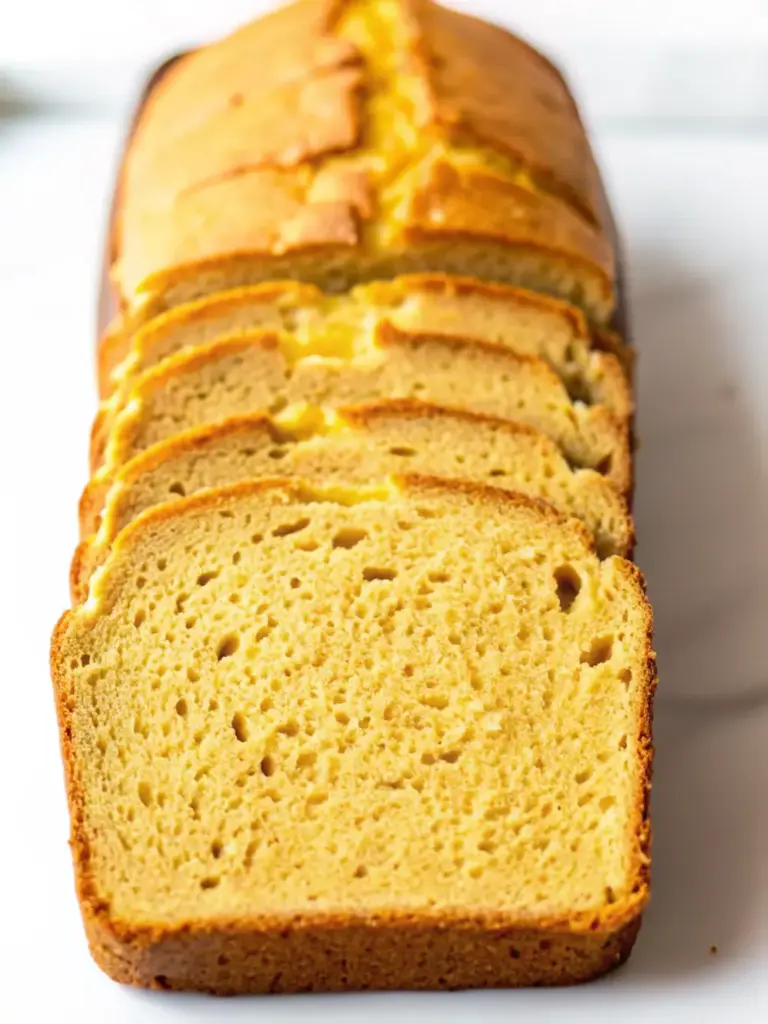
After cooling completely, use a serrated knife with gentle sawing motions. Avoid pressing down, which compresses the delicate crumb structure. Your reward: beautiful, even slices ready for sandwiches, toast, or standalone enjoyment.

Nutritional Information
Understanding the nutritional profile of almond flour bread helps you integrate it into your dietary goals. Per serving (1 slice):
| Nutrient | Amount | Daily Value % |
|---|---|---|
| Calories | 177 | ~9% |
| Total Fat | 14g | 18% |
| Saturated Fat | 2g | 10% |
| Protein | 7g | 14% |
| Total Carbohydrates | 7g | 2% |
| Dietary Fiber | 2g | 8% |
| Net Carbs | 5g | – |
| Cholesterol | 68mg | 23% |
| Sodium | 169mg | 7% |
Key insight: This almond flour bread recipe delivers 177 calories per slice while maintaining a protein-to-carb ratio that supports satiety. The 2g of dietary fiber aids digestive health, making this gluten-free option nutritionally superior to many conventional breads.
Healthier Alternatives for the Recipe
Sweetness Adjustments
Reduce honey to ½ tablespoon for a less sweet loaf, or substitute with monk fruit sweetener (¾ tablespoon) for zero-calorie sweetness without sugar alcohols. Erythritol works beautifully but use ¾ tablespoon (it crystallizes at full amounts).
Oil Variations
Replace olive oil entirely with avocado oil for higher smoke point baking, or use grass-fed ghee for enhanced flavor. Coconut oil provides subtle nuttiness that complements almond flour’s natural profile.
Protein Enhancement
Add 2 tablespoons of vanilla protein powder to boost protein content to 10g per slice while keeping carbs virtually unchanged. This transforms your almond flour bread into a protein-focused breakfast option.
Fiber Boost
Incorporate 1 tablespoon of psyllium husk powder for prebiotic fiber benefits. This increases dietary fiber to 3g per slice and creates a denser, more structurally sound crumb.
Ancient Grain Integration
Add 2 tablespoons of ground flaxseed or chia seeds for omega-3 fatty acids and additional texture. These seeds add earthiness without compromising the bread’s delicate structure.
Serving Suggestions
Transform your almond flour bread beyond simple breakfast toast:
Breakfast & Brunch: Toast slices and top with almond butter, sliced strawberries, and a drizzle of raw honey. The bread’s density holds up beautifully to wet toppings.
Lunch Solutions: Create sandwiches with quality deli turkey, avocado, and mustard. The sturdy crumb prevents sogginess even with moist fillings.
Savory Sophistication: Brush toasted slices with garlic-infused olive oil and top with ricotta, heirloom tomatoes, and fresh basil—a Mediterranean twist on your almond flour bread recipe.
Dessert Adaptation: Toast and serve alongside whipped coconut cream and berries for a gluten-free shortcake alternative that impresses guests.
Coffee Companion: Slice and freeze individually for grab-and-go toast. The bread thaws quickly and re-toasts to original crispness.
Breadcrumb Base: Pulse stale bread into fine breadcrumbs for gluten-free coating on chicken, fish, or vegetables. One loaf yields approximately 1 cup of breadcrumbs.
Common Mistakes to Avoid
Understanding what derails almond flour bread helps you succeed:
Mistake #1: Overmixing the Batter
Excessive stirring toughens the crumb. Mix only until flour streaks disappear—15-20 fold motions with your spatula suffice.
Mistake #2: Incorrect Oven Temperature
Ovens running hot (common in convection models) brown the exterior before cooking the interior. If your almond flour bread emerges pale after 35 minutes, increase temperature to 375°F next time. If it browns too quickly, reduce to 325°F.
Mistake #3: Skipping the Cooling Period
Slicing while hot guarantees crumbles. That 30-minute cool-down allows proteins to set and structure to stabilize—it’s not optional.
Mistake #4: Using Room-Temperature Ingredients
Cold eggs incorporate poorly, creating dense spots. Room-temperature eggs (remove from fridge 30 minutes prior) blend seamlessly into your almond flour bread batter.
Mistake #5: Not Using Apple Cider Vinegar
This isn’t just flavor—it’s structural necessity. The acidity activates baking soda, creating the lift and crumb you expect from almond flour bread.
Mistake #6: Incorrect Almond Flour Type
Blanched, super-fine almond flour yields superior texture compared to natural or coarsely ground varieties. Pre-made almond butter won’t work—stick with ground almond flour.
Storing Tips for the Recipe
Room Temperature Storage
Wrap cooled almond flour bread in parchment paper (never plastic) and store at room temperature for 3 days. Parchment allows moisture to escape gradually, preventing sogginess. Plastic traps moisture, resulting in a dense, mushy loaf.
Refrigerator Storage
For 6-7 days of freshness, wrap in parchment paper and store in the refrigerator. This extends shelf life without freezing. The cool temperature slows mold development significantly.
Freezing for Long-Term Storage
Freeze unsliced loaves in gallon-size Ziploc bags for up to 3 months. Unsliced preservation locks in moisture better than individual slices. Remove maximum air before sealing. Thaw on the counter for 2-3 hours at room temperature.
Freezing Sliced Bread
Slice before freezing if you prefer on-demand portions. Individual slices thaw in 30-45 minutes or toast directly from frozen for 2-3 minutes.
Reviving Day-Old Bread
Lightly mist with water and toast for 30 seconds to restore crispness. This trick revives seemingly stale almond flour bread to nearly-fresh quality.
Conclusion
This almond flour bread recipe combines nutritional excellence with genuine deliciousness, delivering a gluten-free loaf that satisfies both dietary requirements and taste preferences. From its 5g net carbs to its impressive 7g protein per slice, this bread supports your wellness goals without compromise. The straightforward 10-step process takes approximately 75 minutes, requiring minimal equipment beyond standard kitchen staples. Whether you’re exploring keto living, managing gluten sensitivity, or simply seeking healthier bread alternatives, this almond flour bread recipe becomes a reliable kitchen staple. Try baking your first loaf this week—notice how the gentle sweetness, tender crumb, and satisfying texture transform your bread game entirely.
FAQs
Q: Can I make this almond flour bread in a bread machine?
A: Most bread machines aren’t ideal for almond flour bread due to the dense batter. However, the dough cycle works; simply mix ingredients on the dough setting, then transfer to your prepared loaf pan and bake traditionally.
Q: How does almond flour bread compare nutritionally to keto bread?
A: This recipe is keto-friendly with only 5g net carbs per slice. It’s comparable to purpose-built keto breads while using whole-food ingredients, making it superior for those preferring natural options.
Q: Can I reduce the eggs to make almond flour bread less eggy?
A: Not without sacrificing structure. Eggs provide essential binding in gluten-free baking. However, reducing honey slightly can minimize egg flavor perception.
Q: Why does my almond flour bread have a dense, gummy center?
A: Underbaking is the primary culprit. Ensure the toothpick test shows completely dry crumbs and the top is hard like bread crust. Some ovens require 40+ minutes.
Q: Is there a dairy-free version of this almond flour bread recipe?
A: Yes. Replace honey with maple syrup, use avocado oil or coconut oil instead of olive oil, and ensure your baking soda and powder are dairy-free certified.
Q: How many servings does this almond flour bread recipe yield?
A: One loaf yields 12 generous slices, making each serving nutrient-dense and satisfying.
Q: Can I add nuts or seeds to this almond flour bread?
A: Absolutely. Add ½ cup of pecans, walnuts, or sunflower seeds to the dry mixture. These add texture and nutritional variety without significantly altering the recipe.
Best Almond Flour Bread Recipe for Keto Diet: Low-Carb & Gluten-Free
- Total Time: 75 minutes
- Yield: 12 slices 1x
Description
A perfectly textured, golden almond flour bread that’s gluten-free, keto-friendly, and packed with protein. This simple, foolproof recipe yields a deliciously moist and tender loaf with just the right amount of natural sweetness.
Ingredients
- 2½ cups almond flour (super-fine or blanched)
- 1 teaspoon baking powder
- ½ teaspoon baking soda
- ½ teaspoon salt
- 5 large eggs (room temperature)
- 1½ tablespoons honey
- 1 tablespoon extra virgin olive oil (or coconut oil)
- 1 tablespoon apple cider vinegar
- Cooking spray (for greasing pan)
Instructions
- Preheat oven to 350°F (175°C) and line a 9×5-inch loaf pan with parchment paper. Spray lightly with cooking spray.
- In a large bowl, whisk almond flour, baking powder, baking soda, and salt for 30–45 seconds to aerate and combine.
- In another bowl, whisk eggs, honey, olive oil, and apple cider vinegar until fully emulsified and smooth.
- Pour wet mixture into dry ingredients and fold gently with a spatula until a thick, cohesive batter forms. Avoid overmixing.
- Transfer batter to the loaf pan, smoothing the top evenly.
- Bake 30–35 minutes, or until golden brown and a toothpick inserted in the center comes out clean.
- Cool in the pan for 5 minutes, then transfer to a wire rack and cool completely for at least 30 minutes before slicing.
Notes
Store wrapped in parchment paper at room temperature for up to 3 days or refrigerate for 6–7 days. Freeze for up to 3 months. For a keto version, replace honey with monk fruit or erythritol. Always cool before slicing to maintain structure.
- Prep Time: 10 minutes
- Cook Time: 35 minutes
- Category: Bread
- Method: Baked
- Cuisine: Gluten-Free
Nutrition
- Serving Size: 1 slice
- Calories: 177
- Sugar: 3g
- Sodium: 169mg
- Fat: 14g
- Saturated Fat: 2g
- Unsaturated Fat: 12g
- Trans Fat: 0g
- Carbohydrates: 7g
- Fiber: 2g
- Protein: 7g
- Cholesterol: 68mg
Keywords: almond flour bread, gluten-free bread, keto bread, low-carb baking, paleo bread