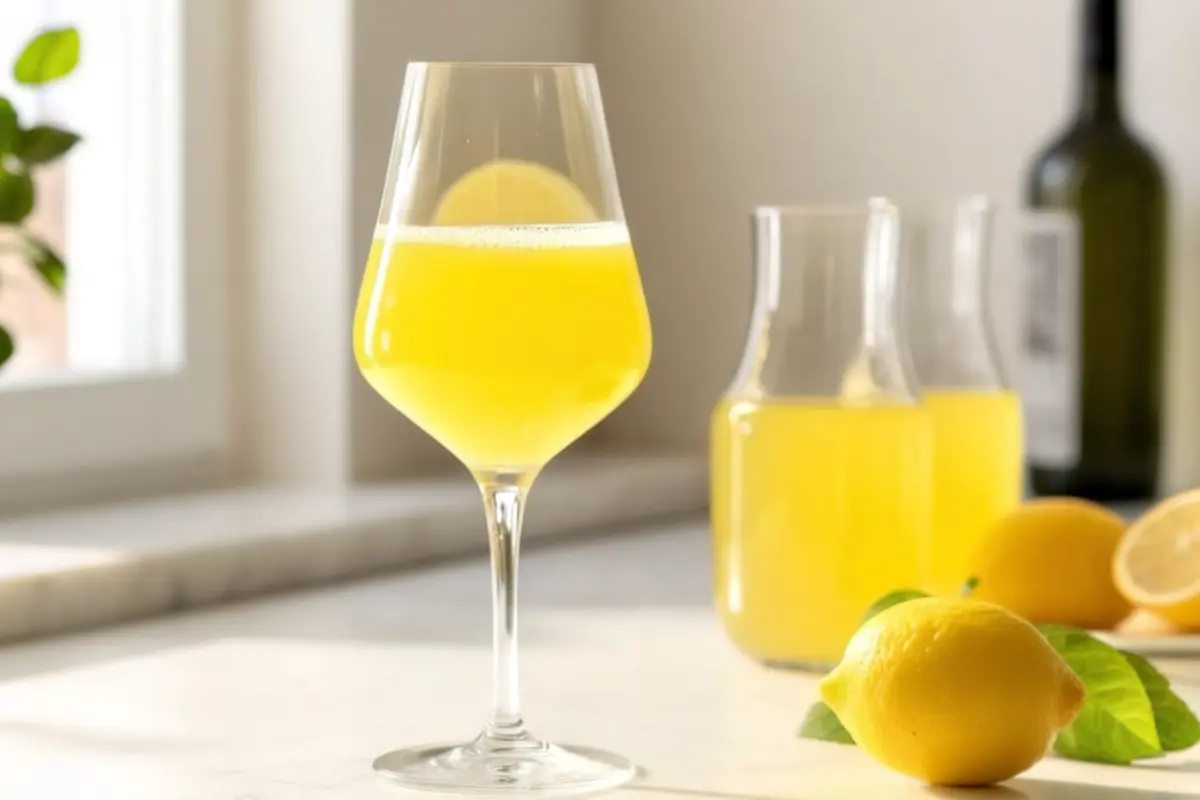
Did you know that authentic limoncello recipe made at home can rival the expensive imported varieties from the Amalfi Coast? If you’ve ever wondered how to capture that bright, zesty flavor of Italy in a bottle, you’re about to discover the secret. Making homemade limoncello isn’t just about following steps—it’s about understanding the delicate balance between time, temperature, and technique.
This comprehensive guide will walk you through everything you need to know to create professional-grade limoncello recipe that’ll impress your guests and elevate your home bar. Whether you’re a seasoned mixologist or a curious beginner, this authentic Italian how to make limoncello guide delivers results that taste far superior to store-bought alternatives.
Ingredients List
Creating the perfect homemade limoncello starts with selecting quality ingredients. Here’s what you’ll need:
Core Ingredients:
- 8-12 organic lemons (Sfusato lemons are ideal, but any unwaxed, organic variety works) – The foundation of your authentic limoncello recipe, these should be fresh and vibrant with no blemishes
- 1 liter (4 cups) of 95% ABV grain alcohol (Everclear preferred, though 100-proof vodka is an acceptable alternative) – High-proof alcohol is essential for proper extraction of lemon oils
- 1.1-1.5 liters filtered or bottled water – For creating your simple syrup base
- 1.1-1.4 kg (2.43 lbs) white granulated sugar – The balancing element that mellows the alcohol’s intensity
Why These Specific Ingredients Matter:
The quality of your limoncello recipe hinges entirely on ingredient selection. Organic lemons prevent pesticide residue in your final product, while the high-proof alcohol extracts the essential oils more efficiently than lower-proof spirits. Store-bought vodka often produces inferior results compared to pure grain alcohol, which creates the traditional Italian flavor profile. The sugar acts as both a preservative and flavor balancer, softening the alcohol’s sharp edges while allowing the bright lemon notes to shine through.
Timing
Understanding the timeline is crucial for successful homemade limoncello:
Preparation Time: 15-20 minutes (washing, peeling, and measuring ingredients)
Steeping Time: 20-25 days (the critical infusion phase)
Processing Time: 10-15 minutes (straining and combining)
Final Mellowing Time: 2-4 weeks (optional but recommended for smoother results)
Total Time to Completion: Approximately 45-60 days
This extended timeline is actually an advantage—modern authentic limoncello recipe methods recognize that patience produces superior flavor complexity. Most commercial producers follow similar timelines, proving that there’s no legitimate shortcut to authentic limoncello quality.
Step-by-Step Instructions
Step 1: Prepare Your Lemons
Begin by thoroughly washing your organic lemons under cool running water to remove any surface debris. Using a vegetable peeler or citrus zester, carefully remove only the yellow outer peel, avoiding the bitter white pith beneath. This distinction is crucial—the pith contains bitter compounds that would compromise your authentic limoncello recipe. Take your time with this step; rushing leads to over-peeling and unwanted bitterness.
Step 2: Combine Zest with Alcohol
Transfer your lemon peels into a large, clean glass jar or bottle that can be sealed airtight. Pour in your entire liter of 95% ABV grain alcohol, ensuring all peel pieces are fully submerged. Seal the jar securely and store it in a dark cupboard, away from direct sunlight. This dark placement prevents degradation of the delicate lemon compounds and maintains the alcohol’s integrity throughout the infusion period.
Step 3: Monitor the Infusion
For the next 20-25 days, your jar does the heavy lifting. Approximately every 3-5 days, gently shake the jar to redistribute the lemon peels and ensure even extraction. By week two, you’ll notice the alcohol transforming into a beautiful golden hue—this is exactly what you want. By day 20-25, the liquid should possess a rich yellow color and intoxicating lemon aroma, signaling that extraction is complete.
Step 4: Strain Your Infusion
Using a fine mesh strainer or cheesecloth, carefully pour your infused alcohol into a large bowl, separating the liquid from the lemon peels. For an ultra-smooth limoncello recipe, consider double-straining through a coffee filter—this removes any residual pulp and creates a crystal-clear final product that looks professionally bottled.
Step 5: Prepare Your Simple Syrup
Pour 1.1-1.5 liters of water into a large pot and place it over medium heat. When tiny bubbles begin forming (not a rolling boil), add your sugar gradually while stirring with a wooden spoon. Continue stirring for 2-3 minutes until the sugar completely dissolves. The cooler temperature prevents sugar crystallization and maintains the delicate lemon volatiles that define authentic homemade limoncello.
Step 6: Combine and Mix
Once your simple syrup has cooled to room temperature (this is non-negotiable—hot syrup will destroy your delicate lemon flavors), slowly pour your strained lemon-infused alcohol into the syrup while continuously stirring. The mixture will appear cloudy initially—don’t panic. This temporary cloudiness clears within hours as the alcohol and water molecules properly integrate.
Step 7: Bottle Your Creation
Using a funnel, carefully pour your finished limoncello into dark glass bottles or vintage apothecary jars. Seal them tightly and store in the freezer for at least 2-4 weeks to allow final flavor mellowing and proper chilling.

Nutritional Information
Here’s the nutritional breakdown per 1-ounce serving of finished authentic limoncello recipe:
| Nutrient | Amount |
|---|---|
| Calories | 125 kcal |
| Carbohydrates | 16g |
| Sugar | 16g |
| Alcohol Content | ~22% ABV |
| Vitamin C | 2mg |
| Calcium | 2mg |
| Potassium | 10mg |
| Fat | 0g |
| Protein | 0g |
Limoncello is traditionally served as a digestif in small 1-1.5 ounce portions after meals, making it more of a flavor experience than a high-volume beverage. The nutritional profile reflects its cultural purpose as a palate-cleanser rather than an everyday drink.
Healthier Alternatives for the Recipe
Sugar Reduction Options:
- Decrease sugar by 15-25% for a more bracing, less-sweet profile that emphasizes bright lemon notes
- Substitute 25% of white sugar with honey for additional antioxidants and a rounder mouthfeel
Alcohol Considerations:
- For a lower-proof version, combine 750ml of 95% alcohol with 250ml of vodka (though this reduces extraction efficiency)
- Use organic, biodynamic spirits to minimize pesticide exposure
Enhanced Nutritional Versions:
- Add dried lemongrass or fresh ginger for additional antimicrobial properties
- Steep additional organic lemon peel in the syrup phase for increased Vitamin C content
Serving Suggestions
Traditional Italian Service:
Serve your finished homemade limoncello ice-cold in small 1-1.5 ounce glasses after dinner as a digestif. The Italian tradition emphasizes quality over quantity, with the liqueur served as a palate-cleanser between courses or after meals.
Modern Cocktail Applications:
- Limoncello Spritz: 1 ounce limoncello, 3 ounces prosecco, 2 ounces soda water, fresh lemon wheel
- Limoncello Martini: 2 ounces vodka, 1 ounce limoncello, 0.5 ounce fresh lemon juice, stirred with ice
- Limoncello Margarita: 1.5 ounces tequila, 1 ounce limoncello, 0.5 ounce lime juice, served on the rocks
Dessert Integration:
- Drizzle over vanilla gelato for an instant Italian-inspired dessert
- Mix into whipped cream as a topping for lemon cake
- Incorporate into panna cotta or zabaglione for sophisticated dinner party presentations
Gift Presentation:
Your homemade limoncello recipe makes an impressive handmade gift. Bottle in vintage glass containers with personalized labels and include serving suggestions.
Common Mistakes to Avoid
Mistake #1: Using Non-Organic Lemons
Conventionally grown lemons often carry pesticide residues concentrated in the peel. Since your authentic limoncello recipe relies entirely on the peel, this is non-negotiable. Always invest in organic, unwaxed lemons.
Mistake #2: Over-Peeling and Including White Pith
The white pith contains limonin, an intensely bitter compound. Many novice attempts fail because the creator included too much pith. Use a light hand with your peeler—if you see white, you’ve gone too deep.
Mistake #3: Using Low-Proof Spirits
Standard vodka (40% ABV) simply won’t extract lemon oils as efficiently as 95% grain alcohol. This mistake results in weak, underwhelming limoncello. The higher alcohol is essential chemistry, not optional preference.
Mistake #4: Rushing the Timeline
Impatient infusion—say, 10 days instead of 20—produces noticeably inferior results. The extraction process requires the full 20-25 days minimum for proper flavor development.
Mistake #5: Storing in Clear Glass or Direct Sunlight
UV light degrades both the alcohol and the delicate lemon compounds. Always use dark glass and store in a cool, dark location.
Mistake #6: Combining Hot Syrup with Alcohol Infusion
Temperature matters enormously. Hot syrup causes volatile lemon compounds to evaporate, significantly diminishing your final product’s aromatics.
Storing Tips for the Recipe
Short-Term Storage (1-6 Months):
Store your finished homemade limoncello in the freezer (it won’t freeze due to alcohol content). The cold temperature preserves flavor integrity and provides the ideal serving temperature simultaneously. Dark glass bottles are essential—clear glass allows light degradation of the delicate compounds you’ve worked 45+ days to develop.
Long-Term Storage (6+ Months):
Transfer to cool, dark cabinets away from heat sources and direct sunlight. Properly sealed bottles maintain quality for 1-2 years when stored at 60-70°F. The high sugar and alcohol content act as natural preservatives, making this more stable than most homemade cordials.
Ingredient Prep Ahead:
- Wash and dry your lemons the day before peeling for easier handling
- Pre-measure your sugar and water into separate containers
- Clean and sterilize your glass jars 24 hours in advance
Pro Storage Hack:
Reserve 2-3 bottles in the freezer for immediate service, while storing additional bottles in a cool cabinet. This allows you to serve guests immediately without thawing.
Conclusion
Making authentic limoncello recipe at home is an achievable, rewarding process that yields superior results compared to commercial alternatives. By carefully selecting organic ingredients, respecting the multi-week infusion timeline, and following precise techniques, you’ll create a professional-quality digestif that captures the essence of the Italian Amalfi Coast. The entire process requires minimal active time—just initial preparation, occasional jar-shaking, and final bottling. Your patience transforms simple lemons and alcohol into liquid gold.
Ready to start your limoncello journey? Try this authentic limoncello recipe today and experience the difference homemade craftsmanship makes. We’d love to hear about your results—leave a comment below sharing your experience, tips, or creative serving suggestions. Subscribe to our blog for more authentic Italian recipes and advanced cocktail guides that elevate your home entertaining.
FAQs
Q: Can I use regular vodka instead of grain alcohol for my limoncello recipe?
A: While 100-proof vodka is an acceptable substitute, it produces noticeably inferior extraction compared to 95% grain alcohol. The higher alcohol content is essential chemistry for optimal lemon oil extraction. If using vodka, expect a slightly less aromatic, less intensely flavored final product.
Q: How long does homemade limoncello last once bottled?
A: Properly stored homemade limoncello maintains quality for 1-2 years when kept in a cool, dark location. The high alcohol and sugar content act as natural preservatives. Always use dark glass bottles to prevent light degradation.
Q: Why is my limoncello cloudy instead of clear?
A: Initial cloudiness after combining syrup and infusion is completely normal and clears within several hours to days as the mixture fully integrates. If it remains cloudy after a week, try double-straining through coffee filters. Cloudiness doesn’t affect flavor—it’s purely aesthetic.
Q: Can I reduce the sugar in my limoncello recipe without compromising quality?
A: Reducing sugar by 15-25% works well, creating a more bracing, less-sweet profile. However, sugar also functions as a preservative, so reducing below 750g per liter may slightly shorten shelf life. Experiment with small batches to find your preferred balance.
Q: What’s the minimum infusion time for acceptable limoncello?
A: While 20 days is the technical minimum, 25+ days produces noticeably superior flavor complexity. Research shows flavor compounds continue extracting throughout this period. Rushing to 10-14 days significantly compromises your final authentic limoncello recipe.
Q: Is homemade limoncello safe to make and consume?
A: Yes, absolutely. The high alcohol content (approximately 22% ABV final product) prevents bacterial or mold growth. However, the high alcohol content means this should only be consumed in small 1-1.5 ounce portions as a digestif, never as a regular beverage.
Print
How to Make Limoncello at Home: Complete Guide to Authentic Italian Limoncello Recipe
- Total Time: 45–60 days
- Yield: Approx. 2 liters
- Diet: Vegan
Description
Learn how to make authentic Italian limoncello at home with this step-by-step guide. Using organic lemons and high-proof alcohol, this recipe delivers the zesty, aromatic flavors of the Amalfi Coast in every sip—perfect as a digestif or cocktail ingredient.
Ingredients
- Core Ingredients:
- 8–12 organic lemons (preferably Sfusato lemons)
- 1 liter (4 cups) 95% ABV grain alcohol (Everclear preferred)
- 1.1–1.5 liters filtered or bottled water
- 1.1–1.4 kg white granulated sugar
Instructions
- Prepare Lemons: Wash and dry organic lemons. Carefully peel the yellow zest only, avoiding the white pith.
- Combine with Alcohol: Place zest in a large glass jar and cover with grain alcohol. Seal and store in a dark cupboard for 20–25 days, shaking gently every few days.
- Strain: After infusion, strain liquid through cheesecloth or coffee filter to remove solids.
- Prepare Simple Syrup: Heat water over medium heat and gradually add sugar. Stir until dissolved, then cool to room temperature.
- Combine: Slowly mix the cooled syrup with the lemon-infused alcohol, stirring continuously. Mixture may appear cloudy—this will settle.
- Bottle: Pour into dark glass bottles, seal tightly, and store in the freezer for 2–4 weeks before serving.
Notes
Use only organic, unwaxed lemons to avoid pesticide residue. Avoid peeling into the white pith to prevent bitterness. Allow at least 20 days of infusion for optimal flavor extraction. Store in dark glass bottles to protect from light damage.
- Prep Time: 20 minutes
- Cook Time: 15 minutes
- Category: Beverage
- Method: Infusion
- Cuisine: Italian
Nutrition
- Serving Size: 1 oz
- Calories: 125
- Sugar: 16g
- Sodium: 0mg
- Fat: 0g
- Saturated Fat: 0g
- Unsaturated Fat: 0g
- Trans Fat: 0g
- Carbohydrates: 16g
- Fiber: 0g
- Protein: 0g
- Cholesterol: 0mg
Keywords: authentic limoncello, Italian liqueur, homemade limoncello, Amalfi Coast recipe, digestif