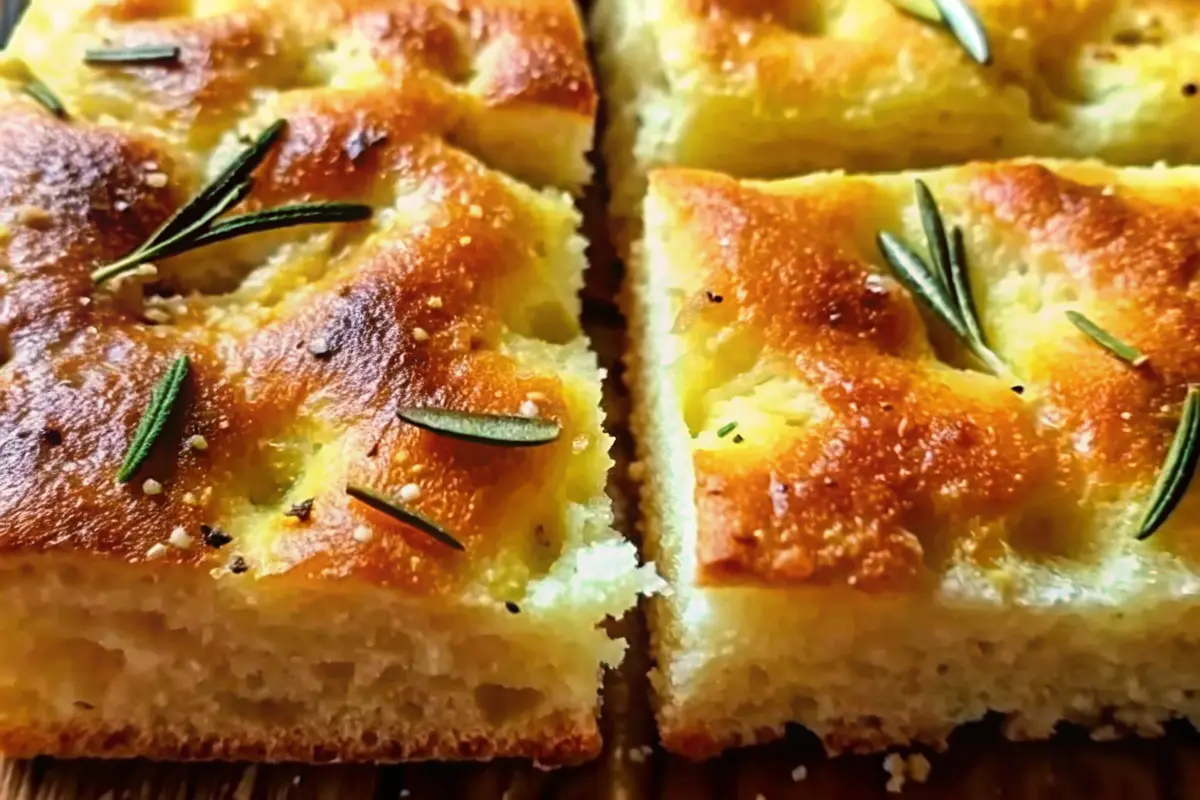
Did you know that a perfectly golden, aromatic focaccia bread recipe can be achieved in just 40 minutes of active work, yet tastes like you’ve spent hours perfecting it? This Italian flatbread has captured hearts worldwide, transforming from a simple peasant bread into a culinary canvas that graces both casual dinners and upscale restaurants. Today’s focaccia bread recipe is your gateway to creating bakery-quality bread at home, with crispy edges, fluffy interiors, and those signature dimples filled with olive oil and herbs.
Whether you’re a beginner baker or a seasoned pro, this easy focaccia recipe delivers consistent, impressive results every time. The secret lies in understanding the perfect ratio of flour to water, the importance of quality olive oil, and mastering the distinctive dimpling technique that gives focaccia its characteristic texture. Let’s dive into this homemade focaccia bread journey that will revolutionize your bread-baking experience.
Ingredients List
Creating an authentic Italian focaccia bread requires simple yet high-quality ingredients that work together to create magic:
For the Dough
- 4 cups bread flour or all-purpose flour – Bread flour creates a chewier texture, while all-purpose yields a softer crumb. You can substitute with 3 cups all-purpose and 1 cup whole wheat for a nuttier flavor profile.
- 2 1/4 teaspoons active dry yeast – This equals one standard packet. For a faster rise, instant yeast can be substituted in equal amounts.
- 2 teaspoons salt – Kosher or fine sea salt enhances flavor and strengthens gluten structure. Avoid table salt as it’s too fine and can make the bread taste overly salty.
- 1 3/4 cups warm water – Temperature is crucial: aim for 105-110°F. Too hot kills yeast; too cold slows fermentation.
- 1/4 cup extra virgin olive oil – This liquid gold adds richness and helps achieve those crispy, golden edges. Never skimp on quality here.
For Topping
- Fresh rosemary leaves – Classic and aromatic. Alternative herbs include thyme, oregano, or sage.
- Coarse sea salt – Flaky Maldon or similar sea salt provides delightful texture and bursts of flavor.
- Additional olive oil for drizzling – Approximately 2-3 tablespoons for that glossy, flavorful finish.
Timing
This quick focaccia bread recipe is remarkably efficient for a yeast bread:
- Preparation Time: 15 minutes
- First Rise: 1 hour
- Second Rise: 30 minutes
- Baking Time: 25 minutes
- Total Time: Approximately 2 hours 10 minutes
Compared to traditional artisan bread recipes that require 4-6 hours or overnight fermentation, this recipe saves you nearly 60% of the time while delivering exceptional results. The active hands-on time is only about 20 minutes, making it perfect for busy weeknights or spontaneous weekend baking sessions.
Step-by-Step Instructions
Step 1: Activate the Yeast
In a large mixing bowl, combine the warm water and active dry yeast. Stir gently and let the mixture sit undisturbed for 5 minutes until it becomes frothy and bubbly. This crucial step, called “proofing,” ensures your yeast is alive and ready to work its magic. If the mixture doesn’t foam, your water was too hot or your yeast is expired—start over with fresh ingredients.
Step 2: Mix the Dough
Add the flour, salt, and 1/4 cup olive oil to the yeast mixture. Using a wooden spoon or sturdy spatula, stir everything together until a shaggy, slightly sticky dough forms. Don’t worry if it looks rough at this stage—that’s exactly what you want. The dough should pull away from the sides of the bowl but remain quite wet compared to other bread doughs.
Step 3: Knead to Perfection
Transfer the dough onto a lightly floured surface. Knead for about 10 minutes using the push-fold-turn method: push the dough away with the heel of your hand, fold it back over itself, and turn it 90 degrees. Repeat this rhythmic motion until the dough becomes smooth, elastic, and springs back when poked. This develops the gluten structure that gives focaccia its perfect chewy texture.
Step 4: First Rise
Place the kneaded dough in a greased bowl, turning it once to coat all sides with oil. Cover with a clean kitchen towel or plastic wrap and set in a warm, draft-free area. Let it rise for about 1 hour or until doubled in size. Pro tip: Place the bowl in an oven with just the light on for consistent warmth.
Step 5: Prepare for Baking
Preheat your oven to 425°F (220°C). Once the dough has doubled, punch it down gently to release air bubbles. Transfer to a parchment-lined baking sheet and gently stretch and press the dough into a rectangle or oval shape, about 1/2 to 3/4 inch thick. Don’t worry about perfect shapes—rustic is beautiful!
Step 6: Second Rise
Cover the shaped dough loosely with a towel and let it rise for another 30 minutes. During this time, the dough will puff up slightly and develop more air pockets that create focaccia’s signature texture.
Step 7: Dimple and Top
Here comes the fun part! Using your fingertips, press firmly into the dough, creating deep dimples all over the surface. Push all the way down—don’t be shy! These dimples will catch pools of olive oil and create the focaccia’s distinctive appearance. Drizzle generously with olive oil, allowing it to pool in the dimples. Scatter fresh rosemary leaves and sprinkle coarse sea salt evenly across the top.
Step 8: Bake to Golden Perfection
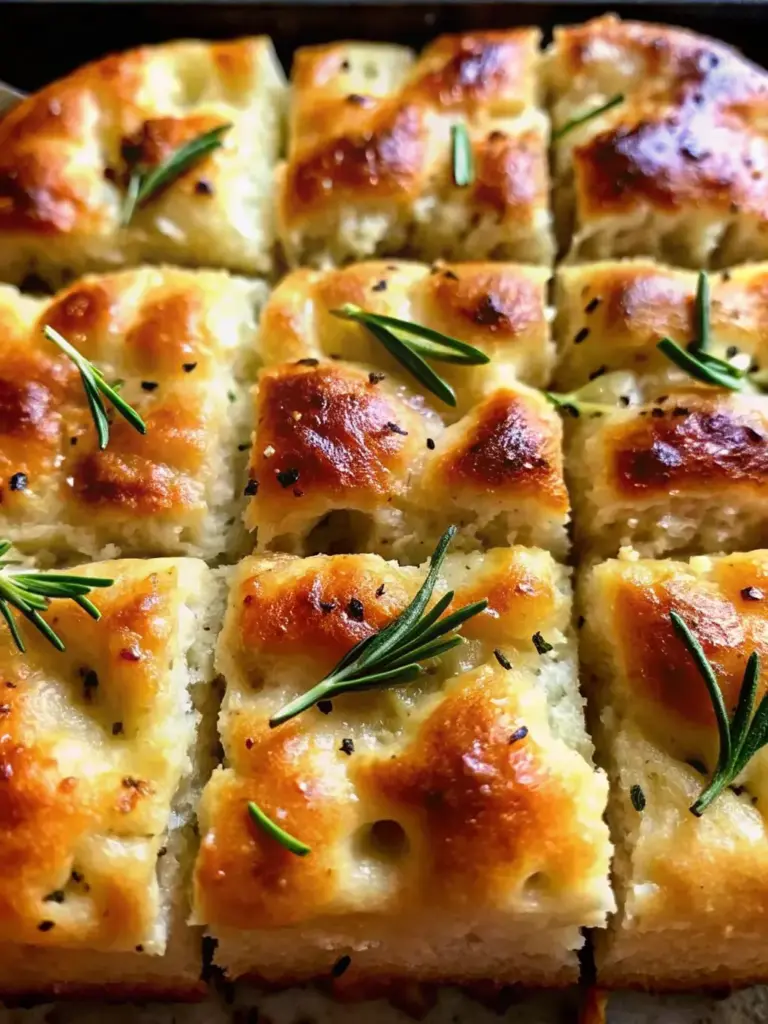
Slide the baking sheet into the preheated oven and bake for about 25 minutes, or until the focaccia is golden brown on top and sounds hollow when tapped on the bottom. The edges should be deeply golden and slightly crispy. Let it cool on the pan for 5 minutes before transferring to a wire rack.

Nutritional Information
Per serving (based on 12 servings):
- Calories: 160
- Total Fat: 7g
- Saturated Fat: 1g
- Unsaturated Fat: 6g
- Trans Fat: 0g
- Carbohydrates: 22g
- Fiber: 1g
- Sugar: 0g
- Protein: 4g
- Sodium: 250mg
- Cholesterol: 0mg
This traditional focaccia recipe provides a moderate calorie option for bread lovers, with the healthy fats from olive oil contributing heart-healthy monounsaturated fatty acids. The sodium content can be adjusted based on your preference by reducing the salt in both the dough and topping.
Healthier Alternatives for the Recipe
Transform this classic focaccia recipe into a more nutritious option without sacrificing flavor:
Whole Grain Boost: Replace 1-2 cups of all-purpose flour with whole wheat or spelt flour for added fiber and nutrients. This increases fiber content by approximately 3-4 grams per serving.
Reduced Oil Version: Cut the olive oil to 2 tablespoons in the dough and use an olive oil spray for topping, reducing fat content by nearly 40%.
Ancient Grains: Experiment with einkorn or kamut flour for a nutty flavor and enhanced nutritional profile, including higher protein and mineral content.
Lower Sodium: Reduce salt to 1 teaspoon in the dough and use fresh herbs more generously to boost flavor without adding sodium.
Gluten-Free Adaptation: Use a high-quality gluten-free flour blend with xanthan gum, though texture will differ slightly from traditional focaccia.
Serving Suggestions
This versatile Italian flatbread recipe pairs beautifully with countless dishes:
Appetizer Perfection: Cut into squares and serve alongside marinara sauce, balsamic vinegar with olive oil, or creamy hummus for dipping. The crispy exterior and soft interior make it ideal for sopping up flavorful sauces.
Sandwich Star: Slice horizontally and use as a base for gourmet sandwiches. Try it with fresh mozzarella, tomatoes, and basil for a Caprese-inspired creation, or layer with roasted vegetables and pesto.
Breakfast Delight: Toast leftover focaccia and top with avocado, poached eggs, and red pepper flakes for an elevated morning meal.
Soup Companion: Serve warm focaccia wedges alongside minestrone, tomato soup, or creamy potato leek soup for the ultimate comfort food combination.
Party Platter: Top with cherry tomatoes, olives, caramelized onions, or roasted garlic before baking for a stunning appetizer that feeds a crowd.
Common Mistakes to Avoid
Master this homemade focaccia bread recipe by sidestepping these frequent pitfalls:
Water Temperature Errors: Using water that’s too hot (above 120°F) kills yeast, while water that’s too cold (below 100°F) won’t activate it properly. Always test with a thermometer for accuracy.
Insufficient Kneading: Under-kneaded dough lacks structure and won’t rise properly. Knead until the dough is smooth and elastic—about 10 minutes by hand or 5-7 minutes in a stand mixer.
Skipping the Second Rise: This rest period is crucial for texture development. Rushing it results in dense, flat bread instead of the desired airy crumb.
Timid Dimpling: Shallow dimples won’t hold enough oil and won’t create the characteristic texture. Press firmly all the way to the pan.
Inadequate Olive Oil: Focaccia should be generous with oil—it’s what creates the crispy bottom and edges. Don’t skimp!
Wrong Pan Size: Using a pan that’s too large spreads the dough too thin, resulting in crackers rather than bread. Aim for 1/2 to 3/4 inch thickness.
Overbaking: Watch carefully during the final minutes. Focaccia should be golden, not deeply brown, as it continues cooking slightly after removal from the oven.
Storing Tips for the Recipe
Maximize freshness and flavor with proper storage:
Room Temperature: Store completely cooled focaccia in an airtight container or wrapped tightly in plastic wrap for up to 2 days. Placing a paper towel in the container absorbs excess moisture and prevents sogginess.
Refrigeration: While not ideal for bread, refrigeration extends shelf life to 5 days. Wrap tightly in plastic wrap and then aluminum foil. Reheat in a 350°F oven for 5-7 minutes to restore crispness.
Freezing: Focaccia freezes exceptionally well for up to 3 months. Slice into portions, wrap individually in plastic wrap, then place in a freezer bag. Thaw at room temperature or reheat directly from frozen in a 375°F oven for 10-12 minutes.
Reheating Pro Tips: Never microwave focaccia, as it becomes rubbery. Instead, refresh in a 350°F oven for 5 minutes, or toast slices in a skillet with a drizzle of olive oil for restored crispiness.
Make-Ahead Strategy: Prepare the dough through the first rise, then refrigerate for up to 24 hours. Let it come to room temperature before shaping and completing the recipe.
Conclusion
This focaccia bread recipe delivers authentic Italian flavor with minimal effort, requiring just basic ingredients and simple techniques to create bakery-quality results. The combination of a well-hydrated dough, quality olive oil, and proper fermentation produces that irresistible golden crust and pillowy interior that makes focaccia universally beloved.
Ready to transform your kitchen into an Italian bakery? Try this easy focaccia recipe today and experience the satisfaction of pulling freshly baked, aromatic bread from your oven. Share your beautiful creations in the comments below—we love seeing your baking successes! Don’t forget to leave a review sharing your experience and subscribe to our blog for more incredible homemade bread recipes, baking tips, and culinary inspiration delivered straight to your inbox.
FAQs
Can I use instant yeast instead of active dry yeast?
Yes! Instant yeast can be substituted in equal amounts and doesn’t require proofing. Simply mix it directly with the flour, though you may notice a slightly faster rise time.
Why is my focaccia dough so sticky?
High-hydration dough is intentional for focaccia—it creates those beautiful air pockets. If it’s unmanageable, lightly flour your hands and work surface, but resist adding too much flour, which results in dense bread.
Can I make focaccia without a stand mixer?
Absolutely! This recipe works perfectly by hand. Mixing and kneading takes slightly longer, but the results are identical. It’s actually quite therapeutic!
How do I know when my focaccia is fully baked?
The top should be golden brown, the edges slightly darker and crispy, and the bottom should sound hollow when tapped. An instant-read thermometer should register 190-200°F in the center.
Can I add toppings other than rosemary?
Definitely! Popular additions include cherry tomatoes, olives, caramelized onions, roasted garlic, sun-dried tomatoes, different herbs, or even grapes and honey for a sweet-savory version. Add them during the dimpling stage.
What’s the difference between focaccia and pizza dough?
While similar, focaccia dough typically has more olive oil and higher hydration, creating a softer, more open crumb. Focaccia is also thicker and focuses on the bread itself rather than being a vehicle for toppings.
Can I make this recipe vegan?
Good news—this recipe is already naturally vegan! Just ensure your bread flour doesn’t contain any milk derivatives (most don’t).
Quick Focaccia Bread Recipe – No Overnight Rise Needed!
- Total Time: 2 hours 10 minutes
- Yield: 1 large focaccia (12 servings) 1x
- Diet: Vegan
Description
An easy, golden Italian focaccia bread recipe with a crisp exterior, fluffy interior, and aromatic olive oil–rosemary flavor — bakery quality in under an hour.
Ingredients
- 4 cups bread flour or all-purpose flour
- 2 1/4 teaspoons active dry yeast
- 2 teaspoons salt
- 1 3/4 cups warm water (105-110°F)
- 1/4 cup extra virgin olive oil
- Fresh rosemary leaves
- Coarse sea salt
- 2–3 tablespoons additional olive oil for drizzling
Instructions
- In a large bowl, mix warm water and yeast; let sit 5 minutes until foamy.
- Add flour, salt, and 1/4 cup olive oil. Stir until a shaggy dough forms.
- Knead on a floured surface for 10 minutes until smooth and elastic.
- Place dough in an oiled bowl, cover, and let rise 1 hour until doubled.
- Punch down dough and stretch onto a parchment-lined baking sheet about 1/2–3/4 inch thick.
- Cover and let rise 30 minutes until puffy.
- Preheat oven to 425°F (220°C). Dimple dough deeply with fingertips, drizzle with olive oil, and sprinkle rosemary and sea salt.
- Bake 25 minutes until golden brown. Cool slightly before slicing and serving.
Notes
Use high-quality olive oil for rich flavor. Make sure your water is warm, not hot, to properly activate the yeast. Dimple deeply for that signature focaccia texture.
- Prep Time: 15 minutes
- Cook Time: 25 minutes
- Category: Bread
- Method: Baking
- Cuisine: Italian
Nutrition
- Serving Size: 1 slice
- Calories: 160
- Sugar: 0g
- Sodium: 250mg
- Fat: 7g
- Saturated Fat: 1g
- Unsaturated Fat: 6g
- Trans Fat: 0g
- Carbohydrates: 22g
- Fiber: 1g
- Protein: 4g
- Cholesterol: 0mg
Keywords: focaccia bread, Italian bread, olive oil bread, quick focaccia, rosemary focaccia