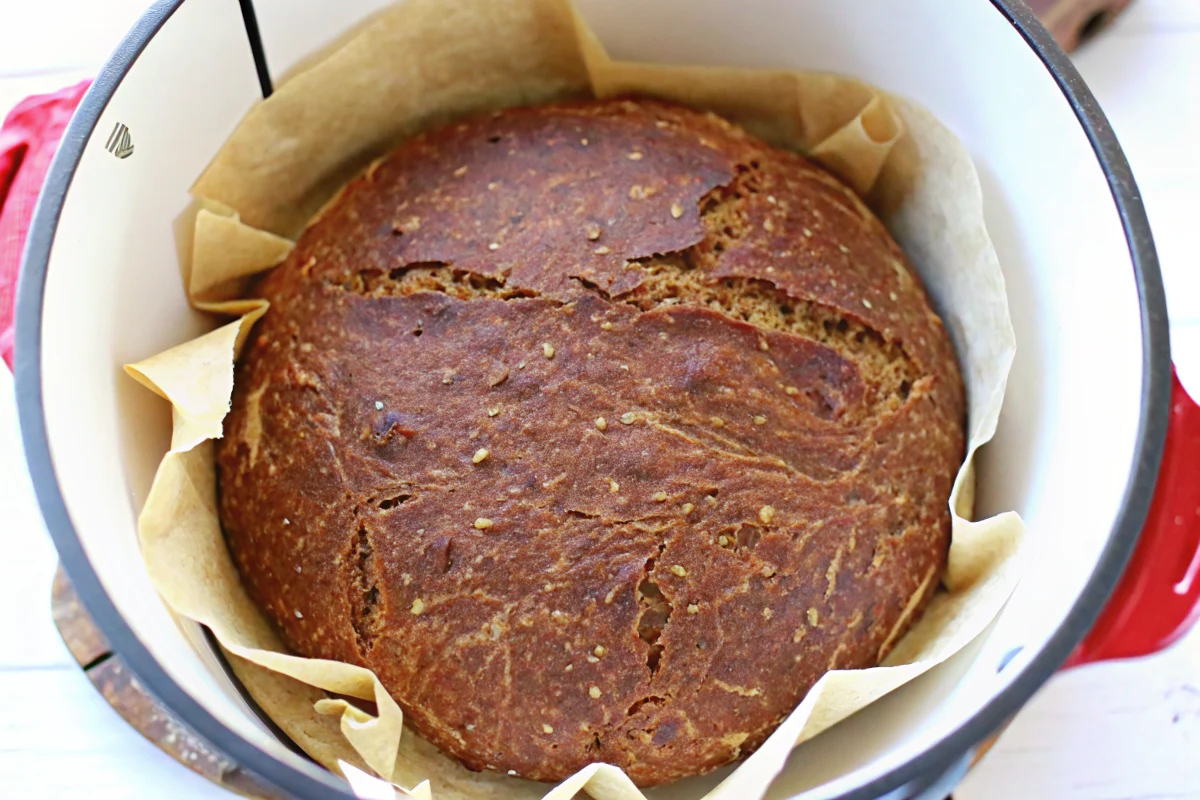
Did you know that traditional German pumpernickel bread requires up to 24 hours of baking time, yet this no knead pumpernickel bread recipe delivers that same rich, complex flavor in just 4 hours of total time? If you’ve been intimidated by artisan bread-making or thought you needed professional baking skills to create a dense, flavorful pumpernickel bread recipe, prepare to have your assumptions challenged. This revolutionary no-knead method eliminates the labor-intensive kneading process while producing a beautifully crusty exterior and tender, dark crumb that rivals any bakery loaf. The secret lies in allowing time to do the work for you, creating a bread that’s not only delicious but also surprisingly simple to master.
The combination of dark rye flour, rich cocoa powder, robust coffee, and sweet molasses creates a depth of flavor that transforms simple ingredients into an extraordinary loaf. Whether you’re a beginner baker or an experienced home cook, this pumpernickel bread recipe will become your go-to for impressive, homemade artisan bread.
Ingredients
Dry Ingredients:
- 1 1/2 cups bread flour or all-purpose flour – Provides structure and helps the bread rise beautifully
- 1 cup whole wheat flour – Adds nutty flavor and nutritional value
- 1/2 cup dark rye flour – The essential ingredient that gives pumpernickel its characteristic tangy taste
- 1 1/2 tablespoons powdered cocoa – Deepens the color and adds rich, subtle complexity (not sweetness!)
- 1 teaspoon instant yeast – The leavening agent that requires no proofing
- 1 teaspoon salt – Enhances all the flavors and controls yeast activity
Wet Ingredients:
- 1 cup coffee (2 teaspoons instant coffee dissolved in 1 cup hot water works perfectly) – Amplifies the deep, earthy notes
- 1/2 cup water – Brings the dough to the perfect consistency
- 2 tablespoons molasses – Provides signature sweetness and moisture
For Shaping:
- 2 tablespoons extra flour – Keeps the dough manageable during shaping
Substitution Options:
- Rye flour alternative: While dark rye is ideal, you can use medium rye flour, though the flavor will be slightly milder
- Coffee substitute: Strong black tea or additional water works, but coffee truly enhances the bread’s complexity
- Molasses replacement: If unavailable, use dark corn syrup, though you’ll lose some authentic flavor
- Whole wheat flour: Can be substituted with additional all-purpose flour for a lighter texture
Timing
Preparation Time: 15 minutes
First Rise: 3 hours at room temperature
Shaping and Second Rise: 35 minutes
Baking Time: 38-40 minutes
Total Time: Approximately 4 hours and 30 minutes
This no knead pumpernickel bread requires roughly 20% less active work time compared to traditional kneaded bread recipes. While the total timeline spans several hours, your actual hands-on involvement is minimal—just about 15-20 minutes total. The extended resting periods allow natural fermentation to develop complex flavors and create the perfect texture without any strenuous kneading.
For an overnight variation, simply use cool water instead of warm liquid and let the dough rest for 8-18 hours on your countertop. This extended fermentation creates even deeper, more nuanced flavors.
Step-by-Step Instructions
Step 1: Mix the Dry Ingredients
In a large mixing bowl, combine the bread flour, whole wheat flour, dark rye flour, cocoa powder, instant yeast, and salt. Whisk these ingredients together thoroughly to ensure even distribution of the yeast and salt. This step is crucial—uneven mixing can result in pockets of dense bread or areas that don’t rise properly. The cocoa powder should be fully incorporated with no visible clumps.
Pro Tip: Always aerate your flour before measuring by stirring it in its container. This prevents packing and ensures accurate measurements.
Step 2: Prepare the Liquid Mixture
In a separate bowl or large measuring cup, combine your coffee, water, and molasses. If using instant coffee, dissolve 2 teaspoons in 1 cup of hot water. Heat this mixture to 130°F (54°C)—this is the optimal temperature for instant yeast activation without killing it. Use a kitchen thermometer for accuracy, as water that’s too hot will kill the yeast, while water that’s too cool won’t activate it properly.
Step 3: Combine Wet and Dry Ingredients
Pour the warm coffee mixture into the flour mixture and stir vigorously with a wooden spoon or sturdy spatula until no dry flour remains visible. The dough will be shaggy, sticky, and quite wet—this is exactly what you want. Unlike traditional bread dough, this mixture won’t form a smooth ball. Don’t worry if it looks messy; the extended rise time will transform it.
Step 4: First Rise
Cover the bowl tightly with plastic wrap (not a towel, which allows too much moisture to escape) and place it in a warm, draft-free location for 3 hours. The dough should roughly double in size and become bubbly on the surface. Room temperature between 70-75°F works best. If your kitchen is cool, place the bowl in an unheated oven with the light on.
Step 5: Shape the Dough
After 3 hours, generously flour a clean work surface. Turn the dough out onto the floured surface and sprinkle additional flour on top. Using a bench scraper or spatula, fold the dough over itself 10-12 times. This creates tension on the surface without traditional kneading. Shape into a rough ball by tucking the edges underneath. The dough will be soft and slightly sticky—resist the urge to add too much flour.
Step 6: Second Rise
Line a bowl with parchment paper (never wax paper, which isn’t heat-safe). Place your shaped dough into the parchment-lined bowl, seam side down. Cover with a clean kitchen towel and let it rest for 35 minutes on the countertop. During this time, the dough will puff up slightly and relax.
Step 7: Preheat Dutch Oven
While the dough rises, place your 3 to 6-quart Dutch oven with its lid into a cold oven. Preheat to 450°F (232°C). This step is critical—the extremely hot pot creates an ideal steam environment that produces a crispy, crackly crust. Never place a cold Dutch oven into a preheated oven, as thermal shock can damage it.
Step 8: Bake the Bread
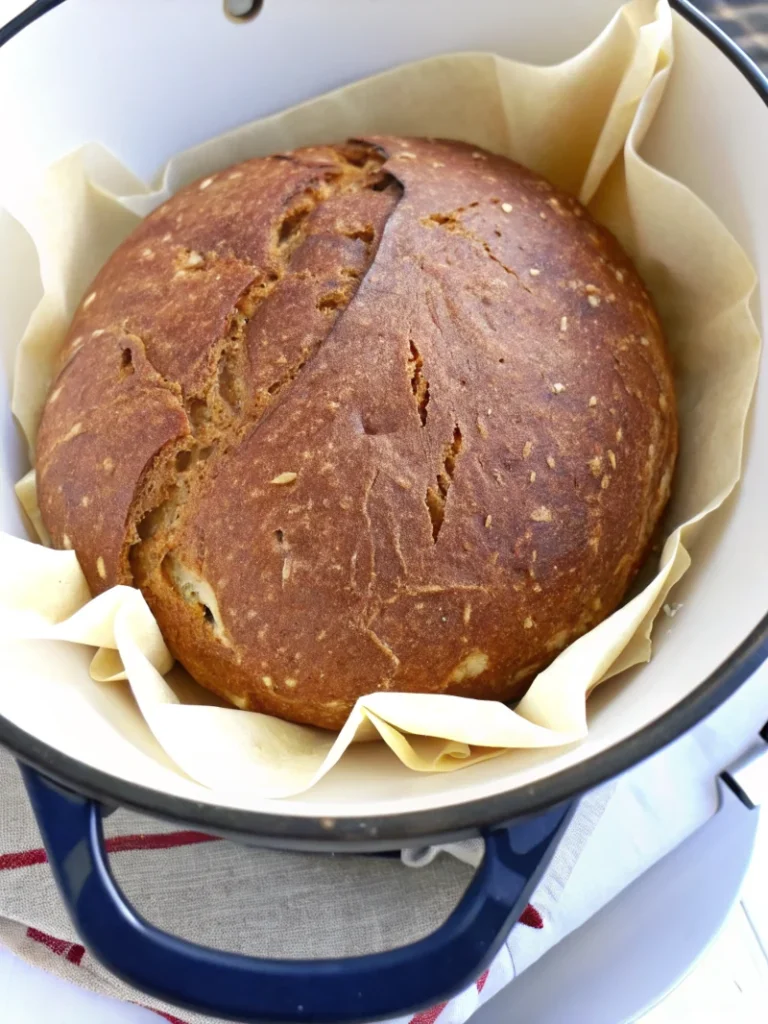
Using heavy-duty oven mitts, carefully remove the blazing hot Dutch oven from the oven. Lift the parchment paper with the dough and gently lower it into the pot—parchment paper and all. The paper protects your hands and prevents sticking. Cover with the lid and bake for 30 minutes.
Step 9: Final Baking
After 30 minutes, reduce the oven temperature to 400°F (204°C) and remove the lid. Continue baking uncovered for 8-10 more minutes until the crust is deeply browned and firm. The bread should sound hollow when tapped on the bottom, and the internal temperature should reach 195-210°F.
Step 10: Cool Completely
Transfer the bread to a wire cooling rack. Resist cutting into it immediately—the interior continues cooking as it cools, and cutting too soon results in a gummy texture. Wait at least 45-60 minutes before slicing.

Nutritional Information
Per Slice (based on 12 slices per loaf):
- Calories: 145-160
- Total Fat: 0.8g
- Saturated Fat: 0.2g
- Sodium: 195mg
- Total Carbohydrates: 31g
- Dietary Fiber: 3g
- Sugars: 3g
- Protein: 4.5g
- Iron: 8% DV
- Magnesium: 6% DV
Key Nutritional Benefits:
The combination of rye and whole wheat flour provides substantially more fiber than white bread—approximately 50% more dietary fiber per slice. Rye flour is particularly rich in essential minerals including iron, magnesium, and phosphorus. The molasses contributes trace amounts of iron and calcium, while the coffee adds powerful antioxidants without calories.
This pumpernickel bread recipe is naturally low in fat and contains no cholesterol, making it heart-healthy when consumed as part of a balanced diet.
Healthier Alternatives for the Recipe
Whole Grain Boost: Replace all white bread flour with whole grain spelt flour for increased protein and fiber content.
Oil-Free Version: This recipe is already naturally oil-free, keeping it lower in calories than many artisan breads. The molasses provides all the moisture needed.
Sugar Reduction: Cut molasses to 1 tablespoon and add 1 tablespoon of unsweetened applesauce for sweetness with fewer calories.
Gluten-Free Adaptation: While traditional pumpernickel depends on gluten structure, you can experiment with gluten-free all-purpose flour blends combined with xanthan gum, though texture will differ significantly.
Added Nutrition: Stir in 2 tablespoons ground flax seed for omega-3 fatty acids and extra fiber without altering texture.
Caraway Seed Addition: While not in this version, adding 1 tablespoon caraway seeds provides authentic European flavor and aids digestion.
Serving Suggestions
Classic Deli Style: Slice thin and serve with pastrami, Swiss cheese, sauerkraut, and Russian dressing for an authentic Reuben sandwich experience.
Breakfast Delight: Toast thick slices and top with cream cheese, smoked salmon, capers, and red onion for a luxurious morning meal.
Soup Companion: The dense, hearty texture makes this bread perfect alongside creamy potato soup, beef stew, or French onion soup. The bread holds up to dipping without falling apart.
Appetizer Base: Cut into small squares and top with herbed goat cheese, roasted vegetables, or chicken salad for elegant party appetizers.
Simple Pleasure: Sometimes the best way to enjoy fresh pumpernickel bread is with just high-quality butter and flaky sea salt, allowing the complex flavors to shine.
Storage Note: This bread actually improves in flavor after 24 hours as the flavors meld and mature. Day-two bread makes exceptional toast.
Common Mistakes to Avoid
Overheating the Liquid: Water above 140°F kills yeast instantly. Always verify temperature with a thermometer rather than guessing.
Skipping the Rise Time: Cutting the 3-hour rise short prevents proper gluten development and flavor creation. Patience is essential in no-knead bread making.
Using Wax Paper Instead of Parchment: Wax paper melts in high heat and can ruin your bread and Dutch oven. Always use parchment paper.
Adding Too Much Flour During Shaping: The dough should remain slightly sticky. Over-flouring creates a dry, tough texture.
Opening the Oven During Initial Baking: Every time you open the oven door during the first 30 minutes, you release essential steam. Keep it closed for the best crust development.
Cutting Too Soon: Hot bread continues cooking internally. Cutting before it cools results in a gummy, compressed crumb.
Wrong Dutch Oven Size: A pot that’s too large allows too much air circulation, preventing proper rise. A pot that’s too small prevents expansion. Stick to 3-6 quart capacity.
Storing Tips for the Recipe
Room Temperature Storage: Once completely cooled, wrap the bread tightly in a clean kitchen towel or place in a paper bag. It will stay fresh for 3-4 days at room temperature. Avoid plastic bags, which make the crust soggy.
Freezing Instructions: This pumpernickel bread freezes exceptionally well. Slice the cooled loaf completely, then wrap individual slices or the whole loaf in plastic wrap, followed by aluminum foil. Freeze for up to 3 months. Toast frozen slices directly from the freezer, or thaw at room temperature for 30 minutes.
Reviving Day-Old Bread: Sprinkle slightly stale bread with water and warm in a 350°F oven for 5-7 minutes to restore crust crispness.
Bread Box Storage: A bread box provides ideal humidity and air circulation, keeping the crust crispy while preventing the interior from drying out.
Refrigeration Warning: Never refrigerate bread—it accelerates staling through retrogradation, making it dry and tough faster than room temperature storage.
Conclusion
This no knead pumpernickel bread recipe proves that artisan bread-making doesn’t require professional skills, expensive equipment, or hours of labor. With just a few simple ingredients, minimal hands-on time, and the magic of extended fermentation, you can create a deeply flavorful, bakery-quality loaf right in your home kitchen. The combination of dark rye, aromatic coffee, and rich molasses delivers authentic pumpernickel flavor that’s perfect for sandwiches, toast, or enjoying on its own.
Ready to bake? Try this recipe today and discover how easy homemade artisan bread can be! Share your results in the comments below, leave a review telling us how your loaf turned out, and subscribe to our blog for more foolproof bread recipes and baking tips. Your perfect loaf is just 4 hours away!
FAQs
Q: Can I use active dry yeast instead of instant yeast?
A: Yes, but you’ll need to proof it first. Dissolve the active dry yeast in a small amount of the warm liquid with a pinch of sugar, wait 5-10 minutes until foamy, then proceed with the recipe.
Q: Why does my bread need coffee?
A: Coffee enhances the deep, complex flavor of pumpernickel without making it taste like coffee. It amplifies the earthiness of the rye and cocoa. You can substitute strong tea or plain water, but the flavor won’t be as rich.
Q: My dough seems too wet. Should I add more flour?
A: No-knead dough is intentionally very wet and sticky. This high hydration creates the open crumb structure and allows the bread to rise without kneading. Resist adding extra flour beyond what’s needed for shaping.
Q: Can I bake this without a Dutch oven?
A: While a Dutch oven creates the best crust by trapping steam, you can bake it on a baking sheet. Place a metal pan with water on the bottom oven rack to create steam, though results won’t be identical.
Q: How do I know when the bread is fully baked?
A: The bread should sound hollow when tapped on the bottom, appear deeply browned, and register an internal temperature of 195-210°F on an instant-read thermometer.
Q: Can I add caraway seeds to this recipe?
A: Absolutely! Add 1-2 tablespoons of caraway seeds to the dry ingredients for traditional pumpernickel flavor.
Q: Why didn’t my bread rise?
A: The most common causes are dead yeast (check expiration dates), liquid that was too hot or too cold, or a kitchen that’s too cold. Yeast needs warmth to activate properly.
Easy Pumpernickel Bread Recipe | Bakery-Style Loaf in 4 Hours
- Total Time: 4 hours 30 minutes
- Yield: 1 loaf (12 slices) 1x
- Diet: Vegetarian
Description
This no knead pumpernickel bread delivers deep, rich flavor and a beautifully crusty exterior in just 4 hours — no kneading required. With its dark rye flour, cocoa, coffee, and molasses, this easy artisan loaf rivals bakery-quality pumpernickel right from your home kitchen.
Ingredients
- 1 1/2 cups bread flour or all-purpose flour
- 1 cup whole wheat flour
- 1/2 cup dark rye flour
- 1 1/2 tablespoons powdered cocoa
- 1 teaspoon instant yeast
- 1 teaspoon salt
- 1 cup coffee (2 tsp instant coffee dissolved in 1 cup hot water)
- 1/2 cup water
- 2 tablespoons molasses
- 2 tablespoons extra flour for shaping
Instructions
- In a large mixing bowl, combine bread flour, whole wheat flour, dark rye flour, cocoa powder, instant yeast, and salt. Whisk thoroughly.
- In a separate bowl, mix coffee, water, and molasses. Heat to 130°F (54°C).
- Pour the warm liquid mixture into the flour mixture. Stir until no dry flour remains; dough will be shaggy and sticky.
- Cover bowl tightly with plastic wrap and let rise at room temperature for 3 hours until doubled and bubbly.
- Transfer dough to a floured surface, sprinkle extra flour, and fold 10–12 times to shape into a ball.
- Line a bowl with parchment paper, place dough seam-side down, cover with a towel, and rest for 35 minutes.
- While resting, preheat a Dutch oven (3–6 quarts) with lid to 450°F (232°C).
- Carefully lower dough with parchment into the hot Dutch oven, cover, and bake 30 minutes.
- Reduce temperature to 400°F (204°C), remove lid, and bake 8–10 minutes more until crust is deep brown and sounds hollow when tapped.
- Cool on a wire rack for at least 45–60 minutes before slicing.
Notes
Avoid overheating liquids (above 140°F) to prevent killing yeast. Don’t skip rise times — patience develops flavor and texture. Always use parchment, not wax paper, and allow bread to cool fully before slicing.
- Prep Time: 15 minutes
- Cook Time: 40 minutes
- Category: Bread
- Method: Dutch Oven Baking
- Cuisine: German
Nutrition
- Serving Size: 1 slice (1/12 loaf)
- Calories: 150
- Sugar: 3g
- Sodium: 195mg
- Fat: 0.8g
- Saturated Fat: 0.2g
- Unsaturated Fat: 0.6g
- Trans Fat: 0g
- Carbohydrates: 31g
- Fiber: 3g
- Protein: 4.5g
- Cholesterol: 0mg
Keywords: no knead pumpernickel bread, artisan loaf, rye bread, molasses, Dutch oven, easy bread recipe