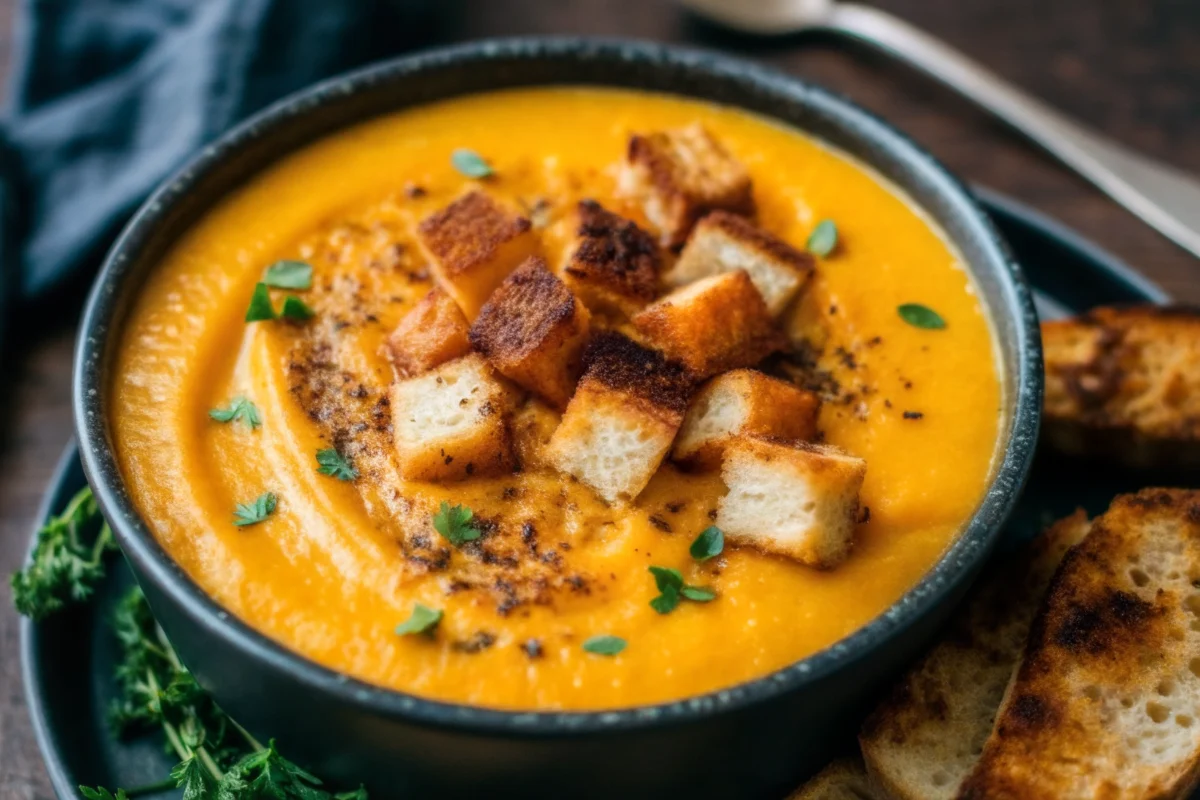
Did you know that roasted butternut squash soup boasts 808 mg of potassium, 482% of daily vitamin A, and 86% of daily vitamin C per serving? This remarkable nutritional profile makes roasted butternut squash soup not just a comforting seasonal favorite, but a genuine superfood powerhouse disguised as comfort food.
While many people assume that creamy, satisfying soups must be loaded with calories and heavy ingredients, this roasted butternut squash soup challenges that notion entirely. The secret lies in the roasting process, which provides an incredibly sweet, caramelized flavor that just cannot be beat, creating natural depth and richness without relying on excessive fats or artificial flavor enhancers.
This comprehensive guide will walk you through creating the perfect roasted butternut squash soup that delivers maximum flavor, optimal nutrition, and restaurant-quality results in your own kitchen. Whether you’re seeking a healthy weeknight dinner solution or an impressive dish for entertaining, this winter squash soup recipe offers the perfect balance of convenience and sophistication.
Table of Contents
Ingredients List
Main Ingredients:
- 1 medium butternut squash (about 3 pounds), peeled, seeded, and cubed
- 2 tablespoons extra-virgin olive oil, divided
- Salt and freshly ground black pepper to taste
- 1 medium yellow onion, chopped (sweet onions work beautifully too)
- 2 garlic cloves, minced (or 3 for extra flavor)
- 1 medium carrot, chopped into 1-inch pieces
- 1 celery stalk, chopped
- 4 cups high-quality vegetable broth
- ½ teaspoon ground nutmeg (freshly grated preferred)
- ½ teaspoon dried thyme (or 1 teaspoon fresh thyme leaves)
- ½ cup heavy cream or full-fat coconut milk (optional, for extra creaminess)
Smart Substitution Options:
- Butternut Squash Alternative: Delicata squash, honeynut squash, or even sweet potato can substitute beautifully
- Dairy-Free Options: Use coconut milk, cashew cream, or omit cream entirely for a lighter version
- Broth Variations: Chicken broth adds richness, while bone broth provides extra protein
- Spice Alternatives: Replace nutmeg with cinnamon, add curry powder for warmth, or incorporate fresh ginger for zing
- Aromatics Enhancement: Substitute shallots for onion, add fresh sage leaves, or include a bay leaf during cooking
Timing
Total Time: 70 minutes (approximately 20% faster than traditional stovetop-only methods)
- Prep Time: 15 minutes
- Roasting Time: 25-30 minutes
- Simmering & Blending: 20-25 minutes
- Final Assembly: 5 minutes
This efficient timing allows the oven to handle the heavy lifting while you prepare other components, making it ideal for busy weeknights or meal prep sessions. The roasting step actually reduces overall cooking time by developing complex flavors quickly through caramelization.
Step-by-Step Instructions
Step 1: Prepare and Roast the Butternut Squash
Preheat your oven to 400°F (200°C) and line a large rimmed baking sheet with parchment paper. Spread the cubed butternut squash evenly across the prepared sheet, ensuring pieces don’t overcrowd. Drizzle with 1 tablespoon olive oil, then season generously with salt and pepper. Toss thoroughly to coat every piece, then arrange in a single layer. Roast the butternut squash. Roasting the squash provides an incredibly sweet, caramelized flavor that just cannot be beat. This crucial step transforms ordinary squash into something extraordinary.
Step 2: Achieve Perfect Caramelization
Roast the butternut squash for 25-30 minutes, checking at the 20-minute mark. You’re looking for tender pieces with golden-brown edges and slightly caramelized surfaces. The natural sugars should be developing beautiful color, and a fork should pierce the largest pieces easily. This caramelization process concentrates flavors and adds natural sweetness that eliminates the need for added sugars.
Step 3: Build Your Aromatic Base
While the squash roasts, heat the remaining tablespoon of olive oil in a large Dutch oven or heavy-bottomed soup pot over medium heat. Add the chopped onion, carrot, and celery, creating a classic mirepoix base. Cook for 5-7 minutes, stirring occasionally, until vegetables soften and become fragrant. The onion should turn translucent, and you should hear gentle sizzling throughout the process.
Step 4: Layer in Depth with Aromatics
Add the minced garlic to your softened vegetables and cook for an additional 60-90 seconds until aromatic. The garlic should be fragrant but not browned. Sprinkle in the nutmeg and thyme, stirring constantly for 30 seconds to toast the spices and release their essential oils. This technique, known as blooming, intensifies flavor compounds significantly.
Step 5: Combine and Simmer
Transfer your perfectly roasted butternut squash to the pot with the aromatic vegetables. Pour in the vegetable broth, scraping up any caramelized bits from the bottom of the pot. These browned bits add incredible depth to your soup base. Bring the mixture to a gentle simmer over medium-high heat, then reduce heat to medium-low and let it simmer for 10-15 minutes, allowing all flavors to meld beautifully.
Step 6: Blend to Silky Perfection
Remove the pot from heat and allow it to cool slightly for safe blending. Using an immersion blender directly in the pot, blend until completely smooth and creamy. Use an immersion blender to make the soup smooth. This is the easiest way, or you can use a stand blender, but be careful as it will be very hot. For ultra-smooth results, blend for a full 2-3 minutes, ensuring no chunks remain.
Step 7: Final Seasoning and Serving
If using cream or coconut milk, stir it in gently and return the pot to low heat for 2-3 minutes to warm through. Taste and adjust seasoning with additional salt, pepper, or a pinch more nutmeg as needed. The soup should be velvety, well-seasoned, and perfectly balanced between sweet and savory flavors.

Nutritional Information
Per Serving (makes 6 servings):
- Calories: Around 300 calories a serving (when prepared with coconut milk)
- Without added cream: Approximately 140 calories per serving
- Protein: 4-6 grams
- Carbohydrates: 28-35 grams
- Dietary Fiber: 8-10 grams
- Fat: 8-12 grams (varies with cream addition)
- Vitamin A: 482% of daily Vitamin A
- Vitamin C: 86% of daily Vitamin C
- Potassium: 808 mg of Potassium
- Folate: 15% DV
- Magnesium: 12% DV
The impressive nutritional profile stems from butternut squash’s natural richness in powerful antioxidants, including vitamin C and beta-carotene. This low-calorie, fiber-rich winter squash may help with weight management, support brain health, and help protect against heart conditions.
Healthier Alternatives for the Recipe
Vegan & Dairy-Free Modifications:
Replace heavy cream with full-fat coconut milk, cashew cream, or simply omit for a lighter version. There’s no milk, cream, or butter in this recipe, making it completely vegan, but velvety and rich at the same time, thanks to the butternut squash and the coconut milk.
Lower-Calorie Options:
- Use vegetable broth in place of cream for richness
- Add roasted cauliflower to bulk up volume without calories
- Incorporate white beans for protein and fiber
- Blend in Greek yogurt after cooking for tang and protein
Anti-Inflammatory Boost:
- Add fresh ginger (1 tablespoon minced)
- Include turmeric (½ teaspoon)
- Incorporate bone broth for collagen benefits
- Finish with a drizzle of high-quality olive oil
Blood Sugar Friendly:
- Add protein through hemp seeds or pumpkin seeds
- Include a handful of spinach when blending
- Serve smaller portions with a protein-rich side
Serving Suggestions
Classic Pairings:
- Crusty sourdough bread or garlic breadsticks
- Grilled cheese sandwich cut into triangles
- Mixed green salad with pumpkin seeds and cranberries
- Roasted Brussels sprouts or roasted root vegetables
Gourmet Garnish Options:
- Toasted pumpkin seeds (pepitas) with sea salt
- Swirl of coconut milk or Greek yogurt
- Pomegranate seeds in the soup and was topped with crème fraîche for an elegant presentation
- Crispy sage leaves fried in butter
- Drizzle of good quality olive oil with cracked black pepper
- Caramelized onions or roasted garlic cloves
Meal Prep & Batch Serving:
Divide into individual containers with garnishes packed separately. This soup actually improves in flavor after a day, making it perfect for make-ahead meals or weekly meal prep routines.
Common Mistakes to Avoid
Roasting Pitfalls:
- Overcrowding the pan: This creates steam instead of caramelization, resulting in bland flavors
- Insufficient seasoning: Season squash generously before roasting for maximum flavor penetration
- Wrong temperature: 400°F is optimal; lower temperatures won’t caramelize effectively
Blending Errors:
- Hot liquid disasters: Allow soup to cool slightly before blending to prevent dangerous splattering
- Under-blending: For a very creamy texture, working in at least two batches, puree the soup in a stand blender. The second method is to use an immersion blender and blend the soup inside the pot. The result won’t be as thick and creamy, but it’s just as tasty
- Texture inconsistency: Blend in small batches for smoothest results
Seasoning Mishaps:
- Early salt addition: Salt draws out moisture during roasting; add after vegetables soften
- Spice timing: Toast spices with aromatics to avoid raw, harsh flavors
- Final taste-testing: Always adjust seasoning after blending when flavors have fully developed
Storing Tips for the Recipe
Refrigerator Storage:
Store any leftovers in an airtight container. They will last about 3-4 days in the fridge, or up to 3 months frozen. Cool completely before refrigerating to maintain food safety standards.
Freezer Storage:
Pour cooled soup into freezer-safe containers, leaving 1-inch headspace for expansion. You can also freeze the cooled soup for up to three months. Label with date and contents for easy identification.
Make-Ahead Strategy:
You can roast the butternut squash 3 days ahead of time or even 3 months ahead of time. When ready to use, just add them to the pot along with the vegetable broth, bring to a boil and cook as usual.
Reheating Best Practices:
Reheat them gently, covered, in the microwave, making sure they don’t reach a boiling temperature. Stir occasionally and add a splash of broth if needed to restore original consistency.
Conclusion
This roasted butternut squash soup delivers restaurant-quality results with simple, wholesome ingredients and straightforward techniques. The roasting process creates natural caramelization and depth, while the balanced nutrition profile makes it both satisfying and healthful. With proper storage, this versatile soup becomes a valuable meal prep asset.
Ready to create your perfect bowl of comfort? Try this recipe today and share your results in our comments section below! Subscribe to our blog for more seasonal soup recipes and kitchen tips that make home cooking both delicious and effortless.
FAQs
Q: Can I use pre-cut butternut squash from the store?
A: Absolutely! Pre-cut butternut squash saves significant prep time and works perfectly in this recipe. Just ensure pieces are relatively uniform for even roasting.
Q: What if my soup is too thick or too thin?
A: A ratio of four cups of squash to 2 cups of broth works well to produce a thick soup. If this is the issue, it’s easy to fix – simply add an extra ½ cup to 1 cup of broth. For thinner soup, add more broth gradually until desired consistency is reached.
Q: Can I make this recipe in a slow cooker?
A: While roasting provides optimal flavor, you can adapt this for slow cooker by combining all ingredients except cream and cooking on low for 6-8 hours. The roasted flavor will be less pronounced but still delicious.
Q: How can I add more protein to this soup?
A: You can increase the protein with toppings like grated cheese or adding in some greek yogurt, or adding in ground turkey or shredded chicken. White beans or lentils also work wonderfully.
Q: Is this soup suitable for meal prep?
A: Yes! This soup is excellent for meal prep and actually improves in flavor after a day. Store in individual portions and reheat gently when ready to serve.
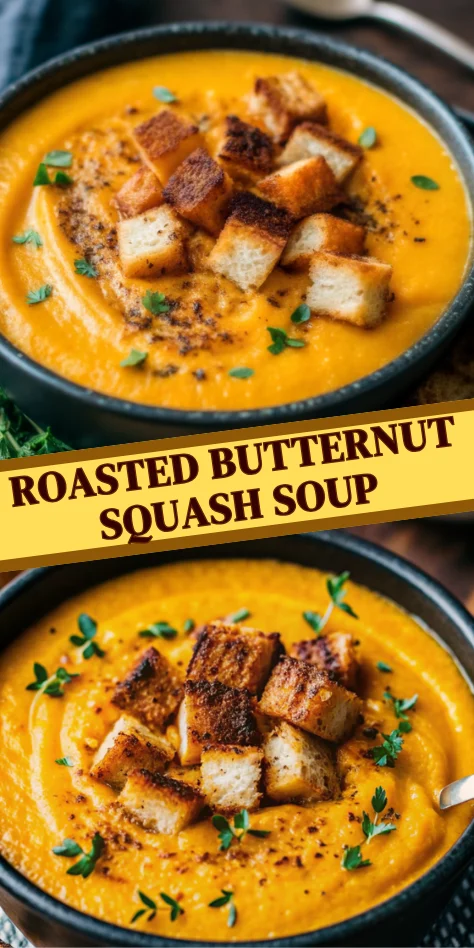

The Ultimate Roasted Butternut Squash Soup
- Total Time: 70 minutes
- Yield: 6 servings 1x
Description
This roasted butternut squash soup is a creamy, nutrient-packed comfort food with rich caramelized flavors from roasting. Loaded with vitamins A and C, fiber, and potassium, it’s a superfood disguised as a cozy fall favorite.
Ingredients
- 1 medium butternut squash (3 lbs), peeled, seeded, cubed
- 2 tbsp extra-virgin olive oil, divided
- Salt & black pepper to taste
- 1 medium yellow onion, chopped
- 2 garlic cloves, minced
- 1 medium carrot, chopped
- 1 celery stalk, chopped
- 4 cups vegetable broth
- 1/2 tsp ground nutmeg
- 1/2 tsp dried thyme (or 1 tsp fresh)
- 1/2 cup heavy cream or coconut milk (optional)
- Optional substitutions: sweet potato, coconut cream, chicken broth, curry powder, sage, ginger
Instructions
- Preheat oven to 400°F (200°C). Line a baking sheet with parchment. Toss squash with 1 tbsp olive oil, salt, and pepper. Roast 25–30 minutes until golden and caramelized.
- Meanwhile, heat remaining olive oil in a Dutch oven. Sauté onion, carrot, and celery 5–7 minutes until softened.
- Add garlic, nutmeg, and thyme. Cook 1 minute until fragrant.
- Add roasted squash and broth. Simmer 10–15 minutes.
- Blend with immersion blender until smooth. Add cream or coconut milk if desired.
- Adjust seasoning. Garnish with pumpkin seeds, yogurt swirl, or crispy sage before serving.
Notes
Avoid overcrowding squash on baking sheet to ensure caramelization. Cool slightly before blending for safety. Natural separation during storage is normal; just stir before reheating.
- Prep Time: 15 minutes
- Cook Time: 50-55 minutes
- Category: Soup
- Method: Roasted & Blended
- Cuisine: American
Nutrition
- Serving Size: 1 bowl
- Calories: 300 (with cream), 140 (without cream)
- Sugar: 8g
- Sodium: 400mg
- Fat: 8-12g
- Saturated Fat: 5g
- Unsaturated Fat: 6g
- Trans Fat: 0g
- Carbohydrates: 28-35g
- Fiber: 8-10g
- Protein: 4-6g
- Cholesterol: 20mg (with cream)
Keywords: roasted butternut squash soup, fall soup, creamy squash soup, healthy comfort food, vegan soup option